How to Prepare Outdoor Faucets Before the First Freeze
Fall weather in Oklahoma moves fast, and the first hard freeze usually arrives somewhere between late October and early November across Broken Arrow, Tulsa, and the surrounding towns. Outdoor faucets take the worst of that first cold snap because they sit on an exterior wall with nothing but a thin brass body separating the water inside from the air outside. Water expands as it turns to ice, and a sealed section of pipe has nowhere to send that pressure, so something eventually gives way. The break rarely happens at the spout where you can see it, because it usually happens a foot or two back inside the wall or the crawl space, which means the damage stays hidden until you open the hose bib again in the spring. Getting an outdoor faucet ready takes less than an hour on a Saturday morning and costs almost nothing compared to opening up drywall and replacing soaked insulation. The steps below walk through draining, shutting off the supply, insulating, and recognizing the signs that a faucet has already been damaged by cold. Sargents Plumbing & Drain handles this work every autumn for homeowners across the Tulsa metro, and the pattern repeats itself every year: the houses that get ready in September and October are the ones that stay dry in January.
What to Do to Prepare Outdoor Faucets Before the First Freeze
Preparing an outdoor faucet comes down to three connected tasks that work together, and skipping any one of them leaves a weak point in the system. You need to get standing water out of the faucet and the line feeding it, you need to close the interior valve that supplies that faucet so no fresh water can refill the line, and you need to slow down heat loss at the exterior wall with insulation. Homeowners often do one of the three and assume they are covered, which is exactly how a burst line happens on the first night that drops into the teens. The order matters as well, since insulating a faucet that still holds water simply slows the freeze instead of preventing it. Start this project while daytime temperatures are still comfortable, because crawling under a house or reaching behind shrubs is far easier in October than in December. A good freeze prep routine also gives you a chance to spot worn washers, dripping spouts, and loose mounting flanges before the weather punishes them.
Draining Outdoor Faucets Before the First Freeze
The garden hose comes off first, and this single step prevents more freeze damage than anything else on the list. A hose left attached holds several gallons of water against the faucet, and that trapped column of water freezes solid and pushes ice backward into the faucet body where it has nowhere to expand. Disconnect every hose on the property, including the ones on the side yard and the back corner that nobody uses, then stretch each hose out along a slope or over a fence rail so gravity pulls the water out through the far end. Once the hoses are empty, coil them loosely and store them in the garage or a shed instead of leaving them on the ground where they can crack. Splitters, timers, quick connect fittings, and pressure regulators all hold water too, so unscrew those and bring them inside for the winter. Rubber washers inside those accessories tend to tear when they are frozen and then flexed, which is why so many of them start dripping the following April. Give the threads on the faucet a quick look while you are there, since damaged threads make it hard to seal a hose in the spring.
With the hose removed, open the faucet handle completely and let the line push out whatever water it can. On a standard hose bib, that draining happens after you close the indoor supply valve, and the open spout lets air into the line so the remaining water can run out instead of sitting in a vacuum. On a frost free hose bib, opening the handle allows the long internal tube to drain forward through the spout, which is the entire design principle behind that style of faucet. Leave the handle open for several minutes and watch the flow slow to a trickle and then stop completely. Many homeowners close the handle right away out of habit, which traps a small amount of water in the worst possible location. Once the faucet is empty, you can leave the handle open through the winter on a standard bib with the indoor valve closed, and that open position gives any residual moisture room to expand harmlessly. Write yourself a note on the indoor valve so you remember what you did before the first warm weekend in spring.
Irrigation systems deserve the same attention, because sprinkler lines and backflow assemblies sit even closer to the surface than most people realize. Shut off the irrigation supply valve, then either run each zone briefly to relieve pressure or have the system blown out with compressed air at a controlled pressure. Backflow preventers hold water in their brass bodies and internal check assemblies, and a cracked backflow device is an expensive repair that also creates a code compliance problem. Insulate the exposed backflow assembly with a purpose built cover or wrap it in insulation and a waterproof outer layer if removal is not practical. Drain valves at the low points of the system should be opened and left open until spring. A frozen sprinkler manifold often goes unnoticed until the first watering cycle of the year floods a section of yard. Handling the irrigation system at the same time as the hose bibs keeps the whole exterior water system on one schedule.
Shutting Off the Water Supply to Outdoor Faucets Before the First Freeze
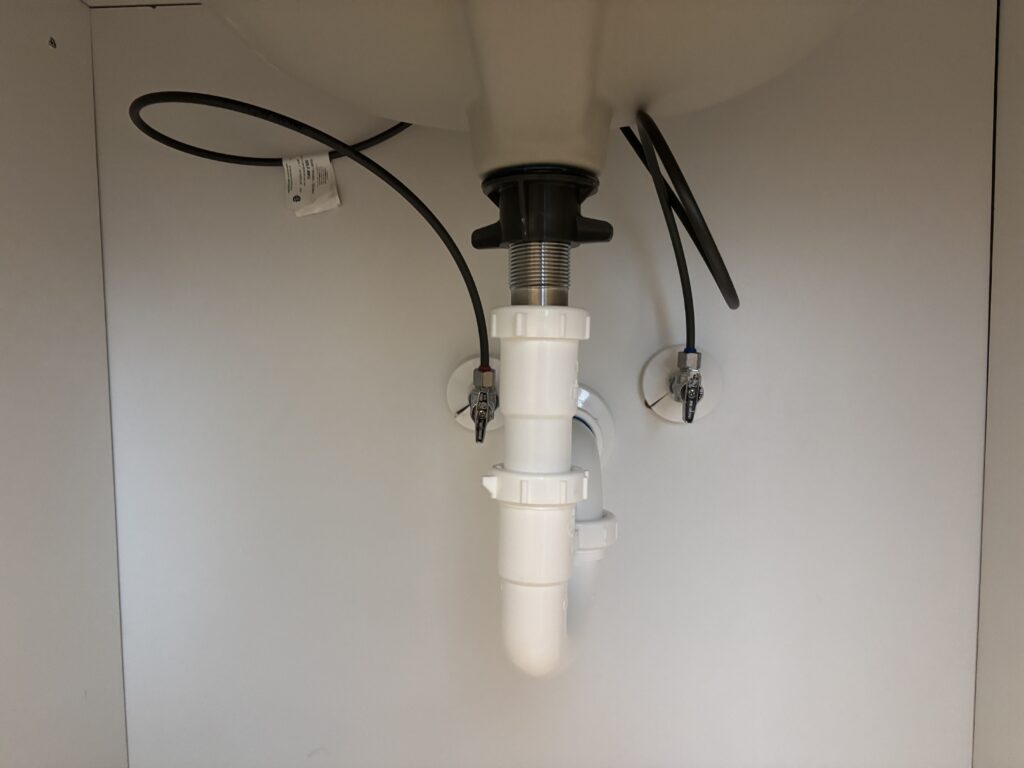
Most homes built in the last several decades have a dedicated shutoff valve inside the house for each outdoor faucet, and finding it now saves a frantic search later. Look on the interior side of the wall where the faucet is mounted, which often puts the valve in a basement ceiling, a garage wall, a utility closet, or the crawl space directly beneath the hose bib. The valve is usually a small quarter turn ball valve with a lever handle or an older multi turn gate valve with a round handle. Close it fully, then go outside and open the faucet handle to confirm that flow stops and the line drains. Tag each valve with a paper label or a piece of masking tape marked “front hose bib” or “back patio faucet” so anyone in the household can find it during an emergency. Older gate valves sometimes fail to seal completely after years of sitting untouched, and a small amount of seepage past a worn gate is enough to refill the line and defeat the whole effort. If the faucet keeps dripping steadily after the valve is closed, the valve itself needs replacement before winter.
Many of these interior valves are stop and waste valves, which include a small bleeder cap on the side of the body for draining the downstream line. Close the valve, open the outdoor faucet, then hold a small bucket or towel under the bleeder cap and loosen it a couple of turns. Air enters through the open spout outside, the trapped water runs out through the bleeder, and the line between the valve and the faucet ends up empty. Snug the cap back down when the dripping stops, but avoid overtightening a small brass cap into an old valve body. This one extra step removes the last pocket of water sitting inside the exterior wall, which is precisely where freeze damage tends to occur. Do this for every outdoor faucet on the house rather than assuming the two front and back lines behave the same way. Knowing the location of your main water shutoff is worth confirming during the same walkthrough, since a burst line inside a wall calls for shutting down the whole house quickly.
Some homes, especially older properties around Broken Arrow and midtown Tulsa, have no dedicated indoor shutoff for the exterior faucets at all. In that situation, the hose bib is fed directly off a branch line with no way to isolate it, which leaves the entire supply line vulnerable through the winter. The right fix is installing a proper stop and waste valve on the branch line, and a plumber can usually do that in a single visit with minimal disruption. Upgrading the hose bib itself to a quality frost free model at the same time gives you two layers of protection instead of one. Long runs of copper or galvanized pipe feeding those faucets through an unheated crawl space are also worth evaluating, since a line that already has corrosion or thin walls will not survive many more cold seasons. Need a shutoff valve or a new supply line for your outdoor faucet? Click here for our water supply line service. Handling this in early fall means the work happens on your schedule instead of during an ice storm.
Insulating Outdoor Faucets and Hose Bibs Before the First Freeze
Insulated faucet covers are inexpensive, and they buy meaningful protection once the faucet has been drained. The foam or hard shell domes sold at any hardware store slip over the hose bib and cinch against the siding with a cord or strap, trapping the small amount of heat that escapes from the wall. Pull the strap tight enough that the gasket seats flat against the exterior surface, because a cover hanging loose in the wind does very little. Covers work best on brick, lap siding, and stucco where the seal has a flat surface to press against, and a bead of removable caulk can close the gap on uneven surfaces. Treat the cover as a supplement rather than a solution, since a faucet full of water under an insulated cover will still freeze during a long stretch of single digit weather. Check the covers after storms and high winds, because a cover blown off in December is worthless. Keep the hose bib handle in the position you chose before installing the cover so you do not disturb it later.
Insulation on the supply line matters just as much as the cover on the faucet. Foam pipe sleeves sized to the outside diameter of your pipe slide over the line in the crawl space, garage, or basement and seal along the seam with the adhesive strip or with wraps of tape. Cut the sleeves so the ends butt together tightly at every joint rather than leaving bare sections at elbows and hangers, because a two inch gap of exposed copper becomes the freeze point for the entire run. Electric heat cable rated and listed for potable water lines is a reasonable addition for a chronically cold section, and it should be installed exactly as the manufacturer specifies, never overlapped on itself, and plugged into a grounded outlet with GFCI protection. Insulation over the top of properly installed heat cable improves its performance considerably. Avoid stuffing loose fiberglass batting around pipes and calling it done, because compressed and damp insulation loses most of its value. Inspect existing sleeves every fall, since sunlight, rodents, and time break foam down until it crumbles.
Air sealing is the quiet part of freeze protection that most homeowners never consider. Cold air pouring through an open crawl space vent, a gap at the rim joist, or an unsealed penetration where the faucet passes through the wall will chill a pipe faster than still air ever could. Close foundation vents in late fall if your crawl space design allows it, and seal the annular gap around the hose bib with exterior grade caulk or a small amount of expanding foam. Keep the garage door closed on cold nights when plumbing lines run through that space, and repair weatherstripping that no longer contacts the slab. Wind driven cold is the reason two identical houses on the same street can have completely different outcomes on the same night. A well sealed wall cavity keeps the pipe near indoor temperature instead of near outdoor temperature. Combining the cover, the sleeve, and the air seal gives an outdoor faucet a realistic chance of surviving even a severe Oklahoma cold snap.
Why Outdoor Faucets Freeze and Burst During the First Hard Freeze
Understanding the mechanism behind a freeze break helps explain why the preparation steps work and why shortcuts fail. Water is unusual among common liquids because it expands as it solidifies, gaining roughly nine percent in volume as it turns to ice. Inside a closed section of plumbing, that expansion creates enormous hydraulic pressure that travels through the remaining liquid water until it finds the weakest point in the assembly. The failure point is often several feet away from the actual ice blockage, which surprises homeowners who expect the damage to be right at the spout. Pipe material, water pressure, pipe age, and the length of the cold spell all influence where and when the failure occurs. The first hard freeze of the season causes more damage than colder nights later in winter simply because most homes have not been prepared yet. Knowing what happens inside the pipe makes the case for spending an hour on prevention in October.
How Freezing Water Breaks Outdoor Faucets and Hose Bibs
Ice does not form uniformly throughout a pipe, and that uneven formation is the root of the problem. Freezing starts at the coldest exposed point, usually right where the line passes through the exterior wall or where it runs closest to a vent opening. As that ice plug grows and seals off the passage, any water trapped between the plug and the closed faucet valve becomes a sealed container. Continued freezing inside that trapped section drives pressure upward until it can exceed the burst rating of the pipe, and residential supply lines are not designed to hold pressure at those levels. The metal or plastic splits along its weakest seam, and the split may only be a hairline crack an inch long. Nothing leaks while the ice remains in place, which is why so many failures reveal themselves during the thaw rather than during the freeze. That delay is exactly why homeowners often blame the warm weather instead of the cold night that actually caused the damage.
Pipe material changes the character of the failure without preventing it. Rigid copper tends to split lengthwise along the tube wall, and the split is usually clean, obvious, and easy to identify once the section is exposed. PEX has more elasticity and can sometimes stretch and recover from a mild freeze event, but its crimped or expanded fittings do not flex the same way, so the connection points become the failure points. Galvanized steel found in older Tulsa area homes is already narrowed by decades of internal corrosion, and thinned walls give way at threaded joints where the metal is thinnest. Brass hose bib bodies crack too, most often at the casting near the stem or right behind the mounting flange. Mixed material systems that were repaired over the years fail at the transition fittings more often than anywhere else. No common residential piping material is truly freeze proof, which is why draining and insulating remain the only reliable answers.
The real cost of a freeze break comes from the water that follows, not from the cracked pipe itself. A supply line under normal residential pressure can release several gallons every minute through even a modest split, and a break inside a wall runs unnoticed for hours. Water finds framing, insulation, subfloor, and drywall, and the resulting repair often involves demolition, drying equipment, mold remediation, and reconstruction. Crawl space breaks soak the ground beneath the house and create humidity problems that linger for months. A vacation, a workday, or a night of sleep is all the time a small crack needs to cause thousands of dollars in damage. Replacing a hose bib and adding a shutoff valve in the fall costs a tiny fraction of that. The math on freeze prevention has never been complicated.
Frost Free Outdoor Faucets Can Still Freeze Without Proper Preparation
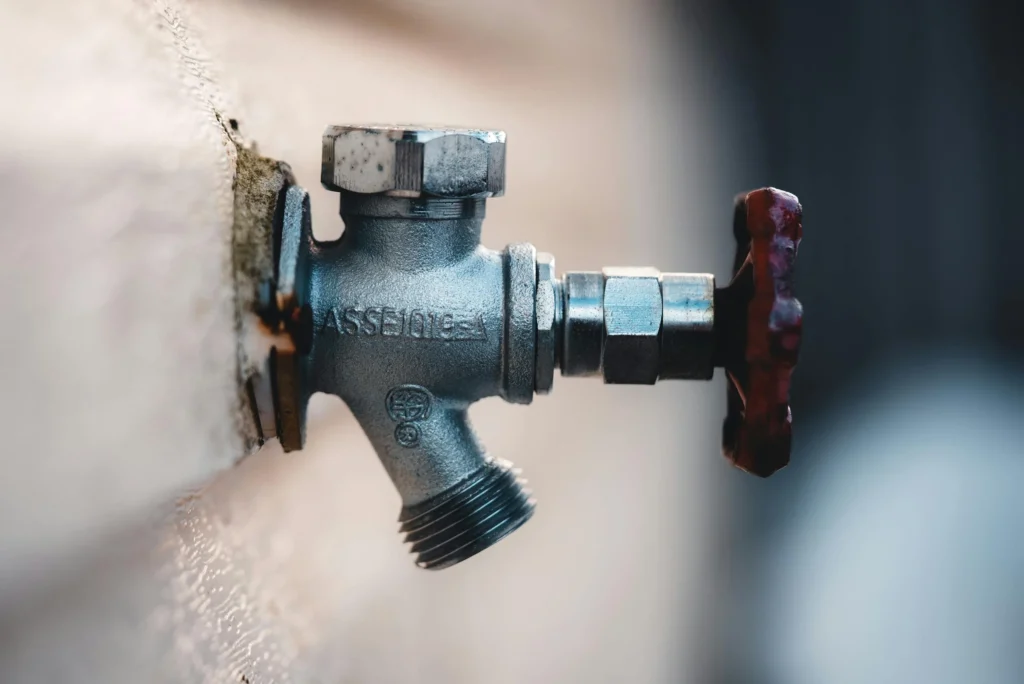
A frost free hose bib, sometimes called a frostproof sillcock, moves the shutoff mechanism deep inside the house instead of leaving it at the spout. The long stem extends eight, ten, or twelve inches back through the wall, and the actual valve seat sits at the far end where the temperature stays above freezing. When you close the handle, the water stops well inside the conditioned space and the tube in front of the seat drains forward and out through the spout. That design works well and has become standard on new construction throughout Oklahoma. The faucet must be installed with a slight downward pitch toward the outside so gravity can empty the tube completely. An installation that is level or pitched backward holds water in the tube every time it is used, which defeats the entire purpose.
Leaving a hose attached is the single most common way a frost free faucet gets destroyed. The connected hose blocks the drainage path, water stays in the long tube, and that water freezes and splits the tube inside the wall where nobody can see it. The faucet appears completely normal from outside, and the handle still turns freely. The following spring, the homeowner opens the faucet, water pours into the wall cavity through the split tube, and the leak only occurs while the faucet is on. Many people notice a wet spot in a basement or a stain on a ceiling and never connect it to the hose bib. That specific failure pattern is one of the most frequent calls plumbers take in March and April. Removing the hose every fall prevents it entirely.
It helps to know which style of faucet you actually have before you plan your winter prep. A standard hose bib has a short body, typically three to four inches from the wall to the handle, with the valve stem right at the spout. A frost free model has a noticeably longer body and a handle that sits farther out from the siding, and turning the handle produces a slight delay before water appears. Anti siphon vacuum breakers on top of the faucet also freeze and crack, and a broken vacuum breaker cap sprays water back at the wall every time the faucet runs. Worn packing nuts and stem washers should be addressed in the fall rather than left to weep through the winter, since a dripping faucet builds ice on the spout and around the foundation. If you are unsure what you have or the faucet already drips, a quick evaluation before cold weather settles in is time well spent. Correct installation, correct pitch, and no attached hose together make a frost free faucet genuinely reliable.
Warning Signs of a Frozen or Burst Outdoor Faucet and Supply Line
During a cold snap, the first clue is a faucet that produces nothing or only a weak trickle when the handle is opened. A supply line that flows normally in the evening and gives nothing the next morning almost certainly has an ice plug somewhere in the run. Reduced pressure at nearby indoor fixtures on the same branch line points to the same problem. Frost or condensation visible on an exposed section of pipe in the crawl space marks the cold spot directly. Do not force the handle open and closed repeatedly, and never apply an open flame or a propane torch to thaw a pipe, because that method starts house fires and can flash trapped water into steam. Safe thawing uses gentle, indirect heat from a hair dryer, a heat lamp at a safe distance, or warm towels applied to the pipe while the faucet stays open so melting water has somewhere to go.
After the thaw is when the evidence appears, and the signs are worth watching for closely. Look for damp or discolored drywall on the interior side of the wall behind the faucet, standing water or wet soil in the crawl space, a musty smell that was not there before, and a water bill that jumps without an explanation. A simple meter test tells you a great deal: shut off every fixture in the house, note the meter reading, wait an hour without using water, and check it again. Movement in that dial with everything closed means water is escaping somewhere in the system. Hidden leaks inside walls and under slabs need proper equipment to locate accurately instead of exploratory demolition. Suspect a hidden leak after a freeze? Click here for our leak detection service. Finding the break early keeps the repair small.
If you discover an active leak, shut off the water at the main valve immediately and leave it off until a plumber evaluates the damage. Move stored items away from the wet area, and photograph everything before cleanup begins in case an insurance claim follows. Resist the urge to close the faucet handle and hope the problem resolves itself, because a split line under pressure will keep releasing water into the structure. Electrical outlets, panels, and appliances near standing water create a genuine hazard, so keep away from them until the area is confirmed safe. Repairs made properly include replacing the damaged section, checking adjacent runs for stress cracks, and correcting the conditions that allowed the freeze. Sargents Plumbing & Drain answers emergency calls around the clock across Broken Arrow, Tulsa, Bixby, Jenks, Owasso, and the surrounding communities. Getting a professional on site quickly limits how far the water travels.
Why You Need a Professional to Prepare Outdoor Faucets Before the First Freeze
Plenty of freeze prep is genuinely do it yourself work, and pulling hoses and installing covers takes nothing more than a free afternoon. The parts that call for a licensed plumber are the ones involving valve replacement, pipe repair, faucet installation, and any situation where the existing plumbing is old, corroded, or poorly configured. A professional evaluation catches the problems that are invisible from the outside, such as a supply line with no isolation valve, a hose bib pitched the wrong direction, or a crawl space run that has been freezing quietly for years. Fall is the right time for that work because scheduling is open and the weather cooperates. Waiting until January means competing with every other emergency call in the metro during an ice event. A short visit now can prevent a very long day later.
Professional Outdoor Faucet Freeze Prep for Older Homes
Older houses across Broken Arrow and Tulsa often carry a mix of original galvanized piping, later copper repairs, and modern PEX additions, and every transition point in that mix is a potential winter failure. A plumber inspecting those systems looks for corrosion, undersized lines, poorly supported runs, missing insulation, and valves that no longer hold. Faucets installed decades ago frequently lack any interior shutoff, and adding one is straightforward work that pays for itself the first time a hard freeze arrives. Replacing brittle or leaking hose bibs with quality frost free models built for this climate removes a recurring source of trouble. Homes that have already suffered one freeze break usually have more weak points along the same run, since the whole section experienced the same conditions.
Whole system evaluation makes sense when problems keep repeating in the same area of the house. Repeated leaks, discolored water, low pressure, and pinhole failures in copper all suggest that spot repairs are no longer the economical answer. Repiping a section or an entire home replaces aging material with modern pipe routed in better protected locations, and it eliminates the guessing game about which joint fails next winter. That work is far more pleasant to schedule in mild fall weather than during an emergency in the middle of an ice storm. Dealing with aging pipes that keep failing? Click here for our repiping service. Sargents Plumbing & Drain backs repipes and fixtures with long term warranties, which gives homeowners real confidence in the result.
Crawl spaces and unheated garages deserve specific attention during any freeze prep visit. Lines running along a foundation wall near an open vent sit in moving cold air all winter, and no amount of foam sleeve compensates for a steady draft. A plumber can identify which runs need insulation, which need rerouting, and which would benefit from listed heat cable installed correctly. Small corrections such as sealing a rim joist gap or relocating a line eight inches inward change the outcome dramatically. Documenting the location of every shutoff valve during that visit gives your household a clear plan for the next emergency.
Emergency Repair When an Outdoor Faucet Freezes and Bursts
Freeze damage does not wait for business hours, and Oklahoma cold snaps have a habit of arriving on holiday weekends. Sargents Plumbing & Drain provides 24/7 emergency service, and there are no additional fees for emergency or weekend calls. That pricing policy matters at two in the morning when water is coming through a ceiling and you are deciding how long to wait. Fast response limits the spread of water into framing, insulation, flooring, and belongings. Every hour a break runs unchecked adds to the restoration bill.
Emergency repair on a frozen line involves more than patching the visible crack. A thorough repair locates the full extent of the damage, checks adjacent joints and fittings that experienced the same freeze, and confirms that pressure holds throughout the affected branch. Ice can stress a fitting without breaking it immediately, and a rushed patch sometimes leaves a second failure waiting a week out. Proper materials, correct support, and code compliant connections matter as much on an emergency call as on a planned installation. Restoring service safely is the goal, not simply stopping the water for the night.
The visit should also close the loop on prevention so the same failure does not repeat. That means installing an accessible shutoff valve, correcting pitch on a frost free faucet, insulating the exposed run, and walking the homeowner through the fall routine. Financing is available for larger repairs, which keeps an unexpected winter problem from becoming a financial emergency. Every repair comes with a clear explanation of what failed, what was replaced, and what to watch going forward. Homeowners who understand their own plumbing make better decisions during the next cold snap.
Why Choose Sargents Plumbing & Drain for Outdoor Faucet Freeze Prep
Sargents Plumbing & Drain is locally owned and built on honesty and hard work, and that shows up in straightforward pricing and clear communication on every job. We are licensed and insured, and our team is dedicated to always providing 5 star service to homeowners throughout the Tulsa metro. We offer 10% discounts for veterans, teachers, seniors, and more, because the people who serve this community deserve a break on their home repairs. Long term warranties back our repipes and fixtures, so the work we complete this fall is work you can count on for years. Our technicians explain the reasoning behind every recommendation instead of handing over a bill and driving away.
We serve Broken Arrow, Tulsa, Bixby, Jenks, Owasso, Sand Springs, Sapulpa, Glenpool, Coweta, Catoosa, Claremore, Collinsville, Verdigris, Wagoner, Kiefer, Turley, and Oakhurst. Our crews know how homes in this region are built, which crawl space configurations cause trouble, and where freeze breaks tend to appear in each neighborhood. That local experience shortens diagnosis time and produces repairs that fit the actual conditions of your house. Emergency and weekend calls carry no extra fees, and financing is available on larger projects. Scheduling early in the season means you get the appointment window you want.
Reach out before the first hard freeze rather than after it. Call Sargents Plumbing & Drain at (918) 380-5637, email info@sgtplumbing.com, or visit us at 605 W Oakland Pl, Broken Arrow, OK 74012. We will inspect your outdoor faucets, supply lines, and shutoff valves, then handle whatever needs attention before the temperature drops. A single afternoon of preparation protects your walls, your floors, and your winter. Let us help you get through the cold season without a single drop out of place.