Why Gas Line Safety Matters Before Heating Season
September in Broken Arrow means the first cool mornings are on the way, and that is exactly when gas appliances across Tulsa County come back to life after months of sitting idle. Your furnace, your gas water heater, and your gas fireplace have gone all summer without much demand placed on them, and the connections that feed them have been sitting through months of temperature swings, ground movement, and humidity. Gas line safety before heating season is not a formality; it is the single most important thing a homeowner can do between now and the first hard freeze. Natural gas leaks are quiet, they are gradual, and they often go unnoticed until the concentration reaches a level that becomes dangerous. The good news is that most gas line problems are detectable well before they become emergencies, and a licensed plumber can find them with the right equipment in a single visit. Sargents Plumbing & Drain works on gas lines throughout Broken Arrow, Tulsa, Bixby, Jenks, and Owasso, and we see the same preventable issues every fall. Getting ahead of them now costs a fraction of what an emergency call costs in January. This guide walks through what actually goes wrong with residential gas lines, how to recognize the warning signs, and what a professional inspection covers before heating season starts.
What Gas Line Safety Problems Show Up Before Heating Season
The majority of gas line issues we find in early fall trace back to three things: corrosion, ground movement, and connections that were never properly sealed in the first place. Oklahoma soil expands and contracts dramatically between wet springs and dry summers, and that movement puts steady stress on buried gas piping and the fittings at every transition point. Older homes in Broken Arrow and midtown Tulsa often still have black iron pipe running through crawl spaces and along foundation walls, and that pipe corrodes from the outside in when it stays damp. Appliance connectors are another frequent culprit, especially the flexible connectors behind ranges and dryers that get bent or stressed when the appliance is pulled out for cleaning. None of these problems announce themselves. They develop slowly, they leak slowly, and they get worse the moment demand on the line increases when the furnace kicks on for the first time in months. Understanding what to look for is the first step toward keeping your household safe through the heating season.
Common Gas Line Safety Issues Found in Oklahoma Homes
Corrosion is the most common gas line safety problem we encounter in this region, and it happens for reasons that have nothing to do with how well a homeowner maintains their property. Black iron pipe is the standard material for residential gas distribution inside a home, and it holds up extremely well when it stays dry. The trouble starts in crawl spaces, under slab penetrations, and anywhere a line passes through an exterior wall where condensation collects. Moisture sits against the pipe, rust forms, and over a period of years that rust eats into the wall thickness until a pinhole develops. A pinhole leak in a gas line does not spray or hiss the way a water leak does; it releases a small, steady volume of natural gas that disperses into the surrounding air. In a ventilated crawl space that gas may never reach a dangerous concentration, but in an enclosed basement, utility closet, or attic it accumulates. We find these leaks with combustible gas detectors during inspections, and the fix is usually a section replacement rather than a full repipe.
Ground movement is the second major contributor, and it affects the buried portion of the gas service line between the meter and the house as well as any lines running to detached garages, pool heaters, or outdoor grills. Broken Arrow sits on expansive clay soil that swells when saturated and shrinks hard during dry stretches. That cycle applies bending force to buried pipe and to the threaded joints where sections connect. Over enough seasons, a joint that was gas-tight when installed can loosen just enough to weep. Homeowners sometimes notice a faint gas odor near an outdoor line or around the meter and assume it is coming from a neighbor’s grill or from the utility itself. It is worth taking seriously every time. Buried gas line repair requires proper permitting and pressure testing, and it is not a job for a handyman or a general contractor without a gas license.
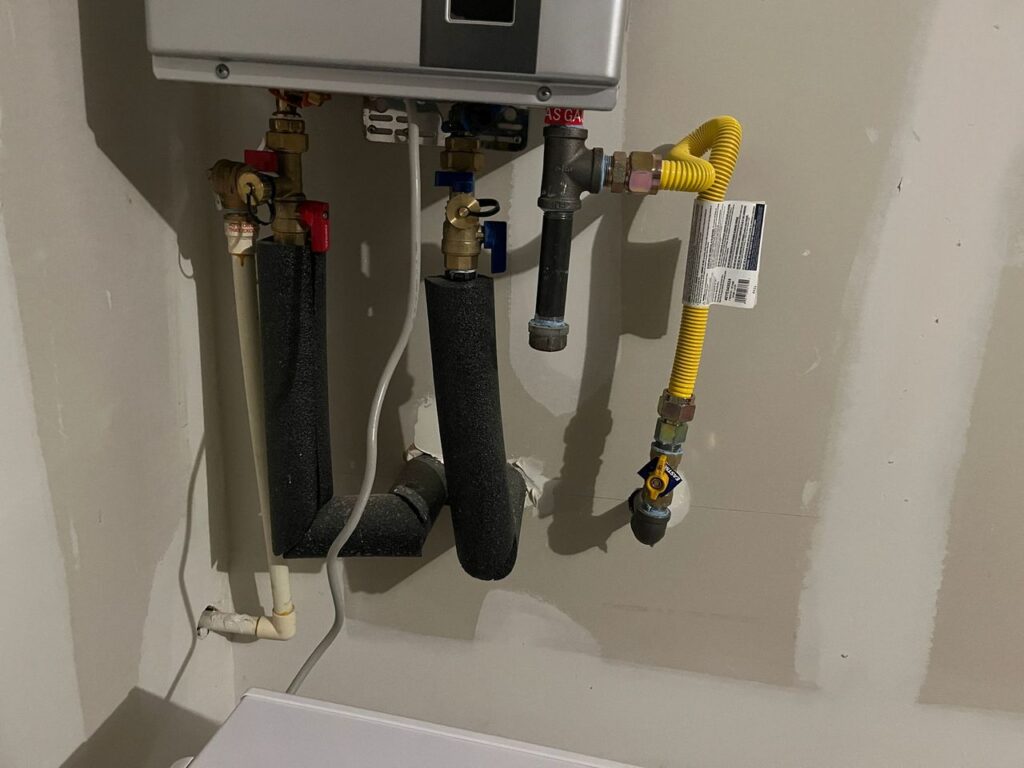
Improper past work is the third category, and it shows up more often than most homeowners would expect. We regularly find gas lines that were extended by someone without a license when a homeowner added a gas range, a tankless water heater, or an outdoor firepit. The common mistakes include using the wrong pipe dope or thread sealant, undersizing the line for the total appliance load, failing to install a sediment trap ahead of an appliance, and leaving unused capped stubs that were never pressure tested. An undersized line is a particularly sneaky problem because it does not leak at all; it simply cannot deliver enough gas volume when multiple appliances run at once. That causes a furnace to short cycle, a water heater to underperform, and burners to run with a lazy yellow flame instead of a crisp blue one. Incomplete combustion produces carbon monoxide, which makes an undersized gas line a genuine safety issue rather than just a performance complaint. If you have added any gas appliance since you bought your home, that work deserves a professional look before you rely on it all winter. Need a gas line repaired or inspected before the cold sets in? Click here for our gas line repair service.
Warning Signs of a Gas Line Safety Problem in Your Home
The rotten egg smell most people associate with natural gas comes from mercaptan, an odorant the utility adds specifically so that leaks can be detected by smell. If you catch that odor anywhere in or around your home, treat it as an emergency without exception. Do not flip light switches, do not use your phone inside the house, and do not try to locate the source yourself. Get everyone outside, call the gas utility from a safe distance, and then call a licensed plumber for repair once the utility has secured the line. That sequence matters because the odorant can fade in concentration as gas travels through soil, meaning a strong smell indoors may indicate a leak that has been feeding for some time. Some people also have a reduced ability to detect mercaptan, which is why relying on smell alone is not a complete safety strategy.
Physical signs around the property often show up before anyone smells anything. Dead or yellowing grass in a line that runs from the meter toward the house is a classic indicator of a buried gas leak, because escaping gas displaces oxygen in the root zone and kills vegetation in a narrow band. Bubbling in standing water or in a puddle after rain over the line path is another sign worth reporting. Inside the home, look at the burner flames on any gas appliance you can see. A healthy natural gas flame burns blue with a small, crisp cone; flames that are yellow, orange, or lazy indicate incomplete combustion. Soot marks around a furnace cabinet, a water heater draft hood, or a fireplace surround point to the same problem. Excessive condensation on windows in a room with a gas appliance can also signal a venting or combustion issue that needs attention.
Physical symptoms in the household deserve equal attention, and they are frequently mistaken for seasonal illness. Headaches, dizziness, nausea, fatigue, and a general foggy feeling that improves when you leave the house and returns when you come back are consistent with low-level carbon monoxide exposure. Because heating season is also cold and flu season, families often write these symptoms off for weeks. Pets acting lethargic or unwell at the same time is a meaningful clue, since animals often show effects sooner. Every home with gas appliances should have working carbon monoxide detectors on each floor and near sleeping areas, tested at the start of heating season and battery-replaced annually. A detector is a last line of defense, not a substitute for a properly maintained gas system, but it buys time that nothing else can. If anyone in your household is showing these symptoms, get outside first and make the calls second.
How Gas Line Safety Connects to Your Water Heater and Furnace
Your gas water heater and your furnace share the same distribution system, which means a problem in one part of that system affects the others. When the furnace fires up for the first time in October, it places a demand on the gas line that has not existed since the previous winter. If the line is marginal, undersized, or partially obstructed, that added demand can starve the water heater at the same moment. Homeowners often notice this as lukewarm showers that started right around the time the heat came on, and they blame the water heater without realizing the two systems are connected. A pressure test and a load calculation tell us quickly whether the supply line can handle the total appliance demand. In older Broken Arrow homes where a furnace was upgraded or a tankless unit was added without recalculating the line size, this is a common finding.
Venting is the other shared concern between these appliances, and it directly determines whether combustion byproducts leave the house. A gas water heater with an atmospheric vent relies on natural draft to carry exhaust up the flue, and that draft can be disrupted by a blocked chimney, a bird nest, a disconnected vent connector, or negative pressure created by a powerful kitchen exhaust fan. When draft fails, exhaust spills into the living space. We check for backdrafting during water heater inspections by watching how the draft hood behaves during firing. Rust flaking around the top of a water heater, a scorched or discolored draft hood, or a sooty smell when the burner runs are all signs that exhaust is not going where it should. Want to make sure your water heater is safe and ready for winter? Click here for our water heater inspection service.
The sediment trap, sometimes called a drip leg, is a small detail with real consequences for both appliances. It is a short capped section of pipe installed vertically below the gas line just before it enters the appliance, and its job is to catch moisture, scale, and debris that travel through the line before those particles reach the burner or the gas valve. Code requires them on most appliance connections, but we find them missing constantly, particularly on installations done by non-licensed installers. Without a sediment trap, debris ends up in the gas valve, where it causes erratic firing, delayed ignition, and eventually valve failure. Delayed ignition means unburned gas accumulates in the burner chamber before it lights, and the resulting rollout can damage the appliance and create a fire hazard. Adding a sediment trap during a fall inspection is inexpensive and takes minutes. It is one of the clearest examples of how a small gas line detail protects a much more expensive piece of equipment.
What a Professional Gas Line Safety Inspection Covers Before Heating Season
A proper gas line inspection is a systematic process, not a walk-through with a sniffer. A licensed plumber starts at the meter and works through every section of pipe, every fitting, every shutoff valve, and every appliance connection in the home. The goal is to verify that the system holds pressure, delivers adequate volume to every appliance under full load, and vents combustion products safely to the outdoors. This kind of inspection takes time to do correctly, and it produces a clear picture of what needs attention now versus what should be monitored. Scheduling it in September or early October means any repairs get done before the first cold snap creates a backlog of emergency calls. Here is what that inspection involves and why each step matters.
The Gas Line Safety Pressure Test and Leak Detection Process
Pressure testing is the foundation of any gas line safety inspection because it detects leaks that are too small to smell. The process involves isolating a section of the gas system, introducing air or inert gas at a specified test pressure, and monitoring a calibrated gauge over a set period of time. A system that holds pressure without any drop is tight. A system that loses pressure has a leak somewhere, and the next step is locating it. This method catches pinhole leaks and weeping joints long before they release enough gas to be noticeable, which is exactly the point of doing it preventively rather than reactively.
Once a pressure drop indicates a leak, locating it requires the right tools rather than guesswork. Electronic combustible gas detectors sample the air along the pipe run and register the presence of methane at very low concentrations, which lets us narrow the search quickly even inside walls and crawl spaces. Bubble solution applied to threaded joints and connections confirms the exact location visually. For buried lines, we may need to trace the line path and test at intervals to isolate the section. This staged approach is far more efficient than opening walls or excavating on a hunch, and it keeps the repair scope as small as possible. In most cases we can pinpoint a leak to a specific fitting or a specific length of pipe.
Repair follows the same standard regardless of where the leak is found. Damaged sections get cut out and replaced with new pipe of the correct material and size, joints get made up with approved sealant rated for gas service, and the repaired section gets pressure tested again before the system is returned to service. Permits and inspections apply to gas work in Broken Arrow and throughout Tulsa County, and a licensed plumber handles that process as part of the job. Skipping permits on gas work creates problems at resale and voids insurance coverage in the event of an incident. It also means nobody independently verified that the repair was done correctly. Suspect a leak somewhere in your system? Click here for our leak detection service.
The Gas Line Safety Appliance and Connection Checklist
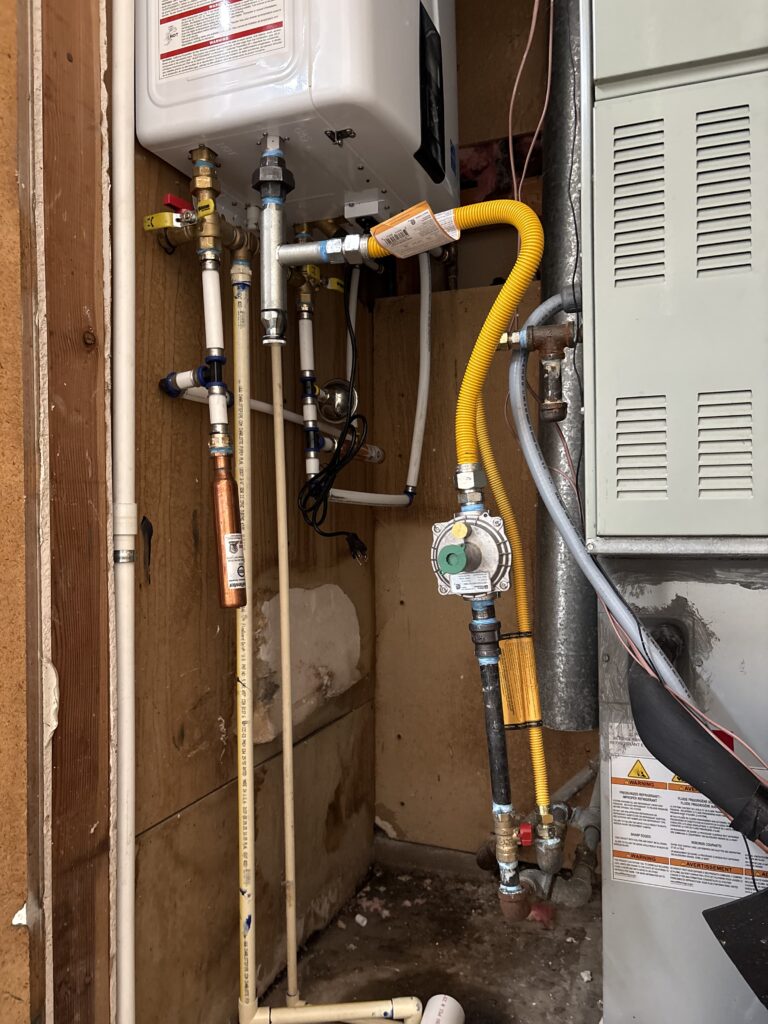
Every gas appliance in the home gets checked individually during a full inspection, starting with the shutoff valve. Each appliance should have its own accessible shutoff within six feet, and that valve should turn freely rather than being seized with corrosion. A frozen shutoff valve is a serious problem in an emergency because it prevents anyone from isolating a single appliance quickly. We also verify that the main shutoff at the meter is accessible and that the homeowner knows where it is and how to operate it. Flexible appliance connectors get examined for kinks, corrosion, and age, since older uncoated brass connectors have a known failure history and should be replaced when found.
Combustion quality is the next item, and it tells us how well each appliance is actually burning fuel. We observe flame characteristics during firing, looking for the steady blue flame that indicates complete combustion. Yellow tipping, flame lifting off the burner, or flames that roll out of the burner compartment all point to problems with gas pressure, air supply, or burner condition. Dirty burners are common on furnaces and water heaters that have gone several seasons without service, and cleaning them restores proper combustion. We also check that the appliance has adequate combustion air, which matters in tightly sealed utility closets and in homes that have been aggressively air sealed without adding a combustion air source.
Venting inspection closes out the appliance checklist and is arguably the most important safety step of the visit. We verify that vent connectors are properly sized, correctly pitched upward toward the chimney or vent terminal, securely fastened, and free of holes or separations. Shared vents serving both a furnace and a water heater get particular scrutiny, since a furnace upgrade to a high efficiency model often leaves an orphaned water heater venting into a chimney that is now oversized for it. That situation causes condensation, chimney deterioration, and poor draft. We check the vent termination outside for blockage from nests, debris, or in winter from snow and ice. Every one of these checks exists because combustion byproducts are only safe when they leave the building completely.
Gas Line Safety Steps Homeowners Can Handle Themselves
There is real value in what a homeowner can do without any tools, starting with learning the layout of your own gas system. Find your gas meter, locate the main shutoff valve, and know which direction turns it off; a quarter turn so the valve is perpendicular to the pipe closes it. Keep a wrench that fits that valve somewhere accessible, and make sure more than one adult in the household knows where it is. Walk through and find the individual shutoff valves for your furnace, water heater, range, dryer, and fireplace. This takes fifteen minutes once and pays off enormously in a situation where seconds matter.
Keeping the area around gas appliances clear is the next homeowner responsibility, and it addresses a surprisingly common cause of problems. Storage stacked around a furnace or water heater restricts combustion air, blocks access for service, and creates a fire risk when flammable materials sit too close to a burner. Paint, solvents, gasoline, aerosols, and cleaning chemicals should never be stored in the same space as a gas appliance, because their vapors can be drawn into the combustion chamber. Give every gas appliance a clear working space on all sides. Check that furnace and water heater areas are free of dust and lint buildup, which is especially heavy in homes where the laundry shares the utility space.
Testing your carbon monoxide detectors and replacing their batteries should go on the calendar at the same time you schedule your fall service. Detectors have a service life of five to ten years depending on the model, and an expired detector provides false confidence rather than protection. Check the manufacture date on the back and replace any unit past its rated life. Never attempt to repair a gas line, replace an appliance connector, or extend gas piping yourself; that work requires a license in Oklahoma for reasons that become obvious the first time you see the aftermath of a bad DIY connection. Your job as a homeowner is recognition and prevention, and a professional handles anything involving the pipe itself.
Why You Need Gas Line Safety Service Before Heating Season Starts
Waiting until something goes wrong with a gas line is the most expensive and most dangerous approach a homeowner can take. Once the temperature drops and every furnace in Tulsa County fires up at once, plumbers and HVAC contractors run flat out and emergency scheduling becomes the only option available. A gas line inspection scheduled in September costs a predictable amount and happens on your timeline. The same problem discovered in January costs more, arrives with less flexibility, and may leave your household without heat or hot water while it gets resolved. Preventive gas line safety service is one of the few home maintenance items where the safety argument and the financial argument point in exactly the same direction. Sargents Plumbing & Drain handles gas line inspection, repair, and installation across Broken Arrow and the surrounding communities, and fall is the right time to get on the schedule.
Scheduling Gas Line Safety Service at the Right Time
Early fall is the ideal window for gas line work because it sits between the summer slow season and the winter rush. Contractors have availability, parts are in stock, and there is time to complete any repair properly rather than patching something to get through the night. If your inspection turns up an undersized line or a section that needs replacement, that work can be scheduled and permitted without pressure. Homeowners who wait often end up choosing between an expensive emergency repair and going without heat, and neither option is good.
Combining gas line service with other fall plumbing maintenance makes efficient use of a single visit. A water heater inspection, a check on outdoor faucets before freezing weather, and a look at any exposed piping in crawl spaces all fit naturally alongside a gas line check. Bundling these tasks reduces the number of appointments you need to schedule and gives you one clear picture of your plumbing system heading into winter. It also means our technician can spot connections between issues that would be easy to miss in isolated visits.
Homes that have recently changed hands deserve particular attention before the first heating season under new ownership. A standard home inspection during a real estate transaction does not include a gas line pressure test, and inspectors are limited to visual observation. That leaves plenty of room for problems to go unreported. If you bought a home in Broken Arrow, Bixby, or Owasso this year, a gas line inspection before winter gives you information the purchase process did not provide. It is a small investment relative to the value of knowing your system is sound.
What Gas Line Safety Service Protects in Your Home
The obvious protection is against fire and explosion, and that alone justifies the service. Natural gas becomes explosive at concentrations between roughly five and fifteen percent in air, and reaching that range inside an enclosed space requires only a modest leak and enough time. Ignition sources are everywhere in a home, from a furnace igniter to a light switch to a static discharge. Eliminating leaks eliminates the possibility entirely, which is a far better position than relying on detection and quick response.
Carbon monoxide protection is the second and less visible benefit. CO is colorless, odorless, and produced whenever gas burns incompletely or exhaust fails to vent properly. It causes hundreds of deaths and thousands of emergency room visits nationally every year, with the majority occurring during heating season. A gas line and combustion inspection addresses the root causes rather than waiting for a detector to alarm. Proper gas pressure, clean burners, adequate combustion air, and sound venting together make CO production and accumulation extremely unlikely.
Equipment protection rounds out the value, and it shows up on the financial side rather than the safety side. Appliances that receive correct gas pressure through clean, properly sized lines run efficiently and last longer than appliances fighting inadequate supply. A furnace that short cycles from gas starvation wears through igniters, control boards, and heat exchangers faster than one running normally. The same holds for water heaters, where poor combustion accelerates tank corrosion and burner failure. Planning a remodel or adding a gas appliance? Click here for our gas line installation service.
Why Choose Sargents Plumbing & Drain for Gas Line Safety Service
Sargents Plumbing & Drain is locally owned and operated out of Broken Arrow, and gas line work is something we treat with the seriousness it deserves. Our plumbers are licensed and insured, and every gas job we perform is pressure tested and permitted according to code. We do not cut corners on gas work, because there is no version of a shortcut on a fuel line that ends well for anybody. When we tell you something needs repair, we show you why and explain what happens if it waits.
We built this company on honesty and hard work, and that shows up in how we quote and how we communicate. There are no additional fees for emergency or weekend calls, which means a gas smell at nine on a Saturday night gets the same pricing as a Tuesday morning appointment. We offer ten percent discounts for veterans, teachers, seniors, and more, and financing is available for larger repairs and repipes. Our work on repipes and fixtures is backed by long-term warranties, so you are not left wondering what happens if something fails a year from now.
Our service area covers Broken Arrow, Tulsa, Bixby, Jenks, Owasso, Coweta, Catoosa, Claremore, Collinsville, Glenpool, Sand Springs, Sapulpa, and the surrounding communities, with 24/7 emergency availability across all of them. Call us at (918) 380-5637 or email info@sgtplumbing.com to get your gas line inspection scheduled before the first cold front arrives. We are dedicated to always providing five star service, and that standard applies to a routine fall inspection exactly as much as it does to a middle of the night emergency. Get it handled now while the weather is still on your side.