Signs Your Home Needs a New Water Supply Line
The water supply line is the single buried pipe that carries potable water from the city meter or your well into the house, and every faucet, shower, toilet, washing machine, and water heater in the home depends on it working correctly. When that pipe starts to fail, the symptoms usually arrive slowly rather than all at once, which is why so many homeowners spend money replacing faucet cartridges and showerheads before anyone thinks to look at the line under the front yard. Pressure fades a little each year until two showers at the same time feel impossible. Cold water at every tap runs cloudy or rusty first thing in the morning. A narrow strip of grass stays bright green through a dry Oklahoma September while the rest of the lawn goes dormant and brown. Early fall is the smartest window to deal with all of this, because the ground is still workable, the crews are not fighting frozen soil, and you get the repair finished well before the first hard freeze arrives in the Broken Arrow and Tulsa area. This guide covers the warning signs that point to a failing supply line, the reasons those failures happen here in Green Country, and what a professional replacement actually involves from the first pressure reading to the final inspection.
Common Signs Your Home Needs a New Water Supply Line
Most failing supply lines announce themselves in three ways: pressure and flow problems, water quality problems, and moisture showing up where it does not belong. None of those signs is proof on its own, since a single clogged aerator or a failing water heater can imitate one of them. The pattern matters more than any single symptom. When a problem shows up at every cold water fixture in the house at the same time, the cause is almost always upstream of the fixtures themselves, which points straight at the service line, the meter, or the main shutoff. Homeowners who catch these signs early usually get to schedule the work on a calm weekday instead of calling for emergency service after a line ruptures under the driveway. The sections below break down each category of warning sign and explain how a licensed plumber tells them apart.
Low Water Pressure Signs Your Home Needs a New Water Supply Line
Healthy residential water pressure in most Oklahoma neighborhoods sits somewhere between 40 and 80 psi measured at an outside hose bib with a simple gauge, and anything above 80 psi calls for a pressure reducing valve under plumbing code. A failing supply line pulls that number down, or it leaves the static pressure looking acceptable while the volume of water actually delivered collapses the moment two fixtures open at once. That distinction between pressure and flow trips up a lot of people, so it is worth understanding. Pressure is the force sitting in the pipe when nothing is running; flow is how many gallons per minute the pipe can actually push into the house. A corroded galvanized service line can hold a decent static reading and still deliver a fraction of the volume it did when it was installed, because the restriction only reveals itself under demand. If your shower turns weak the second someone starts the dishwasher, flow is the problem, and flow problems trace back to the diameter and condition of the pipe feeding the house.
Galvanized steel is the usual culprit in older homes across Broken Arrow, Turley, and the established parts of Tulsa. Over decades, the zinc coating inside the pipe wears away and iron oxide builds into rough, layered deposits called tuberculation, which narrow the opening the same way plaque narrows an artery. A pipe with a nominal one inch opening can end up passing water through a channel closer to a quarter inch. Polybutylene lines from the late 1970s through the mid 1990s cause a different version of the same headache, since the gray plastic itself degrades on contact with chlorinated municipal water and the fittings tend to fail before the pipe does. Undersized lines create trouble too, especially when a home has been remodeled and now runs two full bathrooms, a laundry room, and an irrigation system through a half inch service that was sized for a much smaller house. In every one of these cases, cleaning fixtures and swapping valves changes nothing, because the bottleneck is buried in the yard.
Before assuming the worst, a good plumber rules out the simple explanations, and that troubleshooting sequence is worth knowing. The meter valve or the main shutoff can sit partly closed after previous work, which starves the whole house instantly. A failing pressure reducing valve can drift down over time and drop the entire system to 25 or 30 psi. The city itself occasionally reduces pressure in a neighborhood during main work, so a quick call to the utility or a conversation with a neighbor settles that question fast. We measure static pressure at the hose bib, then measure again with fixtures running to see how far the number falls, and we compare readings taken before and after the meter to isolate the section causing the restriction. When the numbers show that the loss happens between the meter and the house, the service line is the problem, and replacement is the only permanent fix. Losing pressure across the whole house? Click here for our water supply line services and we will get an accurate reading before you spend money on anything else.
Rusty or Discolored Water Signs Your Home Needs a New Water Supply Line
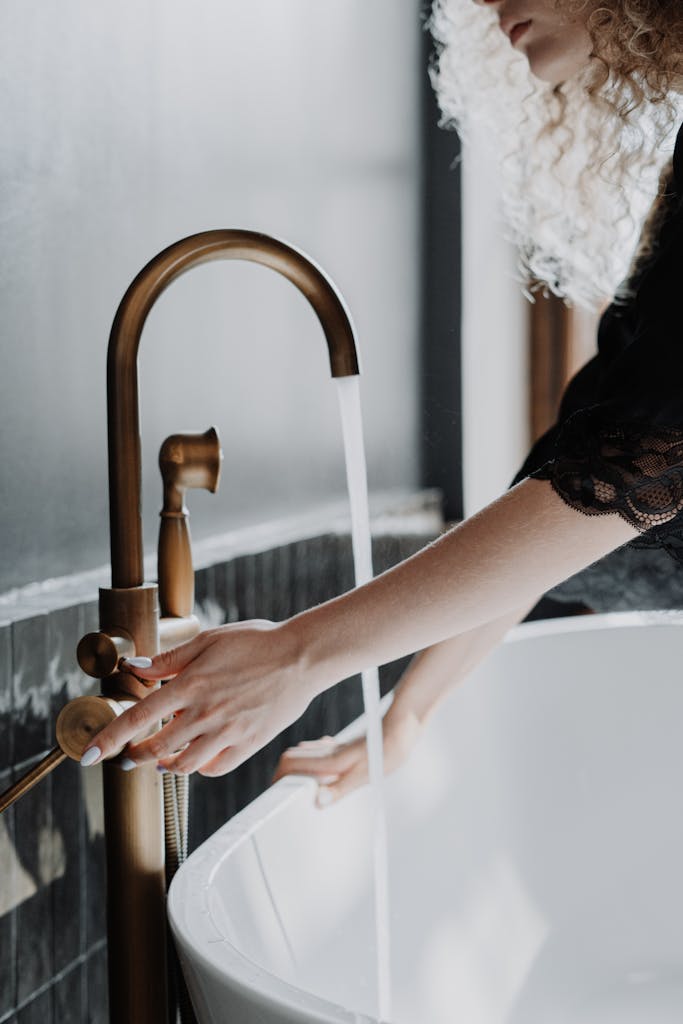
Discolored water is one of the clearest signals that a supply line has reached the end of its service life, but the color and the timing tell you where the trouble sits. Brown, yellow, or reddish water at every cold tap in the house points to iron corrosion in the service line or in the city main feeding your street. Discoloration that shows up only on the hot side almost always means the water heater tank is shedding sediment and rust, which is a separate repair with a separate solution. Water that runs dirty for the first thirty seconds each morning and then clears up is a classic sign of scale flaking loose inside a corroded pipe overnight when demand stops and the deposits settle. Cloudy white water is usually just dissolved air and clears from the bottom of the glass upward, so that one is harmless. A metallic taste, orange staining in toilet bowls and tubs, and rust colored streaks on white laundry all reinforce the same conclusion when they arrive together.
Galvanized steel corrodes from the inside out, and by the time the color reaches your glass, the interior of that pipe is rough, restricted, and thinning. Copper service lines fail differently, developing pinhole leaks in soil that is aggressive or acidic, and the water may show faint blue green staining around fixtures before any leak becomes obvious. Homes built before 1986 sometimes still have lead solder at joints or a lead gooseneck connection at the municipal main, and that is a real health concern rather than a cosmetic one, which is why full replacement with modern material is the recommended answer rather than patching. Replacement lines today are usually high density polyethylene pulled through a bore, Type K copper, or rated PEX tubing, all of which resist corrosion far better than what they replace. Any of those options will restore both the color and the taste of the water coming into the house. A plumber can also pull a sample and check for iron content when the source of the discoloration is not obvious from the symptoms alone.
Filtration deserves an honest mention here, because it treats the symptom without touching the cause. A whole home filter will absolutely catch rust particles and sediment before they reach your fixtures, and many families in Coweta, Owasso, and Bixby run one for taste and hardness reasons regardless of pipe condition. What a filter cannot do is restore the flow you lost to a restricted pipe, stop a corroded line from leaking underground, or remove the risk that comes with old lead containing connections. The right sequence is to replace the failing line first and then add treatment to handle the water chemistry itself. Doing it in that order means you are not repeatedly clogging expensive filter cartridges with debris shed by a pipe that is already on its way out. Interested in better tasting water once the line is replaced? Click here for our water filtration system services and we will size a system that fits your household.
Wet Yard and High Bills Sign Your Home Needs a New Water Supply Line
A leaking supply line pushes treated water into your yard around the clock at full system pressure, and the evidence usually surfaces before the failure becomes catastrophic. Look for a soft or spongy patch of ground along the path from the meter to the house, standing water with no rain to explain it, or one strip of grass that stays vivid and lush while everything around it dries out in late summer heat. Gravel driveways sometimes develop a persistent damp streak, and concrete may show a dark line that never fully dries. In more serious cases the soil washes out beneath a walkway or slab and creates a depression or a crack that seems to appear overnight. Some homeowners hear a faint hiss or a running water sound near the main shutoff when every fixture in the house is closed. Any of these findings deserves attention that same week rather than next season.
The water meter gives you a reliable way to confirm a leak without any special tools. Turn off every fixture and appliance that uses water, including ice makers and irrigation, then find the small triangular or gear shaped leak indicator on the meter face and watch it for several minutes. Movement with everything shut off means water is escaping somewhere between the meter and your fixtures. To narrow it down further, close the main shutoff valve at the house and check the meter again; continued movement puts the leak in the buried service line, while a stopped indicator puts it inside the home. Your water bill supports the same conclusion when it climbs by thirty or fifty percent with no change in how the household uses water. Compare the current bill to the same month last year, since seasonal irrigation can explain an increase that has nothing to do with a leak.
Underground leaks rarely stay small, and that is the practical reason not to wait through the fall and into winter. Escaping water erodes the bedding around the pipe, which increases movement and stress at the weak point until the small seep becomes a full break. Saturated soil against a foundation causes its own expensive problems in the clay heavy ground common throughout the Tulsa metro, including slab movement and cracking. Water traveling along the outside of a pipe can also find its way into a crawl space or a basement wall, where it feeds mold long before anyone notices the moisture. Professional leak detection uses acoustic listening equipment, pressure testing, and tracer gas to pinpoint the failure without digging up the entire yard on a guess. Not sure where the water is going? Click here for our leak detection services and we will locate the source before it undermines your foundation.
What Causes a Water Supply Line to Fail
Supply lines fail for reasons that have very little to do with how carefully a family uses water. Material choice, soil behavior, water chemistry, and system pressure do the damage over years and decades. Understanding which factor is driving the failure matters, because it determines what the replacement line should be made of and how it should be installed. A home that lost a copper line to aggressive soil needs a different answer than a home with a chlorine damaged polybutylene line. Age alone is a strong predictor as well, since most service line materials have a fairly well documented lifespan. The three sections below cover the causes we see most often in homes around Broken Arrow, Jenks, Sand Springs, and Claremore.
Old Pipe Materials That Cause a Water Supply Line to Fail
Galvanized steel dominated residential construction from roughly the 1930s into the 1960s, and it generally delivers somewhere between 40 and 70 years of service before internal corrosion makes it useless. If your home dates to that era and still has its original service line, you are living on borrowed time no matter how the water looks today. Polybutylene arrived in the late 1970s as an inexpensive alternative and was installed widely until the mid 1990s, and it earned a bad reputation for good reason. The gray plastic reacts with the chlorine and chloramine used in municipal disinfection, which makes the pipe wall brittle and prone to sudden splitting. Failures often start at the fittings, especially the acetal plastic insert fittings used in early installations. Many insurance carriers now ask about polybutylene directly, and some homeowners find out they have it only when a claim gets complicated.
Copper has a far better track record, and Type K copper remains an excellent underground material when the soil supports it. Thinner wall copper installed underground, or copper run through soil with high chloride content or low pH, can develop pinhole leaks in twenty or thirty years instead of fifty. Original installation quality plays a large role too. A line laid directly on rocky fill rather than clean sand bedding gets abraded every time the soil shifts, and a joint made under a house rather than in an accessible location becomes a permanent liability. Undersized service lines are their own category of failure, because the pipe may be perfectly sound while still being incapable of supplying a home that has added bathrooms, a second water heater, or an irrigation system since it was built.
Modern replacement work uses materials chosen specifically to outlast the ones that failed. High density polyethylene comes in a continuous coil with no underground joints in the run, which removes the most common leak point entirely and makes it ideal for trenchless installation. Type K copper suits shorter runs and situations where a homeowner prefers metal. Rated PEX tubing works well in many applications and handles freezing conditions better than rigid pipe, since it can expand slightly instead of splitting outright. Sizing gets calculated based on fixture count, available city pressure, and the length of the run, rather than simply matching what was there before. When several interior lines show the same corrosion as the service line, replacing the whole system at once usually costs less than replacing it in pieces over five years. Seeing corrosion on your indoor pipes too? Click here for our repiping services and we will map out the full scope before any work begins.
Oklahoma Soil and Weather That Cause a Water Supply Line to Fail
The expansive clay soil under most of northeastern Oklahoma is hard on anything buried in it. Clay swells when it takes on water and shrinks as it dries, and that cycle repeats every year between spring storms and late summer drought. A rigid pipe held in shifting soil gets bent, stretched, and stressed at every fitting until something gives. Long dry stretches like the ones we see in August and September pull moisture out of the ground and open gaps that let the pipe sag and flex. When heavy fall rain finally arrives, the clay swells back and pushes against the line from a new direction. Older joints and corroded sections rarely survive many rounds of that treatment.
Freezing weather causes a different kind of damage, and Oklahoma winters produce exactly the conditions that expose shallow lines. Service lines should be buried below the local frost depth with adequate cover, but lines installed decades ago, lines disturbed by later landscaping, and lines running under unheated crawl spaces or through exterior walls often sit shallower than they should. Water expands as it freezes, and a plug of ice in a confined pipe generates enough pressure to split copper or crack a fitting. The break frequently goes unnoticed until the thaw, when water starts moving again and floods the space around it. Yard hydrants and irrigation connections tied into the service line create additional freeze vulnerable points. This is the practical reason to handle a suspect line in September or October rather than waiting for January.
Physical disturbance rounds out the list. Tree roots do not usually puncture a pressurized supply line the way they invade a sewer, but a growing root mass can wrap a pipe and apply steady force that eventually deforms a joint. Excavation for a fence, a deck footing, a mailbox post, or a new patio nicks buried lines regularly, and a partial nick may seep quietly for months before anyone connects the dots. Heavy vehicle traffic over a line buried too shallow compacts the soil and transfers load directly to the pipe. Settlement around a foundation or a poorly compacted trench from earlier work creates the same stress concentration. Any of these can turn a functional line into a leaking one, and a plumber will consider recent yard work as part of diagnosing where a problem started.
Pressure and Water Chemistry Problems That Cause a Water Supply Line to Fail
High incoming pressure is one of the most underrated causes of pipe failure in residential plumbing. Municipal systems often deliver water at pressures well above what a house needs, which is precisely why plumbing code requires a pressure reducing valve when static pressure exceeds 80 psi. Excess pressure accelerates wear on every joint, fitting, supply hose, and appliance valve in the system, and it magnifies the water hammer shock that happens each time a washing machine or dishwasher valve slams shut. Homes running at 100 psi or more tend to blow out toilet supply lines and water heater connections years earlier than they should. A pressure reducing valve is a straightforward install that protects the entire system, and it is worth checking any existing valve, since they generally last ten to fifteen years before drifting out of adjustment. Testing takes a few minutes with a gauge and gives you real information rather than a guess.
Water chemistry works on pipe walls continuously. Low pH water behaves aggressively toward copper and gradually thins the wall until a pinhole opens. High mineral content leaves scale that narrows the opening and traps corrosive deposits against the metal. High chloride levels attack certain metals directly, and dissolved oxygen speeds up almost every corrosion process. None of this is visible from the outside, which is why two identical copper lines installed the same year in different neighborhoods can have completely different remaining life. A water test answers questions that visual inspection cannot, and the results guide both the choice of replacement material and the decision about treatment equipment.
Galvanic corrosion deserves specific attention because it is common and easy to miss. When two dissimilar metals meet in the presence of water, one metal corrodes preferentially, and a copper pipe connected directly to a galvanized line creates exactly that situation at the joint. Dielectric unions and proper transition fittings exist to interrupt this reaction, and their absence explains a surprising number of leaks that appear right where two materials meet. Stray electrical current traveling through a metallic water line does similar damage and can also create a genuine safety hazard. Proper electrical bonding and grounding matter here, particularly when a metal service line gets replaced with plastic and the home loses a ground path it previously relied on. A licensed plumber addresses these details during replacement instead of leaving them for the homeowner to discover later.
Why You Need Professional Water Supply Line Replacement
Replacing a water service line is not a weekend project, and the reasons go beyond the physical work of moving dirt. The job involves permits, utility locates, code compliant materials, correct depth and bedding, a proper tie in at the meter, pressure testing, disinfection, and an inspection before anything gets covered up. Getting any one of those steps wrong produces a line that leaks, fails inspection, or creates a contamination risk in your drinking water. Cutting into an unmarked gas, electrical, or communication line during excavation turns a plumbing repair into an emergency and a liability. Hiring a licensed and insured plumbing company puts the responsibility for all of it where it belongs. Sargents Plumbing and Drain handles the full process from the first pressure reading to the last shovel of backfill.
What Happens Before a Professional Water Supply Line Replacement
Every replacement starts with confirmation rather than assumption, because nobody should dig up a yard based on a hunch. We measure static and working pressure, verify where the loss occurs relative to the meter, and use electronic locating and acoustic equipment to trace the existing line and pinpoint any leak. We check the material, the size, and the age of what is there now, and we look at how the home has changed since the line went in. That information determines the correct diameter and material for the replacement instead of simply matching the old pipe. You get a clear explanation of the findings before any work is scheduled.
Planning comes next, and it covers more than the pipe itself. We call in utility locates so gas, electric, and communication lines get marked before a shovel touches the ground. We pull the required permits and coordinate inspection so the finished work is documented and legal. We choose the route that minimizes damage to driveways, sidewalks, mature trees, and landscaping, which often means a different path than the original line took. Depth gets planned to keep the new line safely below frost and out of reach of future yard work.
You receive a written estimate that covers the scope, the material, the timeline, and what your yard will look like when the crew leaves. Financing is available for households that need to spread the cost, since a service line replacement is rarely something anyone budgets for in advance. Discounts of ten percent apply for veterans, teachers, seniors, and several other groups, and we apply them without anyone having to ask twice. If the line fails before the scheduled date, our emergency service covers it, and we charge no additional fees for emergency or weekend calls. Knowing the price in advance means you can make the decision on facts rather than pressure.
What to Expect During a Professional Water Supply Line Replacement
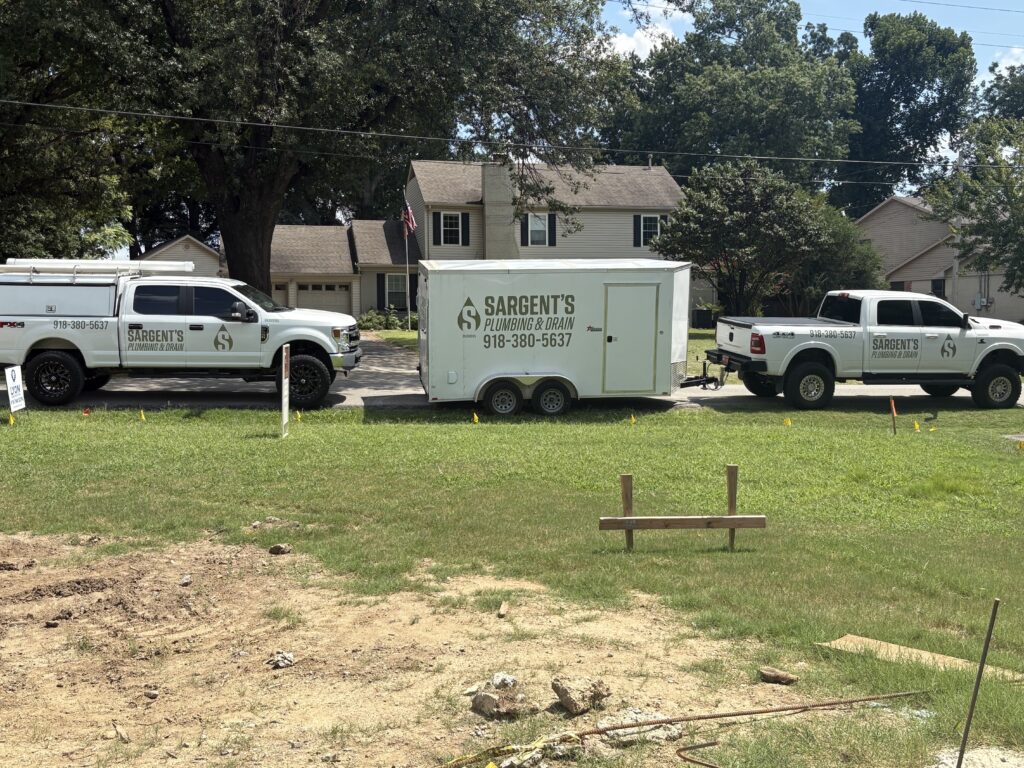
Most residential service line replacements finish within a single day, though longer runs and complicated obstacles occasionally extend that. When conditions allow, we use trenchless methods such as directional boring or pipe bursting, which pull the new line through a bore between two small access pits instead of opening a trench across the entire yard. That approach protects driveways, patios, sidewalks, and established landscaping, and it dramatically reduces the restoration work afterward. Traditional open trenching still makes sense in certain situations, and we explain which method fits your property and why. Water gets shut off only for the portion of the day required to make the connections.
The new line gets bedded properly, connected at the meter and at the house with correct transition fittings, and pressure tested before anything gets buried. We disinfect and flush the line so the water reaching your fixtures is safe, and we verify pressure and flow at multiple fixtures once the system is back in service. The inspector reviews the work while the trench is still open, which is exactly how it should happen. Backfill gets compacted in lifts so the ground does not settle into a rut six months from now. We restore the work area, haul off the debris, and walk the property with you before we go.
Before we leave, we make sure you know where your main shutoff is, how to operate it, and what the new system should feel like day to day. Repipes and fixtures we install carry lasting warranties, and we stand behind the work rather than pointing at a manufacturer. If something does not seem right in the weeks that follow, one phone call brings us back out. Our repair work also connects to the rest of your plumbing, so problems we notice along the way get flagged rather than ignored. Dealing with a damaged line under a driveway or slab? Click here for our trenchless pipe repair services and we will show you how the work gets done without tearing up your property.
Why Choose Sargents Plumbing for Water Supply Line Replacement
Sargents Plumbing and Drain is locally owned and built on honesty and hard work, and that shows up in how we handle jobs like this one. We tell you what we found, what it means, and what your options actually cost, including the option to wait when waiting is reasonable. Our team is licensed and insured, which protects your home and your wallet if anything goes wrong on site. We serve Broken Arrow, Tulsa, Bixby, Jenks, Owasso, Coweta, Claremore, Sand Springs, Glenpool, Catoosa, Collinsville, Sapulpa, Wagoner, Verdigris, Kiefer, Turley, and Oakhurst. Being local means we understand the soil, the water, and the housing stock in each of those communities.
We are dedicated to always providing five star service, and we back it with lasting warranties on repipes and fixtures. Emergency service runs 24 hours a day, seven days a week, and we charge no additional fees for emergency or weekend calls, because a burst service line does not wait for business hours. Financing keeps a major repair manageable when it arrives without warning. Discounts of ten percent are available for veterans, teachers, seniors, and more. You get straight answers and clean work from people who live and work in the same neighborhoods you do.
If the signs in this article match what you are seeing at home, get it looked at now while the weather still cooperates and the ground is easy to work. Call us at (918) 380-5637 or email info@sgtplumbing.com to schedule an evaluation. Our office is located at 605 W Oakland Pl, Broken Arrow, OK 74012. We will measure your pressure, locate the line, and give you a clear picture of what your home needs before winter arrives. Handle it in the fall and you go into the cold months with a line you do not have to think about.