Why You Shouldn’t Ignore a Dripping Faucet
The sound is unmistakable. In the quiet of the night, when the house is finally still, you hear it. Plink. Plink. Plink. That rhythmic sound of a dripping faucet is one of the most universally annoying household noises. It echoes from the bathroom or the kitchen, a constant reminder that something is not quite right. For many homeowners, the immediate reaction is to tighten the handle just a little bit more, hoping to force the seal closed. When that fails, the next step is often denial. It is easy to convince yourself that a small drip is merely a nuisance, something you can learn to live with or put off fixing until you have more time. After all, it is just a few drops of water, right?
Ignoring a dripping faucet is a mistake that can have surprisingly expensive and destructive consequences. What appears to be a minor inconvenience is often a symptom of a larger mechanical failure within your plumbing fixtures. That steady drip is not just water going down the drain; it represents money leaving your wallet, potential damage to your home’s infrastructure, and a clear signal that your plumbing system needs attention. For homeowners in Broken Arrow and the surrounding areas, where water conservation and home maintenance are priorities, understanding the true cost of a leak is essential. Taking action now can save you from a much larger headache down the road.
The Real Cost of Wasted Water
The most immediate impact of a dripping faucet is financial. It is difficult to visualize how much water is actually being lost when you only see one drop at a time. However, the cumulative effect of a continuous leak is staggering. A single faucet dripping at a rate of just one drop per second will waste more than three thousand gallons of water in a year. That is the equivalent of taking over one hundred and eighty showers. If the leak is faster, or if you have more than one faucet dripping in your home, the numbers climb exponentially.

This wasted water shows up directly on your monthly utility bill. You are paying for every single drop that travels through your meter, whether you use it to wash dishes or simply let it run down the drain. Over the course of a few months, the cost of that wasted water can easily exceed the cost of the repair. If the faucet is leaking hot water, the financial blow is double. You are not only paying the water company for the water itself, but you are also paying your gas or electric provider to heat that water before it is wasted. This makes a hot water leak one of the most inefficient and costly problems a homeowner can have.
Beyond the personal cost, there is a broader community impact. Water is a precious resource, and treating and delivering it requires significant energy and infrastructure. Wasting thousands of gallons of treated, potable water places an unnecessary strain on our local water supply systems. By fixing a leak promptly, you are acting as a responsible homeowner and community member, ensuring that valuable resources are not squandered due to negligence.
The Hidden Damage to Your Fixtures
A dripping faucet is not a static problem; it is a progressive one. The mechanical issue causing the leak is actively damaging the fixture every moment it continues. Most faucets work using a system of washers, O-rings, and valve seats to control the flow of water. When you turn the handle off, you are compressing a washer against a seat to create a watertight seal. A leak usually means that the washer has worn down or the seat has become corroded.
Think you may have a hidden leak? Click here for our leak detection service.
When you ignore the leak, you might instinctively try to crank the handle tighter to stop the flow. This is one of the most damaging things you can do. Over-tightening the handle grinds the washer into the valve seat. Over time, this friction can scar or pit the brass metal of the valve seat. Once the metal itself is damaged, simply replacing the rubber washer will no longer fix the leak. The entire valve assembly or even the whole faucet may need to be replaced.
Water moving across a surface also causes erosion. A constant stream of water, even a small one, can eventually cut a channel into the brass or plastic components of the faucet cartridge or body. This is known as wire drawing. Once this happens, the fixture is essentially ruined. What could have been a ten minute repair involving a fifty cent washer turns into a significant project requiring the purchase and installation of a brand new faucet. Procrastination directly converts a minor maintenance task into a major replacement expense.
The Menace of Hard Water Stains
In Oklahoma, we deal with moderately hard water. Our water contains high levels of dissolved minerals, particularly calcium and magnesium. While these minerals are harmless to drink, they are destructive to plumbing fixtures. When water drips constantly from a faucet, it does not just disappear down the drain. It splashes onto the sink bowl, the drain flange, and the faucet body itself. As this water evaporates, it leaves the minerals behind.
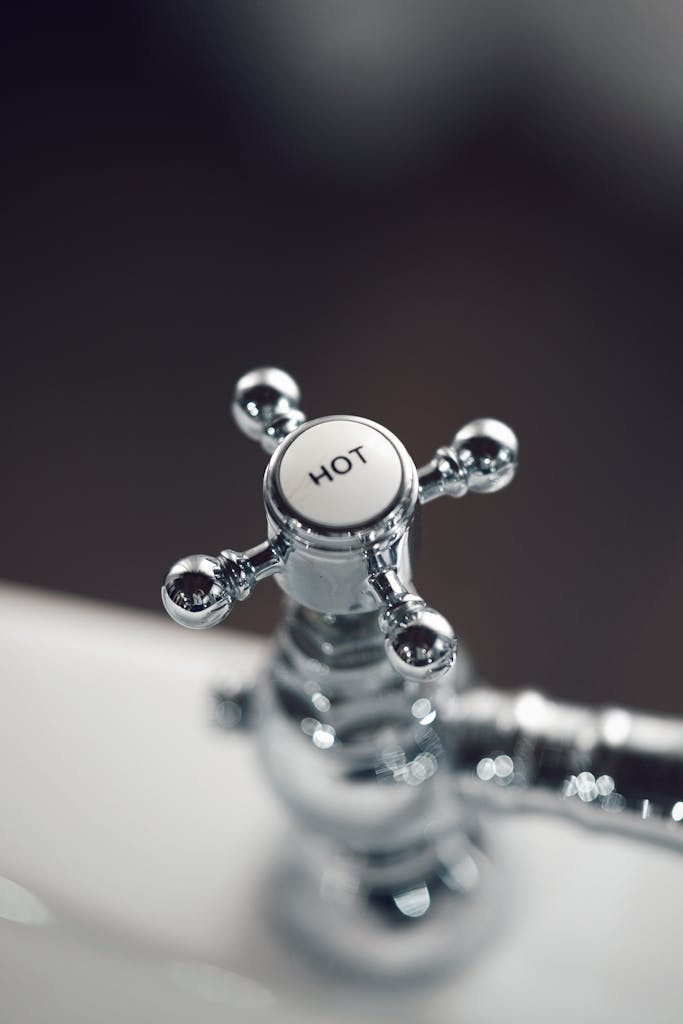
Over time, these minerals build up to form hard, crusty white or yellow scale deposits known as limescale. If you ignore a dripping faucet for weeks or months, you will likely notice a stubborn stain forming in your sink directly under the drip. This scale is incredibly difficult to remove. It bonds to the surface of the sink, whether it is porcelain, stainless steel, or composite. Scrubbing it often requires harsh acidic chemicals or abrasive pads that can scratch and dull the finish of your sink.
The damage is even worse for the fixture itself. As the minerals build up around the aerator and the base of the spout, they can seize up the internal parts. A faucet that leaks is often a faucet that becomes impossible to take apart for repair because the threads have been cemented together by calcium deposits. This calcification can also ruin the finish of your faucet, eating away at the chrome, brushed nickel, or oil rubbed bronze plating, leaving it looking old, corroded, and neglected.
Risks of Mold and Structural Damage
While most people assume a dripping faucet only affects the inside of the sink, the moisture can travel. If the leak is caused by a failure in the cartridge or stem, water may be seeping out around the base of the faucet handles or the spout base. This water sits on the countertop, slowly eating away at the caulk or silicone seal that keeps the vanity dry.
If water seeps under the faucet base, it can rot the countertop substrate, especially if you have laminate counters with a particle board core. The wood swells, warps, and eventually crumbles. Worse, the water can drip down into the cabinet below. The dark, damp environment under a bathroom or kitchen sink is the perfect breeding ground for mold and mildew.
Want to know the top plumbing issues in our area? Click here for more information.
A slow leak that runs down the back of the supply lines can go unnoticed for a long time. It can saturate the bottom of your cabinet, warping the wood and destroying any supplies you have stored there. By the time you smell the musty odor of mold or notice the cabinet floor bowing, the damage is already extensive. Mold poses a health risk to your family and requires expensive remediation. Treating a dripping faucet as an emergency prevents this moisture migration and keeps your home dry and healthy.
The Annoyance and Stress Factor
There is a psychological toll to living with broken things. Your home is supposed to be your sanctuary, a place of rest and relaxation. The constant sound of water dripping is a form of low level stress. It disrupts your sleep, distracts you while you are trying to read or work, and serves as a persistent, nagging reminder of a chore left undone.
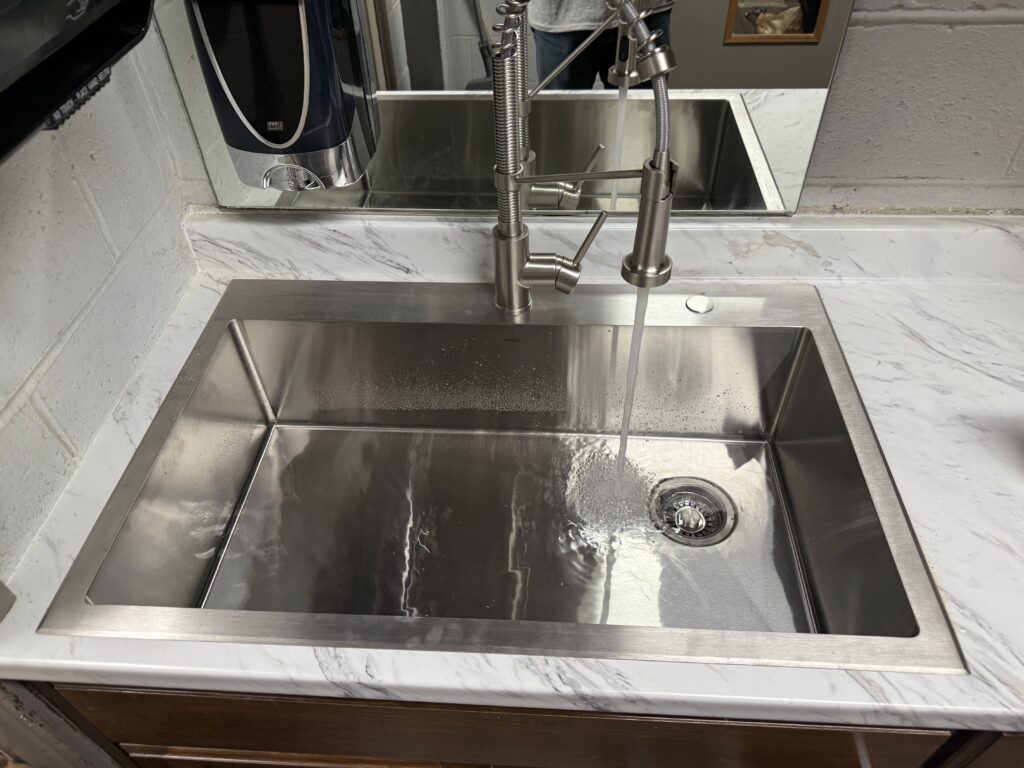
This “deferred maintenance” weighs on a homeowner. When you walk into the bathroom and see the stain in the sink or hear the drip, it creates a subconscious feeling that the house is falling into disrepair. It can be embarrassing when guests use your powder room and have to fiddle with the handle to get it to stop leaking, or worse, listen to it drip while they are visiting.
Fixing the problem provides an immediate sense of relief. There is a tangible satisfaction in turning the handle and having the water stop completely and instantly. Restoring order to your home environment is worth the effort. It eliminates the noise, stops the waste, and restores the polished, well maintained feel of your kitchen or bathroom.
When to DIY and When to Call a Pro
Many homeowners attempt to fix a dripping faucet themselves, and in some cases, it can be a straightforward task. If you have a basic understanding of plumbing and the right tools, replacing a washer or a cartridge can be a manageable Saturday morning project. However, modern faucets are often more complex than the simple compression valves of the past. They may use ceramic discs, ball valves, or specialized cartridges that require specific manufacturer parts.
The challenge often arises when dealing with older plumbing. As mentioned earlier, mineral buildup can cause parts to seize. A homeowner trying to force a stuck nut with a wrench can easily snap the copper supply line or crack the sink. Stripped screws, broken handles, and finding the exact replacement cartridge among hundreds of similar looking options at the hardware store are common frustrations.
Furthermore, not all leaks are from the faucet itself. Sometimes the issue lies in the water pressure or the supply valves. If you have attempted a repair and the drip persists, or if you do not have the tools or confidence to disassemble the fixture safely, it is time to call in a professional. A licensed plumber can diagnose the root cause of the leak, identify the brand and model of the faucet, and ensure the repair is done without damaging your countertop or sink. They can also check your home’s water pressure to ensure that high pressure isn’t causing your fixtures to fail prematurely.
A dripping faucet is never just a drip. It is a steady drain on your finances, a threat to the integrity of your plumbing fixtures, and a potential source of water damage and mold growth. The longer you wait to address it, the more expensive and complicated the solution becomes. What starts as a simple washer replacement can escalate into a full faucet installation or cabinet repair if left unchecked.
At Sargent Plumbing and Drain, we believe that every part of your plumbing system deserves to function perfectly. We understand that your time and money are valuable, and we are dedicated to providing honest, efficient service to the residents of Broken Arrow and Tulsa. Whether it is a simple repair to stop an annoying noise or a complete upgrade to modern, high efficiency fixtures, our experienced team is here to help. Do not let a small leak turn into a big problem. Call us today to restore the silence and reliability to your home.