How to Prevent Frozen Pipes Before Temperatures Drop
Water lines across Broken Arrow and the wider Tulsa metro fail every winter for the same reason, which is that a hard freeze usually arrives faster than homeowners have time to prepare for it. A frozen pipe is not a slow moving problem, because a line running through an unheated attic can freeze solid overnight and split open before anyone in the house notices a change in water pressure at the sink. The real damage often shows up hours later, once the ice inside the pipe thaws and water begins pouring through the break into an attic, a wall cavity, a crawl space, or a finished ceiling. Freeze damage is also one of the most preventable plumbing failures we see all year, since nearly every step involved is simple, inexpensive, and easy to complete on a mild fall weekend. The work centers on the parts of your plumbing system that sit outside your heated living space, because those are the lines that reach freezing temperature first and stay there longest. This guide covers where pipes actually freeze in Oklahoma homes, why they burst the way they do, and the specific steps that keep water moving when the overnight low drops into the teens or lower.
Where Frozen Pipes Start in Oklahoma Homes and How to Protect Them
Most homeowners assume that frozen pipes are a problem for older houses only, but the age of the home matters far less than the location of the water lines inside it. A newer home built on a slab in Broken Arrow often carries its hot and cold supply lines through an unconditioned attic, which means those pipes sit in air that matches the outdoor temperature almost exactly during a freeze. Older homes tend to run supply lines through crawl spaces, exterior walls, and unheated garages, all of which create the same risk in a different location. Ice forms first at the coldest point in the run, then grows into a plug that blocks flow completely. Pressure builds between that ice plug and the closed faucet downstream, and the pipe splits at the weakest point in the line. Knowing exactly where your vulnerable runs are located is the first and most valuable step in preventing a burst.
Preventing Frozen Pipes in Attics and Crawl Spaces
Attic water lines are the single most common source of freeze breaks in the Tulsa area, and the reason comes down to basic building design. Slab construction leaves nowhere to run supply lines underfoot, so builders route them overhead through the attic where temperatures track the outdoor air with very little delay. On a night when the low reaches fifteen degrees, an uninsulated copper or CPVC line in that attic reaches roughly the same temperature within a few hours. Insulation laid across the attic floor makes the situation worse in one specific way, because it keeps household heat in the living space below and leaves the pipes above it completely exposed. The fix involves wrapping every accessible water line in closed cell foam sleeves rated for the pipe diameter, then sealing the seams with tape so that no bare section remains uncovered. Pay close attention to elbows, tee fittings, and the short sections near the attic access hatch, since those spots get skipped most often and fail first.
Crawl spaces present a related problem with a different set of solutions available to homeowners. Air moves through foundation vents by design, which helps control moisture during humid summers but pulls freezing air directly across your supply lines in January. Temporary vent covers made of rigid foam or purpose built magnetic panels block that airflow during the coldest stretch of winter, and they cost very little compared to a single repair call. Sealing gaps around the crawl space door, the rim joist, and any point where plumbing or wiring enters the foundation cuts down on cold drafts even further. Insulating the water lines themselves still matters, because blocked vents slow heat loss but do not eliminate it. Homeowners with a history of freezing in one specific area should consider adding a small amount of controlled heat to the space rather than relying on insulation alone.
Access is the part of this job that catches people off guard when a freeze is already in the forecast. Attic runs above vaulted ceilings, lines buried under blown insulation, and crawl spaces with limited headroom all require time and the right protective gear to reach safely. Working in an attic during a January cold snap is uncomfortable and genuinely risky, since you are balancing on ceiling joists in low light with limited room to move. Fall is the time to handle this work, when the attic is dry, the weather is mild, and there is no water actively running through a cracked line. A licensed plumber can inspect the full run in a single visit, identify the sections most likely to freeze, and insulate them properly the first time. Concerned about the condition of your supply lines before winter? Click here for our water supply line services.
Preventing Frozen Pipes at Outdoor Faucets and Hose Bibs
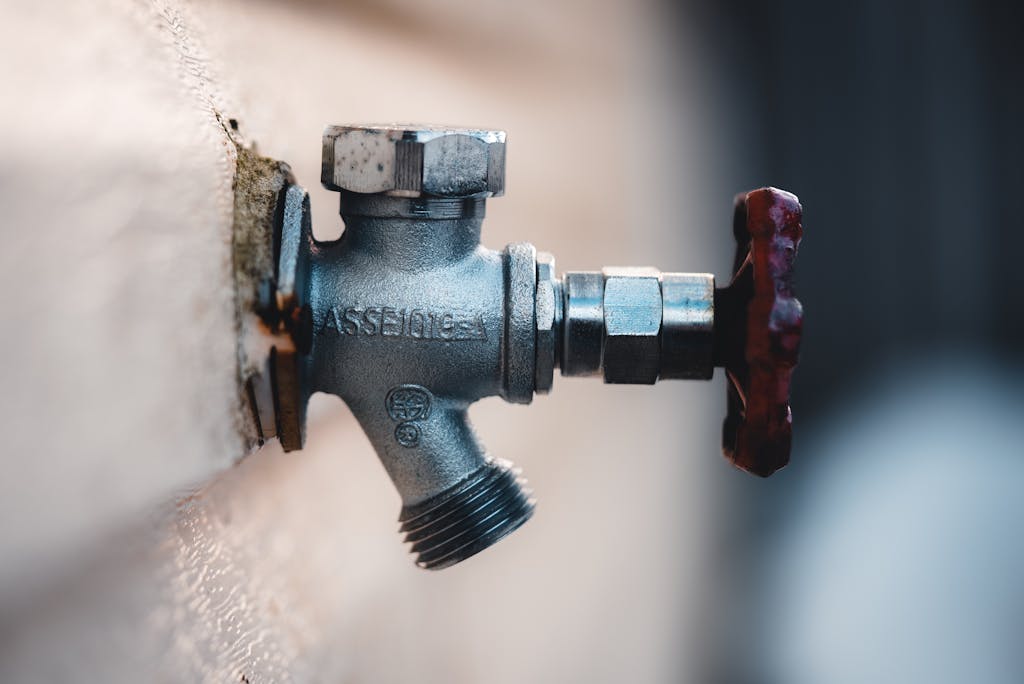
Outdoor faucets freeze more often than any other fixture on the house, and the cause is almost always a garden hose left connected past the first cold night. A standard frost proof sillcock is engineered so that the shutoff seat sits eight to twelve inches inside the heated wall, which leaves the exposed portion of the pipe empty after each use. That drainage only works when nothing blocks the outlet, so an attached hose traps water inside the barrel where it freezes, expands, and cracks the tube. The break sits inside the wall, which means the leak stays completely hidden until the following spring when someone turns the faucet on and water floods the wall cavity. Disconnecting every hose, coiling it, and storing it indoors takes ten minutes and prevents the most common winter plumbing repair we perform. Do the same with splitters, timers, and quick connect fittings, since each one holds water in exactly the same way.
Homes with older style hose bibs need one additional step beyond disconnecting the hose. These non frost proof faucets hold water right at the exterior wall surface, so the water inside them freezes on the first hard night regardless of what is attached. If your home has interior shutoff valves for the exterior faucets, close each one, then open the outdoor spigot fully to let the remaining water drain out of the line. Leave that outdoor faucet in the open position all winter, which gives any residual water room to expand instead of pressing against a closed valve. Insulated faucet covers add a useful layer of protection on top of that, and they work on both faucet styles. Replace any hose bib that drips constantly, since a leaking valve keeps a steady supply of water in the exposed section where it can freeze.
Irrigation systems and outdoor kitchens deserve the same attention, because both carry water well beyond the protection of the house. A sprinkler backflow preventer sits above ground, holds water in its body, and cracks easily when that water freezes and expands against the brass housing. Blowing out the system with compressed air before the first freeze clears the lateral lines and the backflow device in one pass. Pool equipment, outdoor sinks, and standalone spigots on detached shops or garages all follow the same rule, since any line that holds standing water in unheated air is a candidate for a break. Insulating the exposed vertical piping and the backflow assembly gives the system a margin of safety during the deepest cold. Handling all of it during a mild fall weekend takes a fraction of the time and money required to repair a cracked assembly in February.
Preventing Frozen Pipes Inside Exterior Walls and Cabinets
Kitchen and bathroom fixtures mounted on an exterior wall carry a quiet risk that surprises many homeowners. The supply lines feeding those fixtures run inside a wall cavity that separates conditioned indoor air from outdoor air, and the insulation in that cavity is frequently compressed or missing behind the pipes. When temperatures fall into the single digits, that cavity gets cold enough to freeze the short run of pipe feeding the faucet, even though the room itself feels comfortable. Cabinet doors make it worse by trapping warm room air out of the space directly under the sink where those lines connect. Opening the cabinet doors during a hard freeze allows heated air to circulate around the trap and the supply stops, which is often enough to keep the water moving. This costs nothing, requires no tools, and helps most in kitchens and bathrooms along the north and west sides of the house.
Letting a faucet run at a slow, steady drip is the second half of this strategy, and it works for a reason worth understanding. Moving water resists freezing better than standing water, but the greater benefit is pressure relief, since an open faucet gives any ice plug that forms somewhere to push instead of building force against a sealed line. Set the drip on the fixture farthest from where your water service enters the house, which keeps water moving through the longest section of pipe. Open both the hot and cold sides slightly, because the hot water line freezes just as readily as the cold one and often runs through the same exposed cavity. A drip roughly the width of a pencil lead is enough, and the small amount of water used costs far less than a repair. Turn the faucets back to normal once the outdoor temperature climbs back above freezing and stays there.
Air sealing does the long term work that no temporary measure can replace. Cold air enters wall cavities through gaps around pipe penetrations, electrical boxes, sill plates, and the joints where the framing meets the foundation. Expanding foam and caulk applied at those points cut the draft that carries freezing air directly to your supply lines. Recessed exterior features add risk as well, including plumbing runs behind a bathtub set against an outside wall and lines feeding a laundry sink in an attached garage. Garages create their own hazard, since an open overhead door on a cold day drops the interior temperature to match the outside within minutes. Keep that door closed through any freeze event, especially in homes where the water heater or a water softener sits in the garage.
Fall Plumbing Steps That Prevent Frozen Pipes Before Temperatures Drop
Preventing frozen pipes works best as a checklist completed in October or early November rather than a scramble the night a winter storm warning appears. By the time forecasters are calling for a hard freeze, hardware stores are out of pipe insulation and every plumber in the county is booked solid. A short list of tasks handled in advance covers insulation, drainage, thermostat settings, and the one thing most homeowners cannot answer under pressure, which is the location of the main water shutoff. Each step reduces risk on its own, and together they protect the whole system from the water meter to the farthest fixture. None of this requires specialized skill, though a few items are worth handing to a licensed plumber for the sake of accuracy. Think of it the same way you think about changing furnace filters or cleaning gutters, which is routine seasonal maintenance with a clear payoff.
Insulation and Heat Cable Steps That Prevent Frozen Pipes
Pipe insulation is inexpensive, widely available, and frequently installed incorrectly, so the details matter more than the product itself. Closed cell foam sleeves come sized for specific pipe diameters, and using a sleeve that is too large leaves an air gap that carries cold straight to the pipe wall. Measure the outside diameter of your lines before buying, then cut the sleeves to fit tightly around elbows and fittings instead of leaving those junctions bare. Seal every seam and butt joint with the adhesive strip or with a wrap of quality tape, since an open seam is a direct path for cold air. Fiberglass wrap works in some applications, though foam sleeves are faster to install and hold their shape better over time. Focus your effort on attic runs, crawl space runs, garage walls, and any pipe you can see or touch in an unheated space.
Electric heat cable adds active protection where insulation alone has not been enough in past winters. These cables run along the length of the pipe and produce a small amount of heat, with self regulating models adjusting their output based on the surrounding temperature. Choose a product listed by a recognized testing laboratory and rated for your specific pipe material, since some cables are approved for metal only and others work on plastic as well. Follow the manufacturer instructions exactly regarding overlap, spacing, and the use of insulation over the cable, because incorrect installation creates a genuine fire hazard. Plug the cable into a circuit protected by a ground fault device, and inspect the cable each fall for cracked jacketing or damaged connections. Heat cable is a supplement to insulation rather than a replacement for it, and the two work together far better than either one alone.
Some homes keep freezing in the same spot year after year no matter how much insulation goes on the line. That pattern usually points to a routing problem, meaning the pipe travels through a location that simply cannot be protected well enough to survive a deep freeze. Rerouting that section into conditioned space solves the problem permanently, and the work is often less involved than homeowners expect. Older galvanized steel and thin wall copper systems are especially prone to repeat failures, since decades of corrosion leave the pipe wall thin and brittle. In those cases, replacing the affected lines addresses the freeze risk and the pressure and water quality complaints at the same time. Tired of repairing the same section of pipe every winter? Click here for our repiping services.
Water Shutoff and Drainage Steps That Prevent Frozen Pipes
Every adult in your household should know where the main water shutoff is located and how to operate it before winter starts. In most Broken Arrow homes, that valve sits near the water heater, in the garage, in a utility closet, or at the meter box out near the street. Find it now, confirm that it turns freely, and label it so that nobody wastes time searching while water runs through a ceiling. Older gate valves seize up from years of disuse and often refuse to close when they are needed most, which is a strong argument for replacing them with a quarter turn ball valve. Keep a meter key in the garage if your shutoff is located at the street, since curb stops require that tool and a standard wrench will not do the job. Two minutes spent closing a valve can be the difference between drying a small area and replacing drywall, flooring, and insulation across several rooms.
Draining unused lines removes the water that would otherwise freeze inside them. Vacation homes, rental properties, detached shops, and any structure that sits empty through the winter should have the water shut off at the main and the system drained from the lowest point. Open all faucets after closing the valve, flush the toilets to empty the tanks, and drain the water heater if the building will go unheated for an extended period. Add nontoxic plumbing antifreeze to the traps in sinks, tubs, and floor drains so that standing trap water does not freeze and crack the fittings. For a home you are leaving for a week or two, a simpler approach works fine, which is shutting off the main water supply while leaving the heat running at a moderate setting. That combination keeps the structure warm and limits how much water can escape if a line does fail while you are away.
Water heaters and expansion tanks need attention in the fall as well, particularly units installed in garages and unheated utility rooms. A tank sitting in a cold garage works harder all winter, and the exposed supply and discharge piping around it can freeze even though the tank itself holds warm water. Insulating those connections and the temperature and pressure relief discharge line reduces the risk considerably. Flushing sediment out of the tank before winter improves recovery time during the months when incoming water is at its coldest, which is exactly when household demand peaks. Check the expansion tank for proper air charge too, since a waterlogged tank leads to pressure spikes that stress every joint in the system. Want your water heater ready before the cold sets in? Click here for our water heater inspection service.
Thermostat and Airflow Habits That Prevent Frozen Pipes
Thermostat settings play a bigger role in freeze prevention than most homeowners realize, especially during travel. Setting the heat back to fifty degrees while you are away seems economical, but that setting refers to the air temperature at the thermostat, which usually hangs on an interior wall in the warmest part of the house. Wall cavities, attics, crawl spaces, and cabinets sit considerably colder than that reading, so a fifty degree thermostat can leave vulnerable pipes right at or below freezing. Fifty five degrees is the accepted minimum for an occupied home in freezing weather, and keeping that setting consistent day and night matters more than the exact number. Deep overnight setbacks are a poor trade during a hard freeze, since the coldest outdoor hours line up with the lowest indoor temperature. Ask a neighbor to check on the house while you travel, and confirm that the heat is still running.
Airflow inside the house helps distribute warmth to the places where pipes live. Closing vents in unused rooms causes cold pockets in exactly the spots most likely to have exposed plumbing behind the walls. Keep all supply registers open, leave interior doors ajar, and let air circulate freely through the house during a freeze event. A ceiling fan set to run slowly in reverse pushes warm air down from the ceiling and evens out the temperature in rooms with high ceilings. Replace the furnace filter before winter starts, because restricted airflow shortens equipment life and leaves parts of the home colder than the thermostat indicates. These small habits cost nothing and improve the effectiveness of every insulation step you have taken.
Homes that lose power during winter storms need a backup plan prepared in advance. Ice storms are a regular feature of Oklahoma winters, and an outage that lasts more than a day allows indoor temperatures to fall toward freezing even in a well built house. If the power goes out and the forecast calls for extended cold, shut off the water at the main and open the faucets to drain the system before the house cools down. Keep the meter key, a flashlight, and a basic wrench together in one accessible spot so you are not hunting for tools in the dark. Gather towels, a bucket, and a shop vacuum in advance as well, since minutes matter when a line does break. Preparing for the worst case takes very little effort and pays for itself the first time a storm rolls through the metro.
Why You Need Professional Frozen Pipe Prevention Before Winter Arrives
Homeowner steps handle a large share of freeze risk, but some vulnerable areas sit beyond easy reach or require an experienced eye to identify correctly. A licensed plumber can trace your full water line layout, find the runs that pass through unconditioned space, and evaluate the condition of the pipe material itself. That inspection also catches the small problems that turn into large ones during a freeze, including corroded fittings, failing valves, and pressure issues that stress the entire system. Scheduling that visit in fall means the work happens on your timeline rather than during an emergency call at two in the morning. It also means you enter winter knowing exactly where your weak points are and what has been done about them. For homeowners in Broken Arrow, Tulsa, Bixby, Jenks, Owasso, and the surrounding communities, that peace of mind arrives well before the first hard freeze.
Why a Professional Frozen Pipe Inspection Protects Your Home
A professional freeze prevention inspection covers ground that a homeowner walkthrough usually misses. We follow the water lines from the meter through the house, noting every section that runs through an attic, a crawl space, an exterior wall, or a garage. Pipe material factors into the assessment as well, since copper splits cleanly under freeze pressure, CPVC turns brittle in extreme cold, and older galvanized steel fails at corroded threads long before newer materials give out. We also check static water pressure, because pressure above eighty pounds per square inch puts constant strain on joints that a freeze then finishes off. The result is a clear picture of your system and a prioritized list of what to address first.
Insulation quality gets a direct evaluation during that visit rather than a guess from the ground. Foam sleeves degrade over time, tape releases in attic heat, and previous work often leaves elbows and valves uncovered where the risk is highest. We correct those gaps, add insulation where none exists, and recommend heat cable in the specific locations that warrant it. Where a line has frozen repeatedly in past winters, we look at rerouting it into conditioned space instead of adding another layer of foam to a problem that insulation will not solve. Every recommendation comes with a straightforward explanation of the cost and the reason behind it.
The inspection frequently uncovers issues unrelated to freezing that matter just as much. Slow leaks at fittings, a water heater nearing the end of its service life, a failing pressure regulator, and drain problems all surface during a thorough visit. Catching those items in October gives you time to plan and budget rather than reacting to a failure in the middle of winter. Small repairs made early also protect the work you have already done to prepare for the cold. Suspect a leak somewhere in your system? Click here for our leak detection services.

What to Do When Frozen Pipes Cause a Leak or Burst
If you turn on a faucet during a freeze and get little or no water, treat it as a frozen line and act immediately. Leave that faucet open so melting water has an escape route, then locate the frozen section by feeling along accessible pipe for the coldest spot or looking for visible frost on the line. Apply gentle heat with a hair dryer, a heating pad, or towels soaked in hot water, working from the faucet back toward the frozen area so that melted water can drain out. Never use a torch, a propane heater, or any open flame near plumbing, since that approach starts house fires and damages the pipe. If you cannot reach the frozen section or the water does not return, call a plumber before the ice has a chance to expand further.
A burst pipe calls for a different response, and speed is the only thing that limits the damage. Shut the water off at the main valve first, then cut power to any circuit near the water at the breaker panel. Open the lowest faucets in the house to drain the remaining water out of the system and reduce what continues to escape from the break. Move furniture and belongings clear of the affected area, start removing standing water, and photograph everything for your insurance claim. Then call for emergency service so the repair begins as soon as possible.
Freeze damage rarely stays confined to the pipe itself, which is why a fast response matters so much. Water travels along framing, soaks insulation, saturates drywall, and reaches areas well away from the actual break. Hidden moisture inside walls and ceilings leads to mold growth within a couple of days if it goes untreated. Our team repairs the failed section, pressure tests the surrounding lines, and checks for additional weak points that the same freeze may have compromised. We answer emergency calls around the clock, and we do not charge extra for nights, weekends, or holidays.
Why Choose Sargents Plumbing & Drain for Frozen Pipe Prevention
Sargents Plumbing & Drain is locally owned and built on honesty and hard work, and that shows up in how we handle winter preparation. We explain what we find in plain terms, show you the problem areas, and give you straight pricing before any work starts. Our team is licensed and insured, and every repair and installation meets Oklahoma plumbing code. We serve Broken Arrow, Tulsa, Bixby, Jenks, Owasso, Coweta, Catoosa, Claremore, Sand Springs, Sapulpa, Glenpool, Collinsville, Verdigris, Wagoner, and the surrounding communities. Dedication to five star service is the standard we hold ourselves to on every call.
We back our work with long term warranties on repipes and fixtures, because a job done right should not need to be done twice. Emergency service is available around the clock with no additional fees for nights, weekends, or holidays, which matters during the exact storms that cause freeze damage. Financing options are available for larger projects like repiping and water line replacement. We also offer a ten percent discount for veterans, teachers, seniors, and more as a thank you to the people who serve this community. Every technician who comes to your home shows up on time, works clean, and treats your property with respect.
The best time to prepare your plumbing for winter is before the first freeze warning appears in the forecast. Call Sargents Plumbing & Drain at (918) 380-5637 to schedule a freeze prevention inspection, or email us at info@sgtplumbing.com to request a visit. Our office is located at 605 W Oakland Pl, Broken Arrow, OK 74012, and we cover the full Tulsa metro area. One appointment this fall protects your home through the entire season. Let us handle the cold weather preparation so you never have to find out what a burst pipe costs.