Sewer Line Inspection Warning Signs to Watch For
Your sewer line works hard every day, carrying wastewater from your home to the city main or septic system. Most homeowners never think about this pipe until something goes wrong. By the time raw sewage backs up into a tub or basement floor drain, the damage is already expensive. Spring in Broken Arrow brings heavy rains, shifting soil, and active tree roots that stress aging sewer lines. Knowing the early warning signs of a failing sewer line can save you thousands in water damage, flooring repairs, and emergency cleanup costs. This guide walks you through the symptoms every homeowner in Oklahoma should recognize before a small issue becomes a full-blown disaster.
Common Sewer Line Inspection Warning Signs Inside Your Home
The first clues of a sewer line problem often show up inside your house, long before anything surfaces in the yard. Drains start behaving oddly, odors appear where they should not, and small pests may find their way inside. These indoor warning signs are your earliest opportunity to catch a sewer issue while repairs are still affordable. Oklahoma homes built before 1980 often have clay or cast iron sewer lines that are now well past their expected lifespan. Pay close attention to any change in how your plumbing sounds, smells, or drains. Catching these signs early gives a plumber time to inspect the line and plan a targeted repair rather than a full emergency dig.
Slow Drains as a Sewer Line Inspection Warning Sign
A single slow drain usually points to a clog inside that one fixture. When multiple drains in your home slow down at the same time, the problem is almost always in the main sewer line. You might notice the kitchen sink draining sluggishly while the bathtub upstairs also takes longer than usual. Showers may leave standing water around your feet even after a quick rinse. Toilets can become weak flushers, sometimes needing a second flush to clear the bowl. These are signs that wastewater is struggling to leave your home through the main line.
Tree roots are the most common cause of slow drains in Broken Arrow and the surrounding Tulsa area. Roots find tiny cracks in older pipes and grow inside, forming thick mats that catch toilet paper, grease, and debris. Soil shifting from Oklahoma clay can also cause pipes to sag, creating low spots where waste pools instead of flowing downhill. Grease buildup from kitchen drains hardens over time and narrows the pipe opening. Each of these problems starts small but gets worse quickly once it begins. A professional camera inspection is the only way to know for sure what is blocking your line.
Ignoring multiple slow drains almost always leads to a full backup within weeks or months. Raw sewage can push up through the lowest drain in your home, which is often a basement floor drain or a ground-floor shower. Cleanup from a sewage backup costs far more than a simple sewer inspection and repair. Flooring, drywall, baseboards, and personal items may all need replacement after contaminated water spreads. Insurance often denies these claims because the damage traces back to a known maintenance issue. Scheduling an inspection at the first sign of trouble is always the smart move.

Foul Odors as a Sewer Line Inspection Warning Sign
A healthy sewer line is completely sealed, which means you should never smell sewer gas inside your home. If you catch whiffs of rotten eggs, sulfur, or raw sewage, something has broken the seal somewhere in your system. The smell may be strongest near floor drains, under sinks, in basements, or around toilets. Sometimes the odor comes and goes, getting worse after heavy water use or during humid weather. Oklahoma humidity can make these smells especially strong and unpleasant. Do not mask the odor with air fresheners; treat it as a real warning sign.
Cracks in the sewer line itself are a major source of indoor sewer smells. When a pipe cracks underground or inside a wall, gases escape and rise through the floor, the crawlspace, or the basement. Dried-out P-traps in rarely used sinks or floor drains can also let sewer gas into the home. A broken toilet wax ring allows gas to seep around the base of the toilet every time it flushes. Vent stack problems on the roof can push odors back into living spaces instead of releasing them outside. Each of these issues requires a different repair, so professional diagnosis matters.
Sewer gas is more than just unpleasant; it contains hydrogen sulfide, methane, and other harmful compounds. Long-term exposure can cause headaches, nausea, dizziness, and breathing problems. Families with small children, elderly members, or anyone with asthma should treat strong sewer odors as a health issue. A licensed plumber can run a smoke test or camera inspection to pinpoint exactly where the gas is escaping. Need sewer line inspection? Click here for our sewer line inspection service. Fixing the source of the smell protects both your home and your family.
Gurgling Sounds as a Sewer Line Inspection Warning Sign
Strange gurgling noises from your drains and toilets are another early warning sign most homeowners overlook. The sound happens when air gets trapped in the sewer line and bubbles up through the water in your fixtures. You might hear it when you flush a toilet and the bathtub nearby starts gurgling. Running the washing machine may cause a floor drain to bubble or make popping sounds. Even the kitchen sink can gurgle when water drains elsewhere in the house. These noises mean your sewer line is partially blocked and air has nowhere else to go.
A properly flowing sewer line moves water and waste smoothly, with air venting through the roof stack. When a blockage forms, water pushes air backward through the line until it escapes at the nearest fixture. The gurgling usually starts soft and occasional but grows louder and more frequent as the blockage worsens. Roots, grease, wipes labeled as flushable, and collapsed pipe sections are the usual causes. In Broken Arrow, shifting clay soil during dry summers and wet springs puts extra stress on older lines. Pipes that have been patched multiple times are especially likely to develop new air traps.
Do not ignore gurgling even if your drains still work. The sound is telling you that a blockage is forming, and every flush or load of laundry makes it worse. A sewer camera inspection can show the exact location and severity of the problem. Many blockages caught at the gurgling stage can be cleared with hydro jetting rather than full pipe replacement. Waiting until sewage actually backs up turns a simple service call into an emergency repair. Listening to your plumbing and acting early saves money and stress.
Outdoor Sewer Line Inspection Warning Signs Around Your Property
The ground above your sewer line often shows signs of trouble before you notice anything inside the house. Leaking wastewater and shifting pipes affect your lawn, foundation, and landscaping in ways that are easy to spot once you know what to look for. These outdoor clues matter year-round but become especially visible in spring when grass is growing and soil is soft. Walking your yard regularly gives you the chance to catch sewer problems early. Problems that start underground rarely stay there for long. Damaged sewer lines eventually send clear signals to the surface.
Yard Patches as a Sewer Line Inspection Warning Sign
One of the clearest outdoor warning signs is unusual green patches in your lawn that stand out from the rest of the grass. A leaking sewer line acts like constant fertilizer, feeding the roots above it with nutrients and water. The result is a strip of grass that grows taller, thicker, and greener than everything around it. The pattern often follows a straight line from your house toward the street or septic tank. In summer, when most Oklahoma lawns turn brown, these green streaks become very obvious. You might also notice the grass staying wet long after rain has stopped elsewhere.
Along with greener patches, some yards develop soggy, spongy spots that never quite dry out. Stepping on these areas may leave footprints or cause water to squish up around your shoes. The smell in these wet spots is often unpleasant, especially on warm days. Mosquitoes, flies, and other pests are drawn to the moisture and organic material. Pets may sniff around these spots more than usual or even dig into them. Each of these clues points to wastewater escaping from a cracked or disconnected sewer line below.
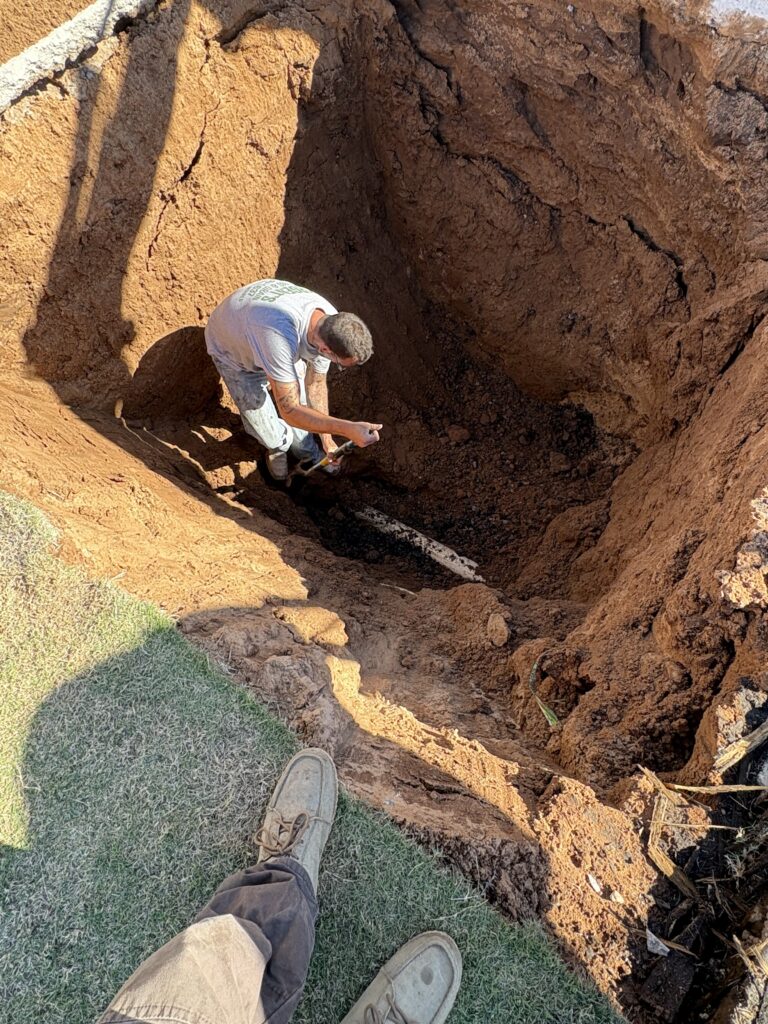
Sinkholes and depressions in the yard are more serious versions of the same problem. When a sewer line breaks open, soil washes into the pipe and creates empty space underground. Over time, the surface sinks to fill that void, creating a shallow dip or a sudden hole. Small depressions can grow quickly, especially after heavy rain. Large sinkholes can damage driveways, patios, and even threaten your home’s foundation. If you see any unexplained dip forming in your yard, schedule a sewer inspection right away before the problem spreads.
Foundation Issues as a Sewer Line Inspection Warning Sign
Oklahoma homes already deal with expansive clay soil that shifts with every drought and heavy rain. Add a leaking sewer line to the mix, and foundation problems can appear much sooner than expected. Constant moisture from a broken pipe erodes the soil that supports your foundation. Over months or years, sections of the foundation settle unevenly, causing cracks to form. You might see hairline cracks in basement walls, along brick exteriors, or around window frames. Doors and windows that used to close smoothly may start to stick or leave gaps.
Inside the home, sloping floors are another sign that something underground is shifting. A marble or small ball placed on the floor may roll toward one corner of a room. Tile grout lines can crack, and hardwood planks may separate or buckle. Drywall cracks above doors and windows often show up along with these floor changes. While not every foundation issue traces back to a sewer line, a broken pipe is a common hidden cause. Plumbers and foundation contractors often work together to diagnose these cases.
Fixing the foundation without fixing the sewer line almost always leads to the same damage returning. The leak must be repaired first, then the soil needs time to stabilize before foundation work begins. Trenchless sewer repair is often the best option because it avoids digging up driveways, patios, and landscaping. Need trenchless pipe repair? Click here for our trenchless pipe repair service. Catching a sewer leak before it damages your foundation saves tens of thousands of dollars in structural repairs. Regular camera inspections every few years are cheap insurance.
Pest Activity as a Sewer Line Inspection Warning Sign
Rats, mice, and insects are drawn to the food source and moisture inside sewer lines. When a pipe cracks, these pests suddenly have a direct path into crawlspaces, basements, and walls. Broken Arrow homeowners sometimes discover a rodent problem that started with a small break in the sewer line. You might hear scratching in the walls, find droppings in the garage, or notice chewed wiring. Roaches also thrive near sewer leaks, especially sewer roaches that live in the pipes themselves. Seeing large dark roaches indoors is often a sign of a cracked drain line.
Flies are another pest closely tied to sewer line problems. Drain flies, sometimes called moth flies, breed in the organic buildup inside pipes and around leaks. Phorid flies, sometimes called coffin flies, are even more telling because they often indicate a broken sewer line under a slab foundation. Small clouds of tiny flies around a floor drain or bathroom should not be ignored. Standard bug spray rarely solves the problem because the source is inside the plumbing. A sewer camera inspection can find the crack that is feeding the infestation.
Pest control and sewer repair go hand in hand when the root cause is a broken pipe. An exterminator may reduce the visible bugs, but they will keep coming back until the sewer line is fixed. Sealing the crack or replacing the damaged section removes the food, moisture, and entry point all at once. Plumbers use cameras, smoke tests, and sometimes dye tests to locate the break precisely. Trenchless methods allow for repairs without tearing up floors or yards in most cases. Solving the plumbing issue often solves the pest issue as a bonus.

Why You Need a Professional Sewer Line Inspection in Broken Arrow
Many sewer problems hide out of sight until they become emergencies, but a professional camera inspection removes the guesswork. A licensed plumber sends a waterproof camera through your sewer line and records exactly what is happening inside. This is the only reliable way to see cracks, root intrusion, bellied pipes, and buildup. Inspections are also smart before buying a home, after major plumbing issues, or every few years for older houses. Catching problems early keeps repairs small and affordable. Sargents Plumbing & Drain serves Broken Arrow, Tulsa, and the surrounding areas with honest inspections and clear reports.
Protect Your Home With a Professional Sewer Line Inspection
A sewer line inspection protects one of the most important and most ignored systems in your home. Most Oklahoma homeowners never think about their sewer line until it fails and sewage enters the house. That kind of damage routinely costs ten to thirty thousand dollars in cleanup, flooring, drywall, and lost belongings. A camera inspection costs a small fraction of that and gives you a clear picture of your pipe’s condition. You learn about small cracks, root growth, and weak spots while they are still easy to fix.
Homes older than thirty years should have a sewer inspection every three to five years as routine maintenance. Clay, cast iron, and Orangeburg pipes all have known failure points that show up with age. Newer PVC lines are more durable but can still suffer from root damage, improper installation, or ground shifting. Broken Arrow’s freeze-thaw cycles and clay soil put extra stress on every type of sewer pipe. Knowing where your line stands today helps you budget for repairs rather than face surprise emergencies. The peace of mind alone is worth the service call.
Inspections also matter during real estate transactions, both for buyers and sellers. A buyer can negotiate repairs or walk away from a bad pipe before closing. A seller can fix known issues upfront and avoid last-minute deal problems. Insurance companies sometimes request inspection records before covering certain claims. Keeping a copy of your most recent camera inspection is a smart homeowner habit. The recording becomes part of your home’s maintenance history.
Save Money With an Early Sewer Line Inspection
Early detection is always cheaper than emergency repair, and sewer lines are no exception. A small root intrusion caught early can be cleared with hydro jetting in a single visit. The same problem left alone for two years may require replacing a full section of pipe. A hairline crack spotted during inspection might be fixed with a trenchless liner that lasts decades. The same crack ignored until it collapses may require open trenching through a driveway.
Water damage from a failed sewer line rarely stays in one place. Sewage spreads through flooring, soaks into drywall, and contaminates anything porous it touches. Cleanup crews charge by the square foot, and restoration after sewage exposure follows strict health guidelines. Replacing one section of pipe is simple; replacing flooring, cabinets, and baseboards adds layers of cost. Homeowners insurance often excludes damage that traces back to gradual pipe failure. Paying for an inspection now prevents paying for restoration later.
Even routine maintenance is cheaper when you know your pipe’s condition. Hydro jetting every few years clears buildup before it causes blockages. Need hydro jetting? Click here for our hydro jetting service. Targeted spot repairs cost less than full line replacements. Planning repairs on your schedule beats paying emergency rates at two in the morning. Our team helps you build a simple plan that fits your home and your budget.
Why Choose Sargents Plumbing & Drain for Your Sewer Line Inspection
Sargents Plumbing & Drain is a locally owned company built on honesty and hard work in Broken Arrow, Oklahoma. Our team is licensed, insured, and trained on the latest sewer camera and trenchless repair equipment. We give clear, honest reports with video footage you can keep for your records. No upsells, no scare tactics, just straight answers about what your sewer line needs. Veterans, teachers, and seniors receive ten percent off their service as our thank-you for their contributions. Financing is available so you can address problems without delay.
We never charge extra fees for emergency or weekend calls, because plumbing problems do not follow business hours. Our twenty-four hour availability means a real technician answers when you call with a sewage backup at midnight. Repipes and fixtures come with long-term warranties that protect your investment for years. Every job is backed by our commitment to five-star service, which you can see in our customer reviews. We treat your home the way we would treat our own. Shoe covers, clean work areas, and respectful technicians are standard on every call.
From the first phone call to the final inspection, our goal is simple: earn your trust and keep it. We serve Broken Arrow, Tulsa, Bixby, Jenks, Owasso, Coweta, and the surrounding communities with the same care every time. Our trucks are stocked so most repairs happen on the first visit. We explain every finding in plain language, show you the video, and let you decide what to do next. Call Sargents Plumbing & Drain at (918) 380-5637 to schedule your sewer line inspection today. Your home deserves the peace of mind that comes with knowing what is underground.