Why Slow Drains Point to Deeper Blockages
The sight of water swirling slowly around a sink or pooling at the bottom of a shower is a common frustration for many homeowners in Broken Arrow. In the hustle of a busy morning routine, a sluggish drain might seem like a minor annoyance that can be ignored for a few more days or handled with a quick splash of a chemical cleaner. However, the plumbing system in a modern residence is a highly tuned network of interconnected pipes that relies on precise pressure and clear pathways to function correctly. When one part of that system begins to slow down, it is rarely an isolated incident and more often a symptom of a much larger struggle occurring deep within the infrastructure of your home.
Recognizing that a slow drain is an early warning system can save a homeowner from the significant costs and headaches of a total plumbing failure. While it is tempting to view a slow sink as a simple localized clog, these minor delays in drainage are frequently the first visible signs of a developing catastrophe in the main sewer line or the ventilation system. In the Tulsa metro area, where environmental factors like shifting clay soil and aggressive tree roots are common, a slow drain is a call to action. By understanding the mechanics behind these delays and the hidden dangers they represent, you can protect your property from water damage, unsanitary backups, and the long-term structural issues that arise from neglected plumbing.
Taking a proactive approach to drain health is about more than just convenience; it is about preserving the integrity of your largest investment. A plumbing system that is allowed to struggle against deep blockages eventually experiences increased internal pressure, which leads to weakened joints, cracked pipes, and the premature failure of expensive appliances. Whether you are dealing with a single stubborn tub or a house-wide slowdown, treating the symptom with temporary fixes only masks the underlying problem. A deep dive into why these blockages form and how they impact your entire system reveals why professional intervention is often the only way to ensure your home remains a safe and functional environment.
The Interconnected Nature of Residential Plumbing
To understand why a slow drain is so significant, it helps to visualize the plumbing in your home as a tree. The trunk of this tree is your main sewer line, which typically runs under your yard and connects your home to the municipal sewer system or a private septic tank. Every drain in your house, from the kitchen sink to the upstairs shower, acts as a branch that feeds into this central trunk. Because every fixture is connected to the same exit point, any restriction in the main line will eventually create a backlog that affects every branch simultaneously. This interconnectedness means that a problem in the basement can manifest as a slow drain in the master bathroom.

The flow of wastewater also relies on a delicate balance of gravity and air pressure. For water to move out of the house effectively, the pipes must be installed at a specific downward slope, and air must be allowed to circulate through a series of vent pipes that exit through your roof. If a blockage begins to form deep in the system, it disrupts this balance, creating a vacuum effect or a pressure buildup that prevents water from moving smoothly. This is why you might hear a gurgling sound in the toilet when you run the bathroom sink; the air in the system is being displaced because the water cannot find a clear path out, forcing it to find another way to equalize the pressure.
When a deep blockage occurs, the entire system is placed under stress. Modern plumbing is designed to handle a specific volume of water, but when that water is forced to sit in the pipes due to a slow exit, it adds weight and pressure to the joints and seals. Over time, this constant strain leads to microscopic leaks that can saturate the wood and drywall behind your walls. By the time a slow drain becomes a total backup, the internal stress on your plumbing has likely already caused secondary damage that is not immediately visible. This is why a systemic view of your home’s pipes is essential for accurate diagnosis and repair.
Differentiating Between Localized Clogs and Systemic Issues
Identifying whether a slow drain is a simple localized problem or a sign of a deeper blockage is the first step in effective troubleshooting. A localized clog is typically limited to a single fixture and is usually caused by things that were recently introduced into that specific drain. For instance, a bathroom sink might be slowed down by hair and soap scum caught in the pop-up stopper, while a kitchen sink might struggle with a buildup of grease or food particles in the P-trap. These issues are generally near the surface and do not affect the rest of the plumbing in the house.
Need repiping for your home? Click here for our repiping service.
Systemic issues, on the other hand, reveal themselves through patterns of behavior across multiple fixtures. If you notice that the kitchen sink, the laundry room drain, and the downstairs bathroom are all draining slowly at the same time, the problem is almost certainly located in the main line where those branches meet. Another red flag for a systemic blockage is the presence of unusual plumbing behavior. If you flush a toilet and see water rise in the shower, or if the washing machine drain causes the nearby floor drain to overflow, you are dealing with a deep obstruction that has completely filled the capacity of the exit pipes.
It is also important to consider the frequency and recurrence of the problem. A localized clog that is cleared with a plunger or a simple cleaning of the trap should stay clear for a long time. If you find yourself reaching for the plunger every few weeks for the same drain, or if the slowness returns shortly after you think you have fixed it, the blockage is likely further down the line than a standard plunger can reach. These recurring issues suggest that there is a structural problem or a persistent obstruction like scale or roots that is catching debris as it passes, leading to a never-ending cycle of partial clogs.
The Role of Broken Arrow Soil and Environmental Factors
Residents of Broken Arrow are familiar with the unique challenges posed by Oklahoma’s expansive clay soil. This type of soil is highly sensitive to moisture levels, expanding when it rains and shrinking during the dry, hot summer months. This constant movement of the earth puts immense physical stress on underground plumbing lines. As the soil shifts, it can cause pipes to settle, sag, or even crack. When a section of the sewer line sags, it creates what plumbers call a belly. A belly in the line allows water and heavy waste to pool in a low spot, creating a constant slow drain that eventually leads to a complete blockage.
In addition to shifting soil, the extreme weather patterns in Oklahoma play a significant role in plumbing health. During periods of drought, the soil shrinks away from the pipes, removing the support they need to stay properly aligned. Conversely, heavy rains can saturate the ground, putting external pressure on weakened pipes and forcing groundwater and silt into any existing cracks. This environmental wear and tear is a primary reason why older homes in the Tulsa metro area frequently experience main line issues. The slow drain you see in your sink may be the first indicator that the earth beneath your home has moved enough to compromise your sewer line’s integrity.
Hard water is another environmental factor that contributes to deep blockages in our region. The water in Broken Arrow contains a high concentration of minerals like calcium and magnesium, which can gradually build up on the inside of your pipes. This mineral scale behaves much like the plaque in a human artery, narrowing the opening of the pipe over many years. As the interior of the pipe becomes smaller and rougher, it becomes much easier for small amounts of debris to get caught, leading to a persistent and growing obstruction. This type of buildup is particularly difficult to clear and often requires professional-grade equipment to restore the pipe to its original capacity.
Tree Root Intrusion The Thirsty Invaders
In many established Broken Arrow neighborhoods, large, mature trees are a point of pride for homeowners. However, those same trees can be the greatest enemy of an underground sewer line. Tree roots are naturally programmed to seek out sources of moisture and nutrients, and a sewer pipe is essentially a subterranean oasis. Even a microscopic crack or a loose joint in an older clay or cast-iron pipe can emit enough moisture to attract nearby roots. Once a single hair-like root finds its way into the pipe, it will grow rapidly, feeding on the organic waste and expanding to fill the entire diameter of the line.
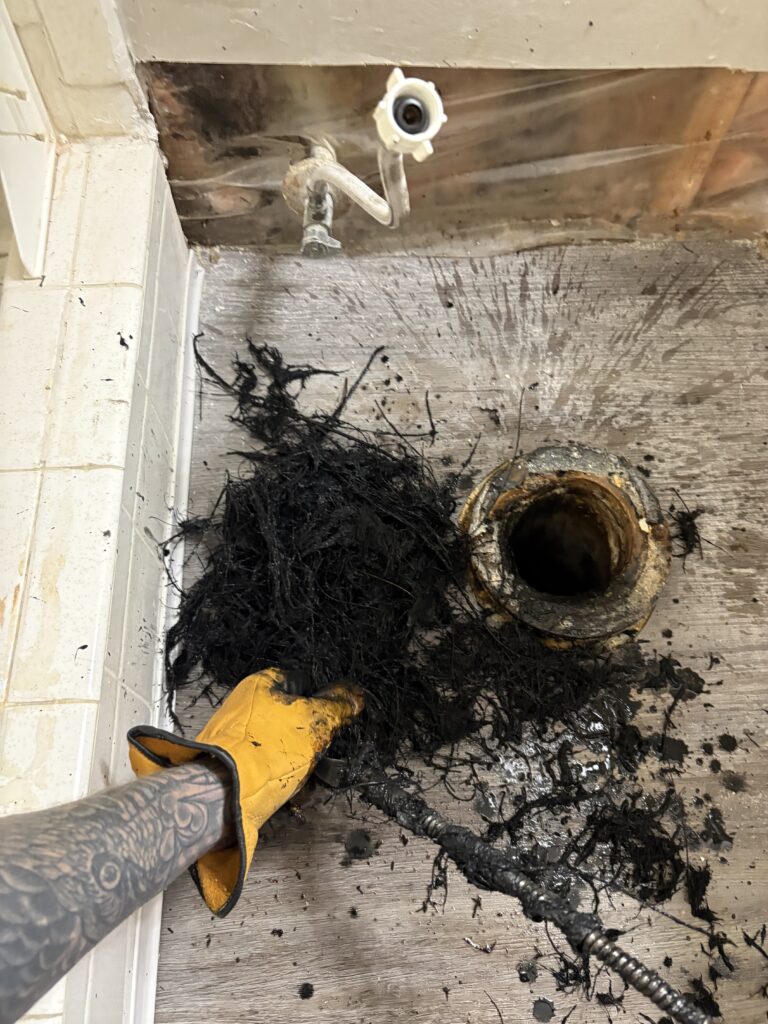
Tree root intrusion is a classic cause of slow drains that point to a deeper problem. At first, the roots act like a filter, allowing water to pass through slowly while catching toilet paper, grease, and other solids. This results in a drain that is consistently sluggish but hasn’t yet reached a total backup. Because the root mass is alive and growing, the blockage will never resolve itself and will only become more dense over time. Many homeowners mistake this for a standard clog and try to clear it with chemicals, but those products rarely affect a significant root mass and can actually damage the pipes further.
The danger of root intrusion goes beyond just a slow drain. As the roots grow larger, they exert outward pressure on the pipe, often causing it to shatter or collapse entirely. What started as a minor delay in your bathroom sink can quickly escalate into a situation where a section of your sewer line must be excavated and replaced. Detecting roots early through a professional camera inspection is the only way to prevent this kind of catastrophic failure. By identifying the intrusion while it is still just a slow drain, you can often utilize less invasive removal methods like hydro jetting or specialized root-cutting tools to clear the line and protect your landscaping.
Pipe Corrosion and Aging Infrastructure
For those living in older homes in the Broken Arrow area, the materials used in the original plumbing may be the root cause of persistent drainage issues. Homes built before the 1970s often utilize galvanized steel or cast-iron pipes, both of which are highly susceptible to corrosion. Galvanized pipes are known for rusting from the inside out, which creates a rough, jagged surface that catches hair and debris. Over several decades, this rust can narrow the pipe so significantly that water can only pass through a hole the size of a pencil. This internal decay is a common reason for house-wide slow drains that seem impossible to fix with standard methods.
Want to know the risks of DIY plumbing repairs? Click here for more information.
Cast-iron pipes face a different set of challenges. While they are incredibly durable, they are prone to a process called channeling, where the water flowing through the bottom of the pipe slowly wears away the metal until a hole or a long crack forms. When this happens, wastewater leaks into the soil beneath the home, and the soil can then enter the pipe, creating a heavy and stubborn blockage. Furthermore, the interior of a cast-iron pipe can become encrusted with a thick layer of scale and grease, which creates a sticky environment that slows down the movement of waste. These aging pipes often require a more comprehensive solution than simple cleaning.
Replacing aging infrastructure is a significant investment, but it is often the only way to permanently resolve slow drains in a vintage home. Modern materials like PEX for supply lines and PVC for drain lines are resistant to corrosion and have smooth interior surfaces that prevent the buildup of scale and debris. If your home has a history of recurring blockages and you know your pipes are several decades old, the slow drains you are experiencing are likely a signal that the metal has reached the end of its functional life. Upgrading these systems not only restores proper drainage but also increases the overall value and safety of your property.
The Dangers of Ignoring Slow Drains
Ignoring a slow drain is a gamble that rarely pays off for the homeowner. When water is slow to leave the house, it is sitting in your pipes longer than it should, which creates an environment ripe for secondary problems. One of the most immediate concerns is the growth of mold and mildew. Standing water and persistent dampness behind walls or under floors can lead to a mold outbreak in as little as forty-eight hours. The mold doesn’t just damage your home’s structure; it also releases spores into the air that can cause respiratory issues and other health problems for your family.
The structural integrity of your home is also at risk when you allow deep blockages to persist. A slow drain often indicates that the pressure inside the pipe is higher than intended. This pressure can force water through weakened seals or hairline cracks that would otherwise remain watertight. Over time, this slow seepage can rot wooden floor joists, damage drywall, and even lead to foundation issues if the leak is occurring under a concrete slab. The cost of remediating water damage and structural rot is almost always significantly higher than the cost of a professional drain cleaning or sewer line repair.
Perhaps the most distressing consequence of a neglected slow drain is the sudden and unsanitary backup of raw sewage into your home. A systemic blockage will eventually reach a point of total obstruction, and when it does, the wastewater will have nowhere to go but back up through your drains. This often happens at the most inconvenient times, such as during a holiday gathering or in the middle of the night. A sewage backup is a health hazard that requires professional biohazard cleaning and can ruin your flooring, cabinetry, and personal belongings. By addressing the slow drain while it is still just a delay, you are preventing the trauma of a full-scale plumbing disaster.
Modern Diagnostic Solutions for Deep Blockages
The days of guessing where a blockage is located are over, thanks to advancements in plumbing technology. When a homeowner in Broken Arrow contacts a professional for a slow drain, the first step is often a high-definition sewer camera inspection. A waterproof camera is fed into the plumbing system, providing a real-time view of the interior of the pipes. This allow us to see exactly what is causing the slowdown, whether it is a mass of tree roots, a buildup of grease, or a structural failure like a collapsed pipe. This transparency ensures that the repair is targeted and effective, saving the homeowner time and money.
Once the problem is identified, modern tools allow for efficient and non-invasive cleaning. Hydro jetting is one of the most effective methods for clearing deep blockages. This process involves using high-pressure water to scour the inside of the pipes, removing years of scale, grease, and even stubborn tree roots. Unlike traditional drain snakes, which only punch a hole through a clog, hydro jetting cleans the entire diameter of the pipe, restoring it to nearly its original capacity. This is an excellent preventative maintenance step for older homes that are prone to recurring slow drains.
For structural issues, trenchless sewer repair offers a way to fix or replace underground pipes without tearing up your entire yard. Methods like pipe lining or pipe bursting allow plumbers to create a new, durable pipe inside the old, damaged one with minimal excavation. This technology is a game-changer for homeowners who want to resolve deep blockages without the high cost and disruption of traditional trenching. By utilizing these modern diagnostic and repair solutions, you can address the root cause of your slow drains and ensure that your plumbing system remains reliable for years to come.
A slow drain is more than just a minor household nuisance; it is a vital indicator of the health and functionality of your entire plumbing system. Whether the cause is the shifting clay soil of Broken Arrow, the aggressive intrusion of tree roots, or the natural decay of aging pipes, a delay in drainage is a clear sign that something is wrong deep within your home. By paying attention to these early warnings and understanding the interconnected nature of your pipes, you can take the necessary steps to prevent a small problem from escalating into a catastrophic and expensive failure.
Living in a community like Broken Arrow means dealing with unique environmental challenges that require a proactive approach to home maintenance. Ignoring a sluggish sink or a gurgling toilet only gives a deep blockage more time to cause structural damage and health risks. Taking action while the problem is still manageable allows you to utilize modern technology like camera inspections and hydro jetting to restore your home’s plumbing without the need for invasive repairs. It is an investment in your property’s longevity and your family’s comfort.
When you encounter a slow drain that refuses to stay clear, remember that you are seeing only the tip of the iceberg. The most effective way to protect your home is to seek a professional evaluation that looks beyond the surface. A clear and healthy plumbing system provides the peace of mind that your home is structurally sound and safe from the dangers of hidden leaks and unsanitary backups. Don’t wait for the water to stop completely before you seek a solution; listen to what your drains are telling you today and ensure your home stays dry and functional for the long term.