How Often Should You Inspect Your Water Heater
Most homeowners in Broken Arrow never think about their water heater until the hot water runs out or a puddle shows up on the garage floor. That tank works every single day of the year, holding forty to eighty gallons of heated water under constant pressure, and it does so quietly enough that it fades into the background of your home. The general rule across the plumbing trade is that a water heater should be inspected professionally once per year, with a short homeowner check every three to six months in between. Tanks in hard water areas like Tulsa County often need attention more frequently because mineral scale builds faster here than in softer water regions. September is one of the smartest months to schedule that inspection, since your unit is about to head into the heaviest demand season of the year. Cold incoming groundwater during Oklahoma winters forces the burner or heating elements to run longer and harder, which exposes any weakness that was hiding all summer. A yearly inspection catches sediment buildup, anode rod failure, faulty valves, and venting problems long before they turn into a flooded floor or a cold shower on Christmas morning. Knowing the right schedule, and knowing what actually gets checked, keeps your unit running closer to its full lifespan instead of failing years early.
How Often Should You Inspect Your Water Heater Based on Age and Type
The correct water heater inspection schedule depends heavily on how old the unit is and what kind of system you own. A brand new tank in its first three years needs far less attention than a twelve year old unit approaching the end of its service life. Standard tank style heaters typically last eight to twelve years, while tankless units often reach fifteen to twenty years with proper maintenance. Gas models carry combustion and venting concerns that electric models simply do not have, so the inspection checklist changes with fuel type. Water quality matters just as much as age, and the moderately hard water throughout Broken Arrow, Bixby, and Jenks accelerates scale accumulation inside every tank in the area. Adjusting your inspection frequency to match these factors gives you far better results than following a single generic rule.
Water Heater Inspection Frequency for Tank Style Units
A conventional tank water heater should receive a full professional inspection once every twelve months from the day it is installed, and that schedule should tighten as the unit ages past the eight year mark. During the first several years of service, an annual visit mostly confirms that everything is operating within spec, that the temperature and pressure relief valve functions correctly, and that sediment has not started to accumulate in a way that will cause trouble later. Once a tank crosses into its ninth or tenth year, many plumbers recommend moving to a twice yearly inspection because the failure risk climbs sharply in that window. The steel tank is protected by a thin glass lining and a sacrificial anode rod, and once that anode is consumed the tank itself begins to corrode from the inside where nobody can see it. Catching a depleted anode rod at year six or seven and replacing it can add several years to the life of the entire appliance for a fraction of the cost of replacement.
Sediment is the other major reason tank units need consistent attention on a set schedule. Calcium and magnesium suspended in the incoming water settle to the bottom of the tank every time the unit heats, forming a crusty layer that acts like insulation between the burner and the water above it. That layer forces the burner to run longer to reach the same temperature, which raises your gas bill and puts thermal stress on the bottom of the tank. Homeowners who never flush their tanks often report popping, rumbling, or kettling sounds from the utility closet, and that noise is steam bubbles escaping from underneath the sediment bed. An annual flush performed as part of the inspection removes that layer before it hardens into a shell that no longer responds to draining. In areas with harder water, a flush every six months produces noticeably better efficiency and a longer tank life.
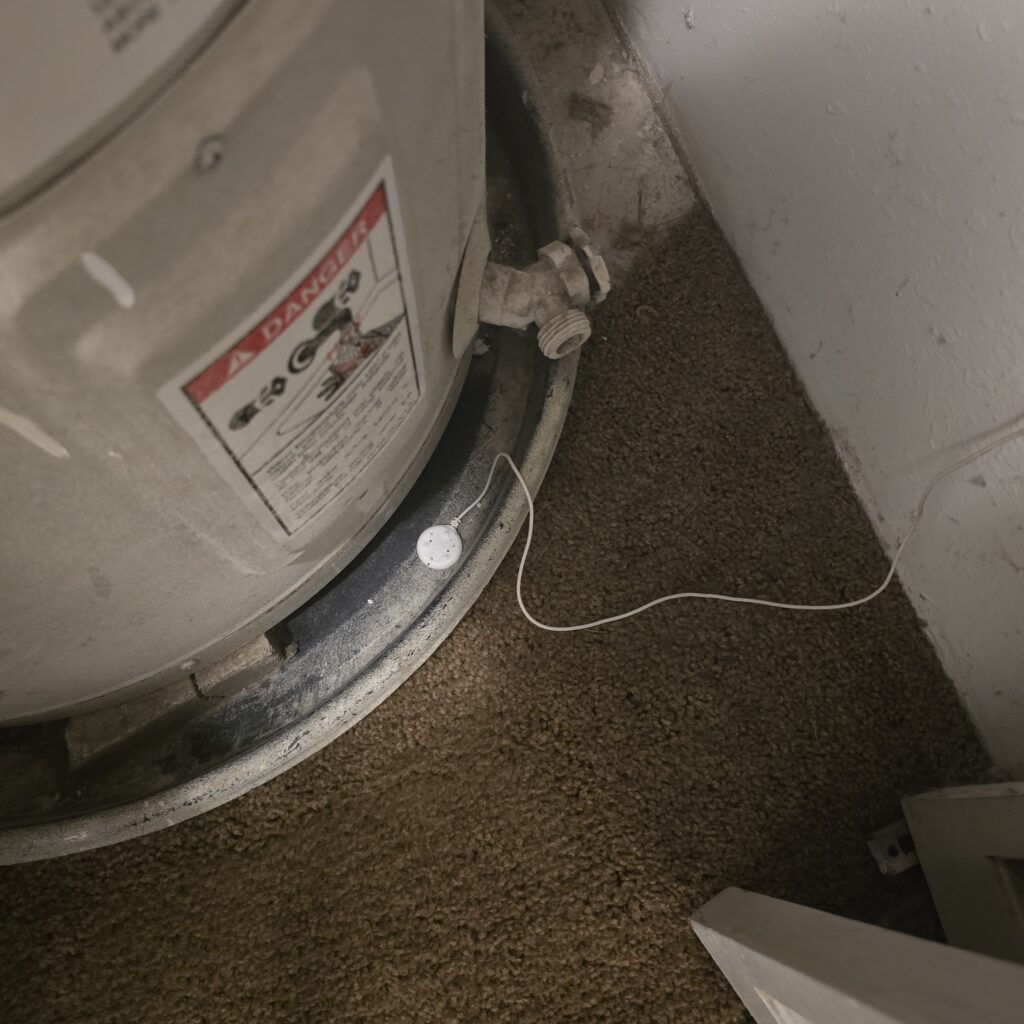
Between professional visits, you should walk out and look at your water heater roughly every three months, and it takes less than five minutes. Check the floor and the drain pan for any moisture, look at the connections at the top of the tank for mineral crust or green corrosion on copper fittings, and glance at the discharge pipe running from the relief valve to see if it has been dripping. Listen for rumbling while the burner is firing and note any change in how quickly hot water runs out during a shower. If your household has grown, added a new appliance, or started running the dishwasher and laundry at the same time, mention that during your annual service because the demand profile has changed. These small homeowner checks are not a substitute for professional service, but they routinely catch problems in the weeks between visits. Need a professional set of eyes on your unit? Click here for our water heater inspection service.
Tankless Water Heater Inspection Frequency and Descaling Intervals
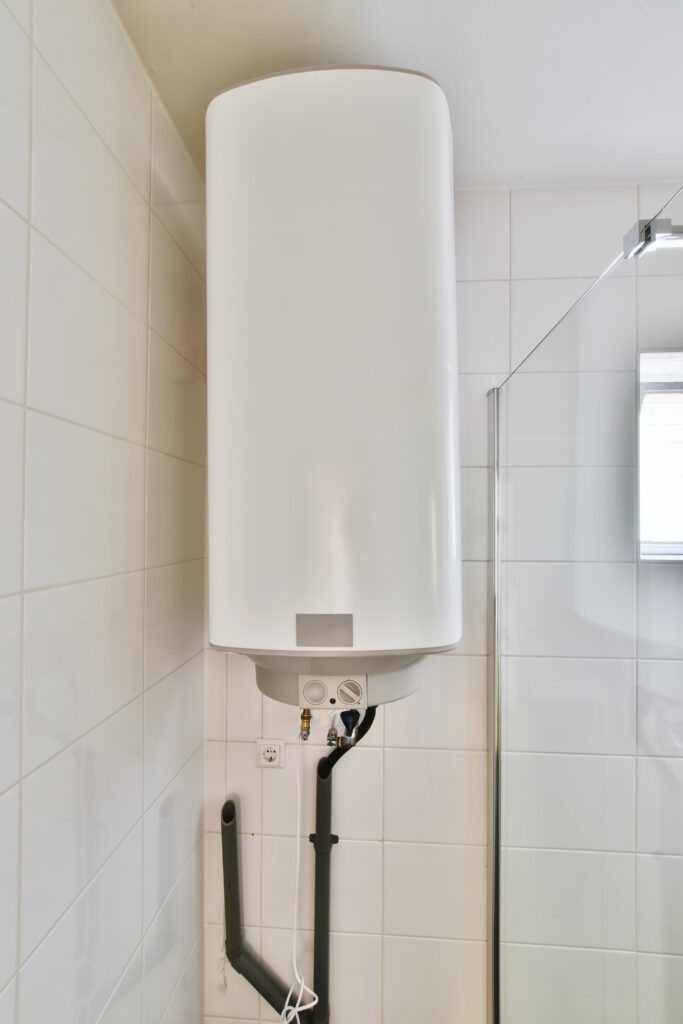
Tankless water heaters follow a different maintenance rhythm than tank units, and the single most important item on the list is descaling the heat exchanger. Water passes through a compact copper or stainless heat exchanger and is heated on demand at very high temperatures, which causes minerals to precipitate directly onto the walls of that exchanger. Most manufacturers specify a descaling flush once every twelve months, and many warranties require documented proof that the service was performed. In hard water conditions common across Owasso, Coweta, and Catoosa, a descaling interval of every six to nine months protects the exchanger far better than waiting a full year. Skipping this service is the leading cause of premature tankless failure, and replacing a scaled heat exchanger frequently costs more than half the price of a whole new unit.
Beyond descaling, a tankless inspection covers the inlet water filter screen, the venting system, the gas supply pressure, the condensate drain on condensing models, and any stored error codes in the control board. That filter screen catches debris from the municipal supply and clogs slowly over time, restricting flow until the unit starts short cycling or throwing ignition faults. Venting on a tankless unit is under more scrutiny than on a tank model because these systems move a large volume of combustion air through relatively small pipes. A technician also verifies that the gas line supplies adequate volume under full fire, since undersized gas piping is one of the most common installation errors found in the field. Many homeowners who complain that their tankless unit cannot keep up are actually dealing with a gas supply problem rather than a defective heater.
Tankless owners should perform their own quick check every few months by looking at the display for error codes, checking the vent termination outside for bird nests or debris, and confirming that the condensate line is draining freely. If you hear the unit cycling on and off repeatedly during a single shower, that symptom deserves a service call rather than a wait and see approach. Pay attention to any drop in maximum flow rate, because a gradual decline in how many fixtures the unit can supply at once often signals scale building inside the exchanger. Recording the install date and every service visit in a simple note on your phone makes warranty claims dramatically easier if something does fail. Considering an upgrade to on demand hot water? Click here for our tankless water heater services.
Water Heater Inspection Frequency for Homes With Hard Water in Broken Arrow
Water hardness across the Tulsa metro varies by neighborhood and source, but most of the region sits in the moderately hard to hard range, which changes everything about your inspection schedule. Every gallon of hard water that enters your tank carries dissolved calcium and magnesium, and heating that water forces those minerals out of solution where they settle and stick. A tank that would need flushing once a year in a soft water region may need it twice a year here to stay in comparable condition. The effect compounds over time, because a partially scaled tank heats less efficiently, which means the burner runs longer, which deposits even more scale. Homeowners who track their gas usage often notice a slow creep upward over several years and assume rates went up when the real cause is a heavily scaled tank.
Hard water also shortens the working life of the anode rod, the sacrificial component that corrodes so your tank does not. In aggressive water conditions, an anode rod that would normally last five years can be fully consumed in three, leaving the bare steel exposed for years before anybody notices. That is precisely why a professional inspection in a hard water area should include pulling and checking the anode rod at least every other year rather than assuming it is fine. Replacing a rod is inexpensive and takes a technician under an hour in most installations. Replacing a rusted through tank means a new appliance, a full day of labor, and potentially water damage cleanup if the failure happened while nobody was home.
Installing a whole home water treatment system is the most effective long term answer to hard water damage, and it protects far more than just the water heater. Softened or filtered water extends the life of dishwashers, washing machines, faucets, shower valves, and every foot of supply pipe in the house. Homes with treatment systems typically see less scale on fixtures, cleaner glassware, and noticeably better soap performance. The water heater benefits most of all, since it experiences the highest temperatures and therefore the most aggressive mineral precipitation in the entire plumbing system. If you are tired of fighting scale in every part of your home, click here for our water filtration systems.
What a Professional Water Heater Inspection Actually Includes
A real water heater inspection goes far beyond a technician glancing at the tank and saying it looks fine. There is a defined sequence of checks covering safety devices, combustion, water chemistry, structural condition, and code compliance. Each item on that list exists because it represents a documented failure mode that causes property damage, injury, or premature equipment death. Understanding what should happen during the visit helps you tell the difference between a thorough service call and a quick upsell attempt. It also helps you ask better questions and understand what the technician is telling you about the condition of your unit. The following breakdown covers the core components of a complete inspection on a residential water heater.
The Safety Device Portion of a Water Heater Inspection
The temperature and pressure relief valve is the single most important safety component on any water heater, and it gets tested during every proper inspection. That valve is designed to open automatically if the tank exceeds roughly 150 psi of pressure or 210 degrees Fahrenheit, releasing water and preventing the tank from becoming a pressure vessel with nowhere to vent. A stuck or corroded T and P valve is a genuine hazard, and mineral buildup around the seat is the usual cause of failure. Technicians test the valve by lifting the lever and confirming it discharges freely and reseats without dripping afterward. The discharge pipe itself also gets inspected, because code requires it to run downward, terminate within six inches of the floor, and use no threaded end cap that could be capped off by a well meaning homeowner.
Thermal expansion control is the next safety item, and it is frequently missed on older installations across the area. When water heats it expands, and in a home with a closed plumbing system due to a check valve or pressure reducing valve at the meter, that expanded volume has nowhere to go. Pressure spikes in a closed system stress the tank seams, the relief valve, and every fixture in the house, often causing toilet fill valves and faucet cartridges to fail early. A properly sized and properly charged expansion tank absorbs that pressure swing and keeps the system stable. Expansion tanks lose their air charge over time, so checking the bladder pressure against the incoming static water pressure belongs on every annual inspection list. Need this component checked or replaced? Click here for our water heater expansion tank service.
Thermostat settings and scald protection round out the safety review. Most manufacturers ship units set at 140 degrees, but the widely accepted recommendation for residential use is 120 degrees, which reduces scald risk for children and older adults while still discouraging bacterial growth inside the tank. A technician verifies the actual delivered temperature at a fixture rather than trusting the dial on the unit, since thermostat calibration drifts over the years. Homes with young children or elderly residents sometimes benefit from a thermostatic mixing valve, which lets the tank store water hotter for capacity while delivering it at a safe temperature. On electric units, both the upper and lower thermostats and both heating elements get tested for continuity and correct operation. A single failed lower element is the most common cause of hot water that runs out unusually fast in an electric water heater.
The Combustion and Venting Portion of a Water Heater Inspection
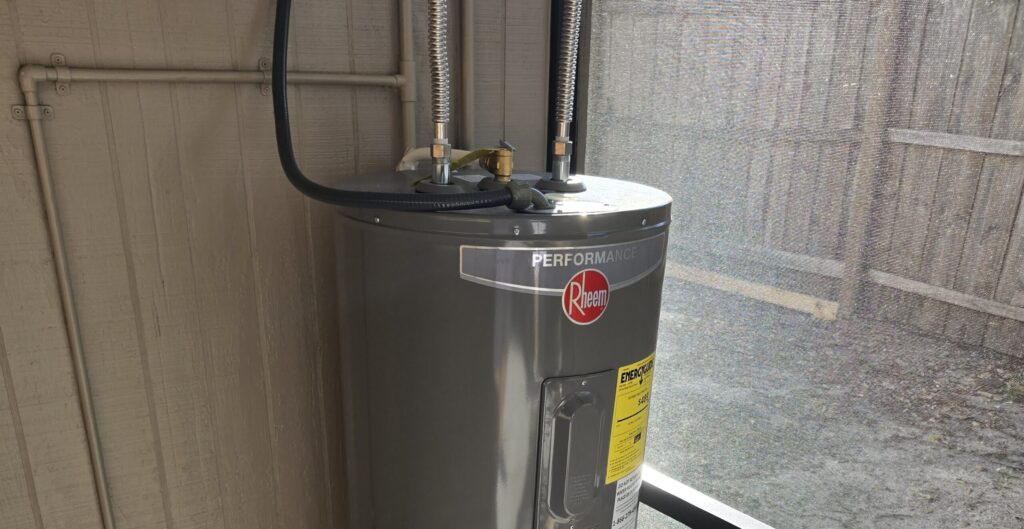
Gas water heaters require a careful look at the burner assembly, the pilot or igniter, the thermocouple or flame sensor, and the entire venting path from the draft hood to the roof. The burner flame should burn a steady blue with minimal yellow tipping, and a lazy yellow flame indicates incomplete combustion that produces carbon monoxide. Soot accumulation on the burner, the flame arrestor screen, or around the draft hood is a warning sign that gets addressed immediately rather than noted for later. The flame arrestor at the base of modern units can clog with lint and dust, starving the burner of combustion air and causing repeated pilot outages. Technicians clean that screen and the burner ports as part of a complete service on gas units.
Draft testing verifies that combustion gases are actually leaving the building instead of spilling back into the room. A simple smoke or match test at the draft hood shows whether the flue is pulling properly once the burner has been firing for a few minutes. Atmospheric vented units share a flue with the furnace in many Broken Arrow homes, and improper sizing or a disconnected section of vent pipe creates a carbon monoxide risk that is invisible without testing. Corrosion at the top of the tank around the flue outlet often indicates condensation from poor draft, which is a symptom worth chasing to its source. Vent connectors should have proper rise, correct slope, screws at every joint, and adequate clearance from combustible materials.
Combustion air supply is the final piece of the venting review and one that changes as homes get tightened up over the years. A water heater installed in a small closet or an enclosed utility room needs a specific volume of air to burn cleanly, and new insulation, weatherstripping, or a replacement door can quietly cut off that supply. Signs of an air starved appliance include soot, repeated pilot failures, and rollout marks around the burner opening. Gas piping to the unit also gets inspected for proper sizing, an accessible shutoff valve, a sediment trap ahead of the control valve, and any sign of corrosion or improper support. Leak testing the gas connections with a solution or an electronic detector is standard on any thorough visit. If your gas lines need attention, click here for our gas line repair services.
The Tank Condition and Water Quality Portion of a Water Heater Inspection
The physical condition of the tank and its connections tells an experienced technician a great deal about how many years of service remain. Rust streaks running down the jacket, moisture in the drain pan, or dampness at the base of the unit all suggest that the tank has begun to fail or that a fitting is weeping. Green or white crust on copper or brass connections at the top of the tank points to slow leaks or galvanic corrosion where dissimilar metals meet without a dielectric union. The nipples where the cold inlet and hot outlet enter the tank are a common corrosion point, especially on units approaching a decade in service. Any visible weeping from the tank body itself is not repairable, and at that point the conversation shifts to replacement planning rather than repair.
Flushing the tank serves as both maintenance and diagnostics during the inspection. A technician opens the drain valve and watches what comes out, because clear water suggests a clean tank while cloudy, gritty, or rust colored water indicates significant sediment or internal corrosion. Water that carries flakes of hard scale or fine rust particles tells you the interior condition without cutting anything open. On tanks that have never been flushed, the drain valve itself often clogs with debris, and a technician may need to clear it before drainage will proceed. This is exactly why an annual flush from the beginning of the unit’s life produces such dramatically better outcomes than starting the practice at year eight.
Water pressure and water quality testing complete the picture, because both directly affect how long your water heater survives. Static pressure above roughly 80 psi violates code in most jurisdictions and accelerates wear on the tank, the relief valve, and every fixture and appliance in the house. High pressure combined with a closed system and a failed expansion tank creates the exact conditions that cause premature tank failure. Testing the hardness of the incoming water helps set the right flush interval and tells you whether a treatment system would pay for itself. Recording these numbers each year builds a history that makes it easy to spot a developing problem before it becomes an emergency call.
Why You Need Annual Water Heater Inspections Before Winter Arrives
Waiting for a water heater to fail is one of the most expensive approaches a homeowner can take. A failed tank does not simply stop making hot water; it frequently releases forty to eighty gallons of water onto a garage floor, into a hallway closet, or through an upstairs ceiling. Insurance claims for water heater failures routinely run into the thousands of dollars once flooring, drywall, and contents are counted. An annual inspection costs a small fraction of that and catches the warning signs while they are still cheap to address. Scheduling that inspection now, before the coldest incoming water of the year arrives, puts your unit in the best possible position for the winter demand ahead.
Winter Water Heater Inspections Prevent the Most Expensive Failures
Oklahoma winters push water heaters harder than any other season, and that is not a small difference. Incoming groundwater temperatures drop substantially between September and January, which means the unit must raise the water temperature across a much wider range to deliver the same 120 degree output. Longer burner run times mean more thermal cycling on the tank, more sediment deposition, and more stress on components that were already showing wear. A heater that struggled quietly through the mild months often fails outright during the first sustained cold snap. Catching a weak element, a failing thermocouple, or a heavily scaled tank in early fall means fixing it on your schedule rather than at midnight during a hard freeze.
Cold weather also raises the stakes on any leak, no matter how small. A slow drip from a relief valve or a supply connection in an unconditioned garage can freeze, expand, and split a fitting wide open. Homes across the Tulsa metro learn this lesson every few winters when a hard freeze exposes weak points that went unnoticed all year. Inspecting connections, insulating exposed supply lines, and confirming that the drain pan and its drain line are clear all belong on the fall checklist. These are inexpensive preventive measures that consistently save homeowners from major water damage claims.
Demand also spikes during the holidays, when houses fill with guests and hot water usage doubles or triples overnight. A tank running at reduced capacity because of sediment or a failed element becomes obvious the moment four people need showers before dinner. Nobody wants to discover a capacity problem while family is in town and every plumbing company in the area is booked solid. Getting ahead of this with a fall inspection is the difference between a planned service visit and a scramble for emergency help. Sargents Plumbing & Drain charges no additional fees for emergency or weekend calls, though we would much rather help you avoid needing one.
Water Heater Repair Versus Replacement After Your Inspection
One of the most valuable outcomes of a professional inspection is a clear, honest answer about repair versus replacement. Many water heater problems are genuinely repairable at reasonable cost, including failed thermostats, burned out heating elements, bad thermocouples, faulty gas control valves, leaking drain valves, and depleted anode rods. A unit that is six years old with a failed element is an easy repair decision, and it should give you years of additional service afterward. The calculation changes when a tank is eleven years old, heavily scaled, and showing corrosion at the fittings. In that situation, spending money on repairs often means paying twice within a short period.
The one condition that always means replacement is a leak from the tank body itself, because the glass lining has failed and the steel underneath has rusted through. No patch, sealant, or fitting change addresses that, and continued use risks a sudden and complete failure. Recognizing this distinction early gives you time to compare options, consider a tankless upgrade, evaluate capacity for your household size, and take advantage of financing rather than making a rushed decision under pressure. Planned replacements also allow for code upgrades, better placement, improved venting, and proper expansion control that a rushed emergency swap might skip.
An honest inspection report should give you a realistic timeline rather than a scare tactic. Knowing that your unit likely has two or three good years left lets you budget instead of panic, and knowing that it is on borrowed time lets you act before the floor gets wet. Sargents Plumbing & Drain backs our work with long term warranties on repipes and fixtures, and we offer financing so a replacement does not have to wreck your budget. Need repair work on an existing unit? Click here for our water heater repair services. Ready to replace an aging tank? Click here for our water heater installation services.
Why Choose Sargents Plumbing & Drain for Your Water Heater Inspection
Sargents Plumbing & Drain is a locally owned company built on honesty and hard work, and that shows up most clearly in how we handle inspections. We tell you what we actually find, we show you the condition of the components we test, and we explain the reasoning behind every recommendation. Our team is licensed and insured, and we service tank, tankless, gas, and electric water heaters throughout Broken Arrow, Tulsa, Bixby, Jenks, Owasso, Coweta, Catoosa, Claremore, Sand Springs, Sapulpa, and the surrounding communities. We know the water conditions in this area because we work in them every day, and that local knowledge shapes the maintenance advice we give.
We offer 24/7 emergency service with no additional fees for emergency or weekend calls, which means a Saturday night failure does not come with a penalty attached to the invoice. We also extend a 10 percent discount to veterans, teachers, seniors, and more, because the people who serve this community deserve a break. Financing is available on larger jobs like water heater replacement and repiping, so a necessary repair does not have to wait for the right month. Our work is backed by long term warranties on repipes and fixtures, and we stand behind what we install.
Our goal on every call is a five star service experience, and we take that standard seriously from the first phone call to the final walkthrough. Reach us at (918) 380-5637 or email info@sgtplumbing.com to schedule your annual water heater inspection before winter demand arrives. You can also visit us at 605 W Oakland Pl, Broken Arrow, OK 74012. One yearly visit protects an appliance that runs every day of the year and quietly supports nearly every routine in your home. Book the inspection now and head into the cold months knowing your hot water is ready for it.