How Repiping Can Solve Recurring Leak Problems
If you keep patching leaks in the same house, the pipes are telling you something. One leak is a repair; a pattern of leaks is a system failure. Many homes in Broken Arrow and the greater Tulsa area still run on original galvanized steel or aging copper lines, and those materials break down from the inside out. Summer makes it worse here in Oklahoma because dry clay soil shifts under slab foundations and puts stress on buried water lines. Repiping replaces the failing network with new, durable piping so the leaks stop for good. It costs more up front than a spot repair, but it ends the cycle of water damage, high bills, and emergency calls. This post explains why recurring leaks happen, how the repiping process works, and why professional installation matters. By the end, you will know if repiping is the right move for your home.
Why Recurring Leaks Are a Sign You Need Whole Home Repiping
A single leak can come from a bad fitting or a frozen line, and a targeted repair handles it. Recurring leaks are different. When pinholes and drips show up in multiple rooms over months or years, the entire piping system has reached the end of its service life. Repairing one section only shifts water pressure to the next weak spot, and that spot fails soon after. Homeowners often spend more on repeated repairs than a full repipe would have cost. Water damage adds up too; soaked drywall, warped floors, and mold remediation are expensive. Whole home repiping addresses the root cause instead of chasing symptoms. Suspect a hidden leak right now? Click here for our leak detection service.
How Aging Galvanized Pipes Cause Recurring Leaks That Repiping Solves
Galvanized steel pipes were standard in American homes for decades, and many houses around Tulsa built before the 1970s still have them. The zinc coating inside these pipes wears away over time, and the exposed steel begins to rust. Corrosion builds up inside the pipe walls, which narrows the opening and weakens the metal at the same time. Water pressure drops at your faucets while stress on the thinning pipe walls climbs. Eventually the rust eats all the way through, and a leak appears. You can patch that spot, but the same corrosion exists throughout every galvanized line in the house. That is why one leak in galvanized pipe almost always leads to another within a year or two. Repiping removes every foot of corroded steel and replaces it with modern material that will not rust from the inside.
Rusty galvanized pipe does more than leak; it also affects your water quality every single day. Corroded pipes shed rust particles and sediment into the water you drink, cook with, and bathe in. Homeowners often notice brown or yellow water after a vacation, or a metallic taste at the kitchen tap. Sediment also clogs faucet aerators, showerheads, and appliance valves, which shortens the life of water heaters and washing machines. These symptoms confirm that corrosion is active inside the walls. No repair clamp or fitting swap can fix water quality problems caused by system wide rust. A complete repipe restores clean, full pressure water to every fixture in the home. Many customers tell us the improvement in water clarity is the first thing they notice after the job is done.
There is also a safety and insurance angle that homeowners should understand. Some insurance companies raise premiums or deny coverage for homes with original galvanized plumbing because the leak risk is well documented. A leak inside a wall can run for days before anyone notices, and the resulting claim can reach tens of thousands of dollars. Corroded threads at joints are especially fragile; a small bump during a remodel can crack them open. Selling a home with galvanized pipe is harder too, since inspectors flag it and buyers negotiate the price down. Repiping protects your property value and can lower your insurance costs. It turns a known liability into a documented upgrade with paperwork to prove it. That single improvement often pays for itself when the house changes hands.
How Pinhole Leaks in Copper Pipes Point to Whole Home Repiping
Copper has a strong reputation, but it is not immune to failure, and pinhole leaks are the proof. Pinhole leaks happen when pitting corrosion attacks the inside of copper pipe from localized chemical reactions in the water. Water chemistry, high velocity, excess flux from the original installation, and stray electrical currents can all trigger pitting. The result is a tiny hole that sprays a fine mist inside a wall or ceiling cavity. These leaks are sneaky because the water often travels along the pipe before dripping, which makes the source hard to find. By the time a stain appears on the drywall, the leak may have been active for weeks. One pinhole is a warning; two or three pinholes in different areas mean the pitting conditions exist throughout the system. At that stage, repiping is the honest recommendation because spot repairs will not outrun the corrosion.
Homeowners sometimes try to manage pinhole leaks with repair couplings, and we understand the appeal of a quick fix. The problem is that each coupling only covers a few inches of pipe. The water chemistry that created the first pinhole is still working on every other section of copper in the house. Each new leak means another wall opened, another drywall patch, another paint job, and another plumbing bill. Repeated openings in ceilings and walls also add up to real remodeling costs that never get counted in the repair total. Meanwhile the risk of a major failure while you are away from home keeps growing. A slow mist inside a wall feeds mold, and mold remediation costs far more than plumbing work. Repiping stops the pattern in one project and lets you close up the walls with confidence.
The good news is that modern repiping materials resist the exact conditions that destroy copper. PEX tubing does not corrode, does not pit, and handles the mineral content in Oklahoma water without trouble. It also flexes slightly, which helps it survive pressure spikes and minor ground movement that would stress rigid pipe. CPVC is another corrosion proof option for certain applications. During a repipe, a licensed plumber evaluates your water chemistry and home layout, then selects the right material for long term performance. New lines are routed cleanly and supported properly, which eliminates the water hammer and vibration that speed up wear. The result is a plumbing system engineered for decades of quiet, leak free service. Ready to replace failing copper lines? Click here for our repiping service.
How Oklahoma Soil Movement Creates Recurring Leaks That Repiping Fixes
Oklahoma sits on expansive clay soil, and that soil is brutal on plumbing. Clay swells when it is wet and shrinks hard during dry summer months like the ones we are in right now. That constant expansion and contraction shifts slab foundations, and the water lines running under or through the slab shift with them. Rigid pipe does not bend gracefully; it stresses at joints and fittings until something cracks. This is why so many Broken Arrow and Tulsa homeowners deal with slab leaks in July and August. A slab leak can waste hundreds of gallons a day while it undermines the foundation it hides beneath. Warm spots on the floor, unexplained water bills, and the sound of running water with everything off are the classic signs. When slab leaks recur, the soil movement is attacking the entire under slab network, not just one line.
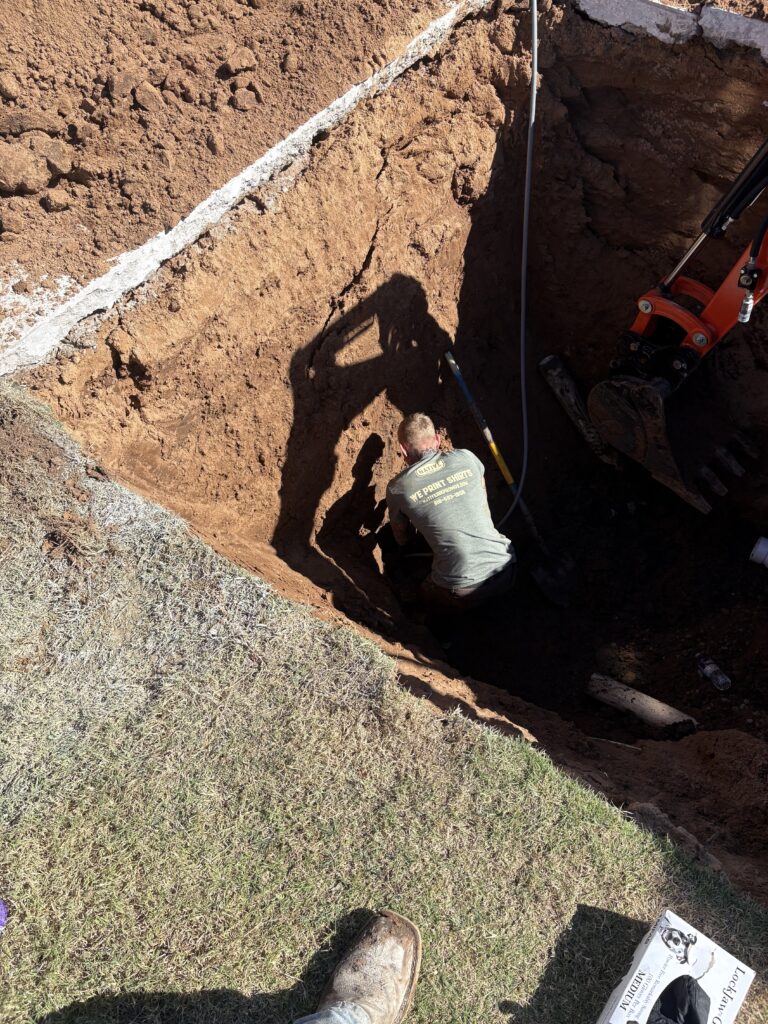
Repairing a slab leak the traditional way means jackhammering through your floor to reach the pipe. That process is loud, messy, and disruptive, and it only fixes the one spot that failed. Six months later, the shifting soil finds the next weak joint and the process starts over. Homeowners can end up with multiple patched trenches through their flooring and a repair history that scares off future buyers. There is a smarter approach for homes with recurring under slab leaks. A repipe reroutes new supply lines through walls, ceilings, or attic spaces, completely out of the soil’s reach. The old under slab lines are abandoned in place, and the soil can shift all it wants without touching your water supply. This is one of the most effective long term solutions available for slab leak problems in our region.
Summer is actually a practical time to schedule this kind of project. The soil is at its driest and most contracted, which means any active movement related leaks are showing themselves now. Kids’ summer schedules are often more flexible than the school year, and attic routed lines are easier to plan before winter insulation work. A summer repipe also protects you heading into winter, since new PEX lines tolerate freezing conditions far better than old rigid pipe. Waiting until a slab leak floods the living room removes all of your scheduling options at once. Emergency repairs happen on the leak’s timeline, not yours. Planning a repipe now means the work happens on your schedule with time to prepare. Sargents Plumbing & Drain never charges additional fees for emergency or weekend calls, but we would rather help you avoid the emergency entirely.
What to Expect During the Whole Home Repiping Process
Repiping sounds intimidating, but a well run project is more organized than most homeowners expect. The process has three main stages: inspection and planning, material selection, and installation. A licensed plumber maps your existing system, identifies every fixture, and designs the new pipe routes before any cutting begins. Most homes keep running water through the majority of the project, with only short planned shutoffs. Wall openings are made strategically and kept as small as possible. A typical single family home takes a few days from start to finish, not weeks. Knowing what happens at each stage helps you plan around the work and ask the right questions. Here is how the whole home repiping process breaks down.
The Inspection and Planning Stage of the Whole Home Repiping Process
Every quality repipe starts with a thorough inspection, and this stage matters more than most homeowners realize. The plumber traces your existing supply lines from the meter to every fixture, noting pipe material, diameter, and condition along the way. Water pressure gets tested at multiple points to establish a baseline and reveal hidden restrictions. Leak detection equipment may be used to confirm active leaks and document damage before work begins. The inspection also identifies code issues in the original installation, such as missing shutoff valves or improper pipe sizing. All of this information feeds into the project plan. A home with a slab foundation gets a different routing strategy than one with a crawl space. Skipping this stage leads to surprises mid project, so a detailed inspection is a sign you hired the right company.
The planning phase turns inspection data into a working blueprint for the new system. Your plumber decides where new lines will run: through the attic, along walls, or through a crawl space, depending on your home’s construction. Fixture locations get counted and mapped so every sink, toilet, shower, and appliance connection is accounted for. Pipe sizing gets calculated based on fixture demand so pressure stays strong even with multiple fixtures running. The plan also schedules water shutoffs to minimize disruption; most families only lose water for a few hours at a time. Permits are pulled where required, which protects you during inspections and future home sales. You should receive a clear written scope before work starts. A written plan with a firm price is the standard you should expect.
Planning is also when you should discuss related upgrades, because a repipe is the most cost effective moment to add them. New shutoff valves at every fixture make future maintenance simple. A pressure regulating valve protects the new system from municipal pressure spikes. Water heater connections get evaluated, and if your heater is near the end of its life, replacing it during the repipe saves labor costs. Many homeowners add a water filtration system while the walls are already open. Your main water supply line from the meter deserves a look too, since an old service line can undermine a brand new interior system. Thinking about the full picture now prevents opening walls twice. Concerned about the line feeding your home? Click here for our water supply line service.
Pipe Material Options in the Whole Home Repiping Process
PEX is the most popular repiping material in modern residential work, and it earned that position honestly. PEX is cross linked polyethylene, a flexible tubing that snakes through walls and joists with far fewer fittings than rigid pipe. Fewer fittings mean fewer potential leak points, which is the whole reason you are repiping in the first place. PEX does not corrode, does not react with Oklahoma’s mineral heavy water, and resists scale buildup inside the tubing. It also expands slightly if water freezes inside it, which gives it a real survival advantage during our winter cold snaps. Installation moves faster than copper, which reduces labor cost and time in your home. Quality PEX systems carry manufacturer warranties measured in decades. For most Broken Arrow homes, PEX delivers the best combination of durability, performance, and value.
Copper remains a legitimate option, and some homeowners prefer it for specific reasons. Type L copper is thick walled, proven over generations, and naturally resistant to bacteria growth inside the pipe. It handles high heat well, which makes it a common choice for water heater connections even in otherwise PEX homes. Copper also adds perceived value for some buyers who trust the traditional material. The tradeoffs are real, though; copper costs significantly more in both material and labor, and it remains vulnerable to the pitting corrosion described earlier if water chemistry is aggressive. Rigid copper also transmits water hammer noise more than flexible tubing. A hybrid approach often makes sense, using copper at the water heater and exposed stub outs with PEX everywhere else. A licensed plumber can test your water and recommend the right mix for your situation.
CPVC deserves a mention because some homes in our area already have it, and homeowners ask about it. CPVC is a rigid plastic rated for hot and cold potable water, and it resists corrosion completely. It costs less than copper and installs with solvent cement rather than soldering. The downside is brittleness; CPVC becomes fragile with age and can crack from impact or stress, especially in attics that bake through Oklahoma summers. Many plumbers now recommend replacing aging CPVC with PEX during a repipe rather than extending it. Material choice should always account for local climate, water chemistry, and how your specific house is built. Beware of any contractor who quotes a repipe without asking what material is going in and why. At Sargents Plumbing & Drain, we walk you through the options and put the material specification in writing.
The Installation Timeline for the Whole Home Repiping Process
Day one of a repipe focuses on setup and access. The crew protects your floors and furniture with drop cloths and plastic sheeting before any cutting starts. Small access openings are cut in drywall at strategic points, usually behind fixtures and at pipe route turns. Good crews keep these openings tidy and standardized so patching goes quickly later. New pipe runs begin going in immediately, routed alongside the old lines that are still carrying your water. This parallel approach is the key to keeping your water on during most of the project. You can usually cook, flush, and shower normally through the first phase. Expect some noise from drilling and cutting, but expect a clean job site at the end of each day.
The middle phase is the switchover, and this is where planning pays off. Once the new lines are fully run and connected to fixtures, the crew schedules a shutoff to cut over from old pipe to new. In a well planned project, this shutoff lasts a few hours, not days. Every fixture gets connected, every new shutoff valve gets installed, and the system gets pressurized for testing. Pressure testing verifies that every joint holds before any wall gets closed. The old pipes are drained and abandoned in place or removed where accessible. Your plumber should walk you through the new system, showing you the main shutoff and each fixture valve. Water comes back on the same day, running through pipe that has never carried a drop before.
The final phase covers inspection, patching, and cleanup. Where permits were pulled, a municipal inspector reviews the work before walls close, which is a protection you should welcome. Drywall openings get patched, and many companies coordinate texture and paint so the walls look untouched. A final walkthrough confirms strong pressure at every fixture, hot water arriving quickly, and no drips anywhere. You should receive documentation of the work, material specifications, and warranty terms in writing. Total timeline for an average home runs two to five days depending on size and complexity. Compare that to years of recurring leak repairs and the math gets simple. Sargents Plumbing & Drain backs repipes with long term warranties, so the paperwork you receive actually means something.
Why You Need a Licensed Plumber for Repiping in Broken Arrow
Repiping touches every wall, every fixture, and the health of everyone who drinks your water. This is not a project for a handyman or a weekend attempt. Licensed plumbers carry the training, permits, and insurance that protect your home and your investment. Code compliant work also protects you at resale, when inspectors and buyers scrutinize plumbing documentation. Unpermitted pipe work can void insurance claims and stall home sales. Hiring right the first time is the cheapest decision in the entire project.
The Cost Savings of Professional Repiping in Broken Arrow
Professional repiping saves money in ways that show up for years. New pipes eliminate the hidden leaks that inflate water bills month after month. Full pressure returns to every fixture, so appliances like water heaters and washing machines stop straining against restricted flow. Insurance premiums often drop once galvanized or leak prone pipe is documented as replaced. Every future repair bill for the old system simply disappears. The project pays you back quietly every single month.
Compare that to the true cost of repeated leak repairs. Each leak event brings a plumbing bill, drywall repair, paint, and sometimes flooring replacement. Water damage claims raise insurance rates, and mold remediation can cost thousands on its own. Emergency repairs also happen at the worst times, when you have no leverage on price or schedule. Three or four leak events can easily exceed the cost of a planned repipe. Recurring leaks are the most expensive plumbing problem to ignore.
Financing removes the biggest barrier for most families. Sargents Plumbing & Drain offers financing options so a repipe fits a monthly budget instead of demanding a lump sum. We also offer 10% discounts for veterans, teachers, seniors, and more. There are no additional fees for emergency or weekend calls, ever. A clear written quote up front means no surprises at the end. Honest pricing is part of how this company was built.

The Long Term Warranty Benefits of Repiping in Broken Arrow
A warranty is only as good as the company standing behind it, and repipe warranties are where that matters most. Quality PEX and copper materials carry manufacturer warranties that can span decades. Workmanship warranties from the installer cover the labor side, which is where most failures actually originate. Together, these protections mean a leak in year five is the company’s problem, not yours. Ask any repiping contractor for their warranty terms in writing before signing. If they hesitate, keep looking.
Warranties also transfer real value when you sell your home. A documented repipe with active warranty coverage answers the inspector’s biggest question before it gets asked. Buyers pay more for homes with new plumbing systems, and they close faster. Your disclosure paperwork becomes a selling point instead of a liability list. Permits, material specs, and warranty documents form a package that protects your equity. Few home improvements offer that kind of paper trail.
Sargents Plumbing & Drain backs repipes and fixtures with long term warranties because we expect our work to last. Our warranties are written, specific, and honored without argument. We are locally owned, so the company behind your warranty is here in Broken Arrow, not a call center three states away. If something ever needs attention, the same team that installed your system comes back to service it. That accountability is the whole point of hiring local. Your pipes and your paperwork are both built to last.
Why Choose Sargents Plumbing & Drain for Repiping in Broken Arrow
Sargents Plumbing & Drain is locally owned and built on honesty and hard work. We are licensed and insured, and every repipe we perform meets code and passes inspection. Our team serves Broken Arrow, Tulsa, Bixby, Jenks, Owasso, and the surrounding communities. We know Oklahoma soil, Oklahoma water, and the pipe problems both of them cause. Local knowledge shows up in better routing decisions and materials that hold up here. When you call us, you get neighbors who answer for their work.
Our service standards are simple and public. We offer 24/7 emergency service with no additional fees for emergency or weekend calls. Veterans, teachers, seniors, and more receive a 10% discount on our work. Financing is available so major projects like repiping stay affordable. We are dedicated to always providing 5 star service, and our reviews reflect that commitment. Every job gets the same care we would give our own homes.
Stop paying for the same leak twice. Call Sargents Plumbing & Drain at (918) 380-5637 or email info@sgtplumbing.com to schedule a repiping evaluation. We will inspect your system, explain your options in plain language, and give you a written quote with no pressure. Our shop is located at 605 W Oakland Pl, Broken Arrow, OK 74012. Long term warranties back every repipe we install. One project ends the leaks for good.