How Trenchless Pipe Repair Works Without Digging Up Your Yard
Summer is the season when Broken Arrow homeowners finally get their yards looking the way they want, and the last thing anyone wants is a backhoe tearing through the lawn to fix a broken sewer line. Trenchless pipe repair solves that problem by fixing or replacing underground pipes through small access points instead of a long open trench. The technology has been used by professional plumbers for decades, and it works on sewer lines, water lines, and drain pipes in most residential situations. A trenchless repair typically finishes in one or two days, while traditional excavation can stretch across a week or more. Your grass, garden beds, driveway, and mature trees stay intact because the work happens inside the existing pipe path. The repaired pipe is often stronger than the original, with a service life of 50 years or longer. Oklahoma’s shifting clay soil and aggressive tree roots make pipe damage common in the Tulsa metro, so understanding this option before an emergency happens puts you ahead. This guide explains exactly how trenchless pipe repair works, why it protects your property, and how to know when your home needs it.
How Trenchless Pipe Repair Works Step by Step
Trenchless pipe repair follows a clear process that starts with diagnosis and ends with a fully restored pipe, all without open excavation across your yard. The plumber first locates the damage with a sewer camera, then cleans the pipe, and finally repairs it using one of two main methods. Those methods are pipe lining, which creates a new pipe inside the old one, and pipe bursting, which replaces the old pipe entirely. Both methods need only one or two small access pits, usually a few feet square, placed at the ends of the damaged section. Existing cleanouts can sometimes serve as access points, which means no digging at all. The choice between lining and bursting depends on the pipe material, the extent of the damage, and the layout of your property. A licensed plumber will explain which method fits your situation after the inspection. Here is how each step works in detail.
The Camera Inspection That Starts Every Trenchless Pipe Repair
Every trenchless pipe repair begins with a video camera inspection of the pipe. The plumber inserts a small waterproof camera on a flexible cable through a cleanout or access point and pushes it through the entire line. The camera sends live video to a monitor above ground, so the technician sees cracks, root intrusion, corrosion, offset joints, and collapsed sections in real time. A locator device tracks the camera head from the surface, which pinpoints the exact depth and position of each problem. This precision is what makes trenchless repair possible, because the plumber knows exactly where to work without guessing. The inspection also confirms the pipe material, which matters since clay, cast iron, Orangeburg, and PVC each behave differently. Without this step, no honest plumber can recommend a repair method or give you an accurate price. Sargents Plumbing & Drain performs a camera inspection before every trenchless job so you see the evidence yourself.
The inspection reveals more than just the obvious break. Many older sewer lines in Tulsa area homes have multiple problem spots, such as root intrusion at several joints along with a cracked section near the street. Seeing the full picture prevents a situation where one section gets fixed while another fails six months later. The camera footage also shows the slope of the line, which affects how well waste flows toward the city main. Bellied sections, where the pipe has sagged and holds standing water, show up clearly on video. Grease buildup, scale, and debris are visible too, and those findings shape the cleaning plan. Homeowners receive a recording or a walkthrough of the footage, so the recommendation is backed by proof rather than a sales pitch. That transparency matters when you are deciding on a repair that involves your largest investment.
Camera inspections also protect you during real estate transactions and remodels. Buyers in Broken Arrow, Tulsa, and Owasso increasingly request sewer scopes before closing because a hidden sewer problem can cost thousands after move in. If you are planning a bathroom addition or a kitchen remodel, an inspection confirms the existing line can handle the added fixtures. The inspection takes about an hour in most homes and requires no digging whatsoever. It is the cheapest step in the entire process and the one that prevents the most expensive mistakes. Regular inspections every few years catch root intrusion early, when a simple cleaning solves the problem instead of a full repair. Think of it as a checkup for the one pipe in your home you can never see. Want to know what is happening inside your sewer line? Click here for our sewer line inspection service.
How Pipe Lining Works in Trenchless Pipe Repair
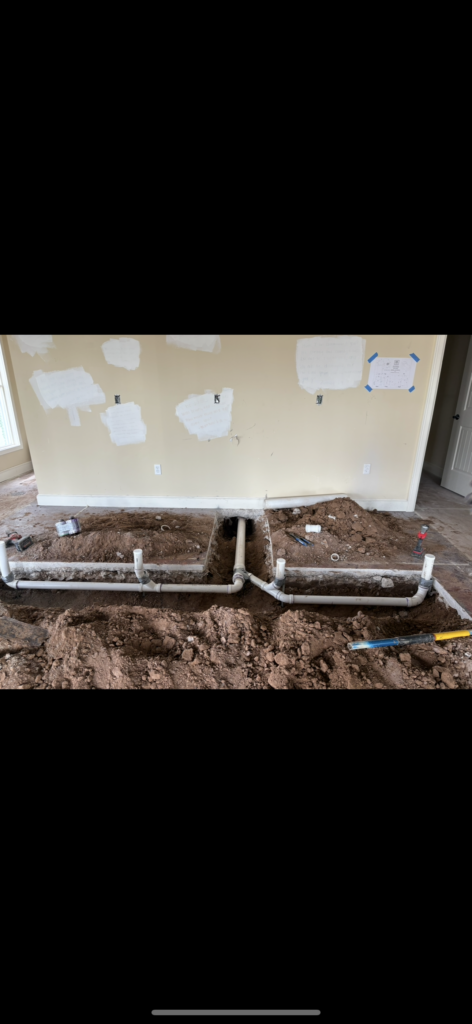
Pipe lining, also called cured in place pipe or CIPP, is the most common trenchless pipe repair method for lines that are damaged but still structurally intact. The process starts with a thorough cleaning of the old pipe, usually with hydro jetting, which blasts away roots, scale, and debris with high pressure water. A clean pipe surface is critical because the new liner must bond evenly along the entire run. The liner itself is a flexible felt or fiberglass tube saturated with a special epoxy resin. Technicians insert the liner through an access point and position it along the damaged section using air or water pressure. An inflatable bladder then presses the resin soaked liner tight against the old pipe walls. The resin cures over several hours using hot water, steam, or UV light, depending on the system. When curing finishes, the bladder comes out and a brand new pipe exists inside the old one.
The cured liner is smooth, seamless, and jointless, which gives it real advantages over the original pipe. Tree roots invade sewer lines through joints and cracks, and a seamless liner removes every entry point they exploited before. The smooth epoxy surface also improves flow, since waste and water slide through with less friction than they did through rough clay or corroded cast iron. The liner reduces the pipe’s interior diameter by only a small fraction, and the improved flow more than makes up for it in normal residential use. Cured liners carry ratings for 50 years of service life, and many manufacturers back them with long warranties. Lining works on pipes made of clay, cast iron, PVC, and even deteriorated Orangeburg in some cases. It handles cracks, small gaps, root damage, and corrosion effectively. A camera inspection after curing verifies the liner installed correctly from end to end.
Pipe lining does have limits, and an honest plumber will tell you when it is not the right choice. A pipe that has fully collapsed leaves no path for the liner to travel through, so lining cannot fix it. Severely bellied lines are poor candidates because the liner follows the sag instead of correcting it. Lines with major offsets at joints may also need a different approach. In those cases, pipe bursting or a targeted spot repair makes more sense. This is why the camera inspection comes first, since the footage determines what the pipe can accept. When lining is the right fit, most residential jobs finish in a single day. Your water and sewer service is usually restored the same evening, and your yard looks exactly the way it did that morning.
How Pipe Bursting Works in Trenchless Pipe Repair
Pipe bursting is the trenchless pipe repair method used when the old pipe is too damaged for lining or when you want a full replacement with a brand new pipe. The process requires two small access pits, one at each end of the pipe run. Technicians dig a launch pit and a receiving pit, each only a few feet across, instead of trenching the entire length of the line. A steel cable runs through the old pipe between the two pits. A cone shaped bursting head attaches to the cable, and a new high density polyethylene pipe attaches directly behind the head. A powerful hydraulic machine then pulls the cable, dragging the bursting head through the old pipe. The head fractures the old pipe outward into the surrounding soil as it moves. The new HDPE pipe follows immediately behind, taking the exact path of the old line.
The result is a completely new pipe, not a repair of the old one. HDPE pipe is fused at its joints with heat, creating a single continuous line with no mechanical connections for roots to attack. The material resists corrosion, handles soil movement, and flexes slightly without cracking, which suits Oklahoma’s expansive clay soils well. Pipe bursting can even upsize the line, replacing an old 4 inch pipe with a 6 inch pipe when a home needs more capacity. That makes it a smart choice during major remodels or additions that add bathrooms. The new pipe carries a service life of 50 to 100 years under normal conditions. Bursting works on clay, cast iron, Orangeburg, and concrete pipes. It handles collapsed sections that lining cannot, as long as a cable can still pass through the line.
Most residential pipe bursting jobs finish in one to two days from start to backfill. The crew locates other utilities before work begins, since the bursting action displaces soil around the pipe path. Water, gas, and electric lines nearby are marked and protected. Once the new pipe is in place, the plumber connects it to your home and the city main, then tests the line with a camera and flow check. The access pits get backfilled and the surface restored, leaving two small patches instead of a scar across the whole yard. Compare that to traditional replacement, which requires a trench several feet wide and deep along the full length of the line. Homeowners with new landscaping, irrigation systems, or hardscaping almost always come out ahead with bursting. Think your sewer line may be beyond a simple fix? Click here for our trenchless pipe repair service.
Why Trenchless Pipe Repair Protects Your Yard and Landscaping
The biggest reason homeowners choose trenchless pipe repair is simple: it protects everything sitting above the pipe. Traditional sewer replacement means excavating a trench from your house to the street, and that trench does not care what is in its way. Lawns, flower beds, sprinkler systems, sidewalks, driveways, fences, and tree roots all get destroyed or disturbed. Trenchless methods work through one or two small openings, so the damage footprint shrinks by 90 percent or more. In summer, when your grass and gardens are at their peak, that difference is worth thousands of dollars in restoration you never have to pay for. The savings extend beyond landscaping to concrete, hardscaping, and even interior floors when the damaged pipe runs under the house. Here is a closer look at exactly what trenchless pipe repair saves you.
Trenchless Pipe Repair Saves Driveways, Patios, and Mature Trees
Sewer lines in the Tulsa metro frequently run beneath driveways, sidewalks, patios, and porches on their way to the city main. Traditional excavation through concrete means cutting it, breaking it out, hauling it away, and pouring new concrete after the pipe work finishes. New concrete rarely matches the old, so your driveway ends up with a visible patched strip forever. Trenchless pipe repair passes directly beneath these surfaces without touching them. The liner or new pipe travels under the slab through the existing pipe path, and the concrete above never knows the difference. That alone can save several thousand dollars on a typical Broken Arrow home. Stamped concrete, pavers, and decorative hardscaping are even more expensive to replace, and trenchless work leaves them untouched. Homeowners with outdoor kitchens or pool decks over their lines should consider trenchless the default option.
Mature trees present a different problem that trenchless repair solves better than any alternative. A large shade tree adds real value to a property, and its root system often spreads two to three times wider than its canopy. Trenching through that root zone can sever enough roots to destabilize or kill the tree, even when the trunk sits many feet from the trench. Ironically, tree roots are often the reason the pipe failed in the first place, since they invade joints seeking water. Trenchless repair removes the root intrusion inside the pipe and seals every entry point without harming the tree itself. The tree keeps its roots, you keep your shade, and the roots can no longer reach the inside of the line. Arborists charge significant fees to assess and treat trench damaged trees, and a lost mature tree cannot be replaced at any reasonable price. Protecting trees is one of the most overlooked financial benefits of going trenchless.
Irrigation systems, landscape lighting, and buried utilities also survive trenchless work intact. Sprinkler lines crisscross most established yards in Bixby, Jenks, and Owasso, and an excavator cannot avoid them along a full trench path. Every cut sprinkler line means repair parts, labor, and rezoning work after the sewer job ends. Low voltage lighting wires, drainage pipes, and pet fences face the same risk. Trenchless access pits are small enough to place away from these systems in most yards. Fences and gates stay standing because heavy equipment does not need a wide path across the property. Even your neighbors benefit, since trenchless equipment is quieter and the job wraps up faster. When you add up concrete, trees, irrigation, and turf, the protected value often exceeds the cost of the pipe repair itself.
Trenchless Pipe Repair Costs Less Than Excavation in Total
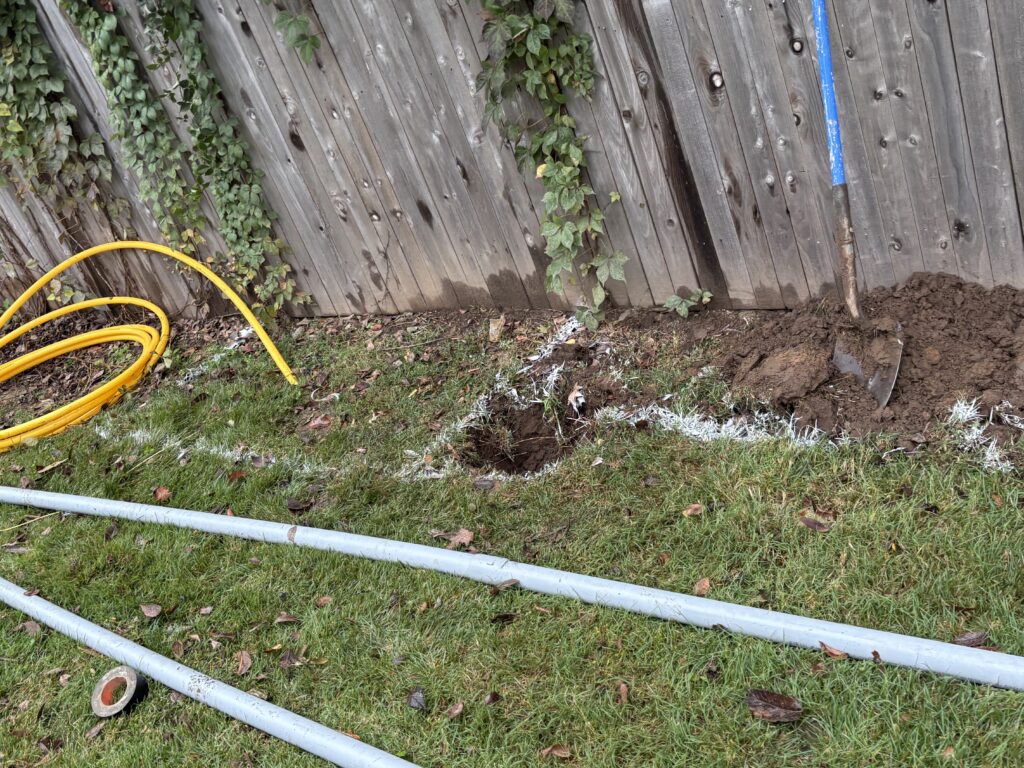
Homeowners sometimes hesitate when they see that trenchless pipe repair carries a similar or slightly higher base price than open trench replacement. The base price comparison is misleading because it ignores restoration costs, and restoration is where excavation gets expensive. A trenched yard needs new sod, and quality sod installation runs into the thousands for a typical suburban lot. Broken driveway sections, sidewalk panels, and patio slabs add thousands more. Sprinkler repairs, landscape replacement, and fence work stack on top of that. None of those costs appear on the excavation quote, but every one of them lands on you after the plumber leaves. Trenchless repair includes nearly everything in one number because there is almost nothing to restore. When you compare total project cost, trenchless wins in most residential situations.
Time is another cost that excavation hides. A full trench replacement can take three to five days or longer, and your sewer service may be limited for much of that time. Trenchless lining often finishes in a single day, and bursting rarely takes more than two. Less time on site means less labor cost and less disruption to your household. Families do not need to relocate or ration water use for a week. Faster completion also matters in summer heat, when an open trench dries out surrounding soil and stresses nearby plantings. Permit requirements are often simpler for trenchless work as well, since some cities treat it differently than open excavation near streets and rights of way. Fewer days, fewer crews, and fewer restoration contractors add up to a smoother project.
Financing and value protection round out the financial case. Sargents Plumbing & Drain offers financing options, so a necessary repair does not have to drain your savings in a single payment. A properly documented trenchless repair with a long warranty also becomes a selling point when you list your home. Buyers and inspectors view a new sewer liner or HDPE line as a major asset, since it removes one of the biggest unknowns in an older home. An old clay line with visible root intrusion, on the other hand, gives buyers leverage to demand price reductions. Spending on trenchless repair now protects your negotiating position later. The repair pays for itself twice, once in avoided restoration costs and again in preserved home value.
How Long Trenchless Pipe Repair Lasts Compared to Traditional Repair
Durability is where trenchless pipe repair quietly outperforms the pipes it replaces. Cured in place liners carry design lives of 50 years, verified through decades of use in municipal sewer systems across the country. HDPE pipe installed through bursting is rated for 50 to 100 years depending on conditions. Compare that to the original materials in many Tulsa area homes: clay pipe with joints every few feet, cast iron that corrodes from the inside out, and Orangeburg pipe that literally deforms with age. Homes built before the 1980s often have lines that were engineered for a fraction of the lifespan modern materials deliver. A trenchless repair does not just fix the current problem; it upgrades the entire line to modern standards. That is a meaningful difference from spot repairs that leave the rest of the old pipe waiting to fail.
The seamless nature of trenchless materials drives the longevity. Roots enter pipes at joints, and epoxy liners and fused HDPE have no joints along the repaired run. Corrosion attacks metal pipes, and neither epoxy nor HDPE corrodes. Soil movement cracks rigid clay, while liners bond to the host pipe and HDPE flexes with the ground. Oklahoma’s clay soils swell in wet springs and shrink in dry summers, and that seasonal movement is exactly what modern trenchless materials are built to tolerate. Chemical resistance matters too, since household drain cleaners and waste do not degrade epoxy or polyethylene the way they attack older materials. The smooth interior also resists grease and scale buildup better than rough old pipe walls. Fewer clogs mean fewer service calls over the life of the line.
Warranties back up the lifespan claims, and this is where choosing the right contractor matters. Sargents Plumbing & Drain stands behind its work with long warranties on major pipe repairs, so the promise on paper matches the performance underground. A warranty only helps if the installer did the job correctly, which is why post repair camera verification should be standard on every trenchless project. Ask any contractor to show you the finished line on video before final payment. Proper installation includes correct resin curing times, full liner inversion, and verified connections at both ends. Cutting corners on any of those steps shortens the life of the repair dramatically. A properly installed trenchless repair should be the last sewer work your home needs for generations.
Why You Need Professional Trenchless Pipe Repair in Broken Arrow
Trenchless pipe repair requires specialized equipment, training, and licensing that general handymen and even many plumbing companies do not have. Camera systems, hydro jetters, liner inversion equipment, and bursting rigs represent serious investments, and operating them correctly takes real experience. A botched liner installation can block your entire sewer line, turning a repair into an emergency. Oklahoma licensing requirements exist to protect homeowners from exactly that outcome. Sargents Plumbing & Drain is licensed, insured, and locally owned right here in Broken Arrow, serving Tulsa, Bixby, Jenks, Owasso, and surrounding communities. When your sewer line fails, the company you call determines how the next 50 years go.
Signs Your Home Needs Trenchless Pipe Repair
Sewer line damage announces itself in patterns most homeowners can learn to spot. Recurring drain clogs throughout the house, not just in one fixture, point to a problem in the main line rather than a local blockage. Gurgling sounds from toilets or drains signal air trapped by a partial obstruction downstream. Sewage odors in the yard or basement mean waste is escaping the pipe before it reaches the city main. Watch your yard this summer for suspicious green patches; grass growing greener and faster over the sewer path often means leaking waste is fertilizing it. Soggy spots, sinkholes, or foundation cracks near the pipe route are more advanced warnings. Any of these signs justifies a camera inspection before the problem escalates.
Slow drains that keep coming back after cleaning deserve special attention. A clog that returns weeks after snaking usually means roots have reinvaded through a crack or joint. Chemical drain cleaners cannot fix that and often damage older pipes further. Multiple plumbers clearing the same line repeatedly is a sign you are paying for symptoms instead of the cause. Hydro jetting combined with a camera inspection reveals what keeps catching debris in the line. Struggling with drains that clog again and again? Click here for our hydro jetting service.
The age and material of your pipes matter as much as the symptoms. Homes in Tulsa, Sand Springs, and Sapulpa built before 1980 commonly have clay or cast iron sewer lines nearing the end of their design life. Orangeburg pipe, used in some mid century construction, is a tar paper product that deforms and fails predictably around 50 years. If your home falls in that age range and has never had sewer work, an inspection is smart even without symptoms. Catching deterioration early lets you schedule a trenchless repair on your terms. Waiting for a full collapse means emergency pricing, sewage backups, and fewer repair options.
What to Expect During a Trenchless Pipe Repair Appointment
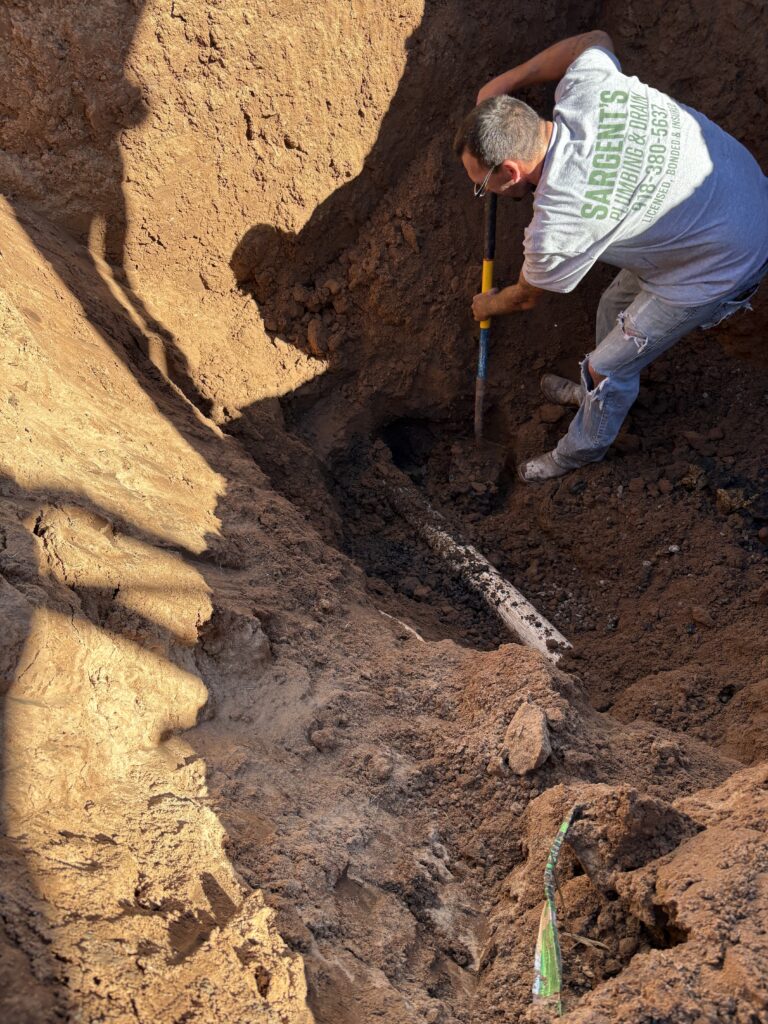
The process starts with a phone call and a scheduled camera inspection of your line. A technician arrives, locates your cleanout or creates an access point, and runs the camera through the full length of the pipe. You see the footage together, and the technician explains what the damage means in plain terms. You then receive a written recommendation with clear pricing before any repair work begins. Sargents Plumbing & Drain does not charge additional fees for emergency or weekend calls, so a weekend backup does not cost you extra. Financing options are available for larger repairs, and discounts apply for veterans, teachers, seniors, and more.
On repair day, the crew arrives with the lining or bursting equipment matched to your job. They protect access areas, mark utilities, and walk you through the day’s plan before starting. Lining jobs typically involve cleaning in the morning, liner installation midday, and curing through the afternoon. Bursting jobs begin with the two access pits, then the pull, then connections and testing. Water and drain use is limited during active work, and the crew tells you exactly when service restores. Most homeowners are back to normal use the same evening.
The job ends with verification, not just cleanup. A final camera pass documents the finished pipe from your home to the connection point, and you can review that footage. Access pits get backfilled, compacted, and restored, and the crew hauls away all debris. You receive warranty documentation for your records and for future home sale disclosures. Any questions about maintenance or what to watch for get answered before the truck leaves. That start to finish accountability is what separates a professional trenchless installation from a cheap one.
Why Choose Sargents Plumbing & Drain for Trenchless Pipe Repair
Sargents Plumbing & Drain is locally owned and built on honesty and hard work, values that show up in how every job gets quoted and completed. The company is fully licensed and insured, which protects you and your property throughout the project. Long term warranties back repipes and major repairs, so the work is guaranteed well after the crew leaves. Emergency service is available 24/7 with no additional fees for emergency or weekend calls. That policy matters because sewer failures never wait for business hours. Located at 605 W Oakland Pl in Broken Arrow, the team knows local soils, local pipe materials, and local code requirements firsthand.
Pricing at Sargents is straightforward, with discounts of 10 percent for veterans, teachers, seniors, and more. Financing is available, which makes a major pipe repair manageable without emptying savings. Every recommendation comes backed by camera footage, so you never take a diagnosis on faith. The company serves Broken Arrow, Tulsa, Bixby, Jenks, Owasso, Coweta, Claremore, and the surrounding communities. Local ownership means the person standing behind the warranty lives in the same community you do. That accountability is hard to find with out of town franchises.
The team is dedicated to always providing five star service on every call, from a simple inspection to a full trenchless replacement. Technicians explain their work in plain language and respect your home and yard at every step. Reviews from neighbors across the Tulsa metro reflect that commitment consistently. When your sewer line needs attention, you deserve a contractor who fixes it right the first time without destroying your property in the process. Call Sargents Plumbing & Drain at (918) 380-5637 or email info@sgtplumbing.com to schedule your inspection. Your yard will thank you.