Why a Tankless Water Heater Might Be Right for Your Home
Hot water demand in Broken Arrow homes climbs right as the seasons shift, and September is when many homeowners start noticing that their old tank simply cannot keep pace with longer showers and heavier laundry loads. A tankless water heater takes a completely different approach by heating water on demand instead of storing dozens of gallons around the clock. That difference changes how much energy your home burns, how much floor space you free up, and how long you wait between showers when the house is full. Oklahoma water chemistry, gas line sizing, and venting requirements all factor into how well a tankless unit performs once it is installed, so the decision deserves more than a quick price comparison. Homeowners who understand the mechanics ahead of time tend to be far happier with the results. This guide walks through how these systems work, who benefits most from them, and what a proper installation actually requires in a Green Country home.
How a Tankless Water Heater Works Compared to a Traditional Tank
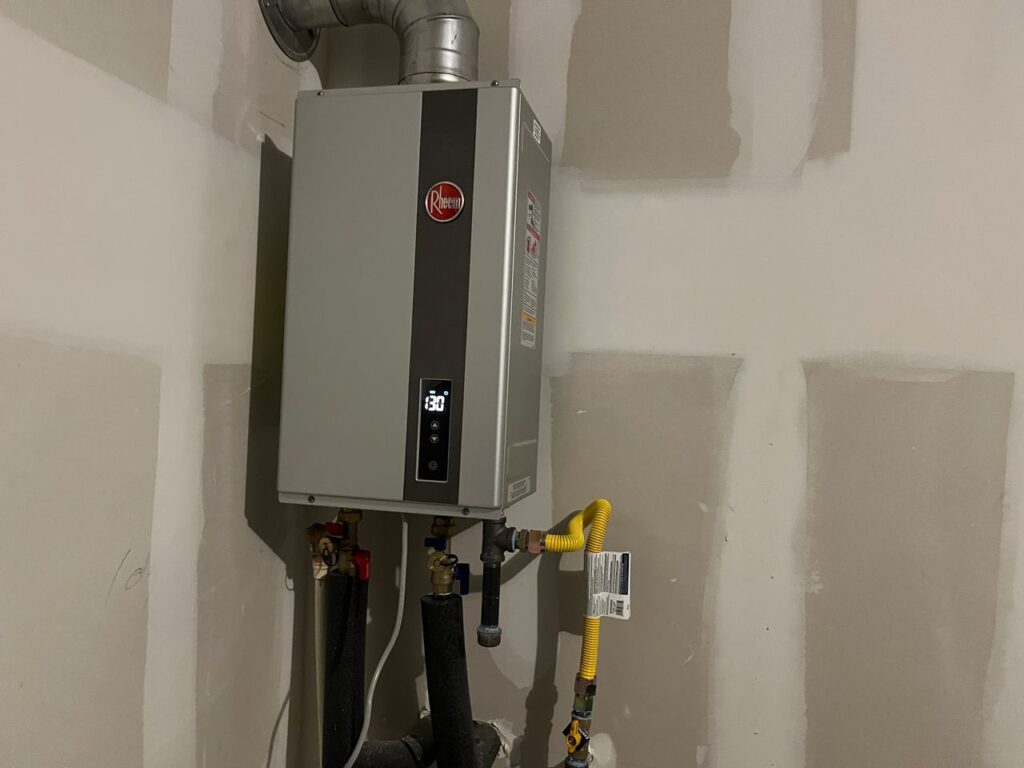
A traditional storage water heater keeps forty or fifty gallons hot at all times, cycling the burner on and off whenever the stored temperature drops below the thermostat setting. A tankless water heater does none of that; it sits idle until a hot water tap opens, then fires a high-output burner or element that heats water as it moves through a heat exchanger. The result is hot water that continues as long as the tap stays open, provided the unit is sized correctly for the flow rate your household demands. Understanding this basic difference explains almost every advantage and limitation that comes with the technology. It also explains why installation is more involved than a simple swap, since the fuel supply and venting requirements are substantially different from what a tank unit needs.
How the Tankless Water Heater Heats Water on Demand
The moment you open a hot water fixture, a flow sensor inside the tankless water heater detects movement in the line and signals the control board to begin the ignition sequence. A gas unit opens its valve, ignites the burner, and ramps the flame to match the incoming water temperature and the flow rate the sensor is reading. Cold water passes through a copper or stainless heat exchanger where it absorbs heat rapidly, exiting at your set temperature within a few seconds. Modern condensing models add a second heat exchanger that captures heat from the exhaust gases before they leave the vent, which pushes efficiency ratings noticeably higher than older single-exchanger designs. The entire process is continuous, meaning the burner modulates up and down in real time as you adjust the faucet or as a second fixture opens elsewhere in the house.
This on-demand cycle is what eliminates standby loss, the energy a tank unit wastes reheating water that nobody used. In a typical Broken Arrow home, that standby loss runs constantly through the night and every hour the family is at work or school. A tankless system spends those same hours drawing essentially no fuel at all, which is where most of the annual savings originate. Homes with lower daily hot water use tend to see the largest percentage reduction, since standby loss makes up a bigger share of their total consumption. Larger families still save, though their savings come more from the higher efficiency of the burner itself than from eliminated standby loss.
There is a small tradeoff worth knowing about before you commit. Because the burner needs a moment to fire and the water already sitting in the supply line has cooled, you will wait a few seconds longer for hot water to reach a distant fixture than you might with a tank. This is often called the cold water sandwich, and it is most noticeable when you turn a tap off and back on quickly. Recirculation pumps and buffer tanks solve the problem effectively, and many current models include a small internal buffer for exactly this reason. Discussing your fixture layout during the estimate lets us recommend the right solution before installation rather than after.
How Tankless Water Heater Sizing Differs From Tank Sizing
Tank water heaters are sized by capacity, which is why homeowners think in terms of forty, fifty, or seventy-five gallons. Tankless water heaters are sized by flow rate and temperature rise, expressed in gallons per minute at a specific temperature increase. The math matters more than most people expect, because groundwater entering an Oklahoma home in the winter arrives considerably colder than it does in August. A unit that easily delivers five gallons per minute during a mild September afternoon may only deliver three and a half in January, when the incoming supply drops toward the mid forties. Sizing for the winter condition rather than the summer average is the single most common way installations go wrong.
Calculating the correct size starts with adding up the fixtures your family realistically runs at the same time. A modern showerhead uses roughly two gallons per minute, a kitchen faucet about one and a half, and a washing machine somewhere between one and a half and three depending on the model. If two showers and a dishwasher might run simultaneously on a busy morning, the unit needs to handle that combined flow at winter temperatures without dropping output. Undersizing produces lukewarm water during peak demand, which is the complaint we hear most often from homeowners who bought a unit online and had it installed by a general handyman. Oversizing wastes money upfront and can cause short cycling at very low flow rates.
Whole-home units for a typical three or four bedroom Broken Arrow house generally land in the range of eight to eleven gallons per minute for gas models. Electric tankless units are available and work well for point-of-use applications like a detached shop sink or a guest bathroom far from the main heater. Using electric for whole-home service in this region usually requires a service panel upgrade and multiple dedicated high-amperage circuits, which frequently costs more than the heater itself. Gas remains the practical choice for most homes here, assuming the existing gas line can supply the required volume. We evaluate all of this during the estimate so the recommendation matches your actual household rather than a generic chart.
How Tankless Water Heater Efficiency Translates to Lower Bills
Efficiency in water heating is measured with a Uniform Energy Factor rating, and tankless gas models routinely score in the low to mid nineties for condensing designs. Standard atmospheric tank heaters typically fall in the low sixties, which represents a substantial gap in how much of each fuel dollar actually ends up in your hot water. The Department of Energy has estimated that homes using around forty gallons per day can see energy savings in the range of twenty-four to thirty-four percent after switching. Homes with heavier usage see a smaller percentage but a larger dollar amount, since they are consuming more total energy in the first place. Actual savings vary with fuel prices, household habits, and how well the unit was sized and installed.
Longevity contributes to the value equation in a way that monthly bills alone do not capture. A conventional tank water heater in Oklahoma commonly lasts eight to twelve years before the tank lining fails and the unit begins to leak. A properly maintained tankless unit frequently reaches twenty years or more, and its heat exchanger and internal components can be replaced individually rather than scrapping the whole appliance. That extended service life means you may replace two tank heaters in the time one tankless unit serves your home. Spreading the higher upfront cost across that longer span narrows the price gap considerably.
Maintenance is what protects those numbers, and it is not optional in this part of Oklahoma. Hard water leaves scale deposits inside the heat exchanger that restrict flow and force the burner to work harder to hit the same temperature. An annual descaling flush removes that buildup and keeps the unit operating at its rated efficiency for years. Skipping the flush is the fastest way to lose the savings you paid for and to shorten the lifespan you were counting on. Many homeowners in areas with harder water pair a tankless install with a whole-home filtration or softening system to slow scale formation at the source. Want cleaner water throughout the house? Click here for our water filtration systems service.
Who Benefits Most From a Tankless Water Heater Installation
Not every home is an obvious candidate for a tankless water heater, and honest guidance matters more than a sales pitch. The systems shine in specific situations and offer thinner margins in others, so knowing which category your home falls into helps you spend wisely. Household size, hot water habits, available space, fuel type, and how long you plan to stay in the home all shape the answer. Some homeowners install one primarily for endless hot water rather than for savings, and that is a perfectly valid reason. Others want the wall space back in a cramped utility room. Here is how the decision typically breaks down for homes across Broken Arrow, Bixby, Jenks, and the surrounding communities.
Families Who Gain the Most From Endless Tankless Water Heater Capacity
Households where hot water demand comes in long stretches rather than short bursts get the most obvious daily benefit. A family with teenagers, back-to-back morning showers, and a laundry routine that runs several loads a day regularly drains a fifty gallon tank and then waits for recovery. A correctly sized tankless water heater never runs out, because it heats continuously rather than drawing from a finite reserve. The last person to shower gets the same temperature as the first, which eliminates one of the more persistent household arguments. That reliability alone justifies the upgrade for many families we work with.
Homes with large soaking tubs or multiple bathrooms also fit this profile well. Filling a sixty or eighty gallon tub from a fifty gallon tank simply does not work; you get lukewarm water partway through and have to stop. A tankless unit sized for that flow rate fills the tub completely at temperature without interruption. The same principle applies to homes where guests visit frequently and hot water demand spikes unpredictably. Being able to absorb those spikes without planning around recovery time changes how the household functions.
Homeowners planning to stay in place for a decade or longer capture the full financial return. The higher installation cost pays back gradually through lower bills and deferred replacement, and that math only completes if you own the home long enough to reach it. If you expect to sell within two or three years, a quality tank replacement often makes more financial sense, though a tankless system does add some appeal on a listing. We give straight answers about this during the estimate rather than pushing the more expensive option by default. Need help deciding on a replacement? Click here for our water heater installation service.
Homes Where Space Savings Make a Tankless Water Heater Worthwhile
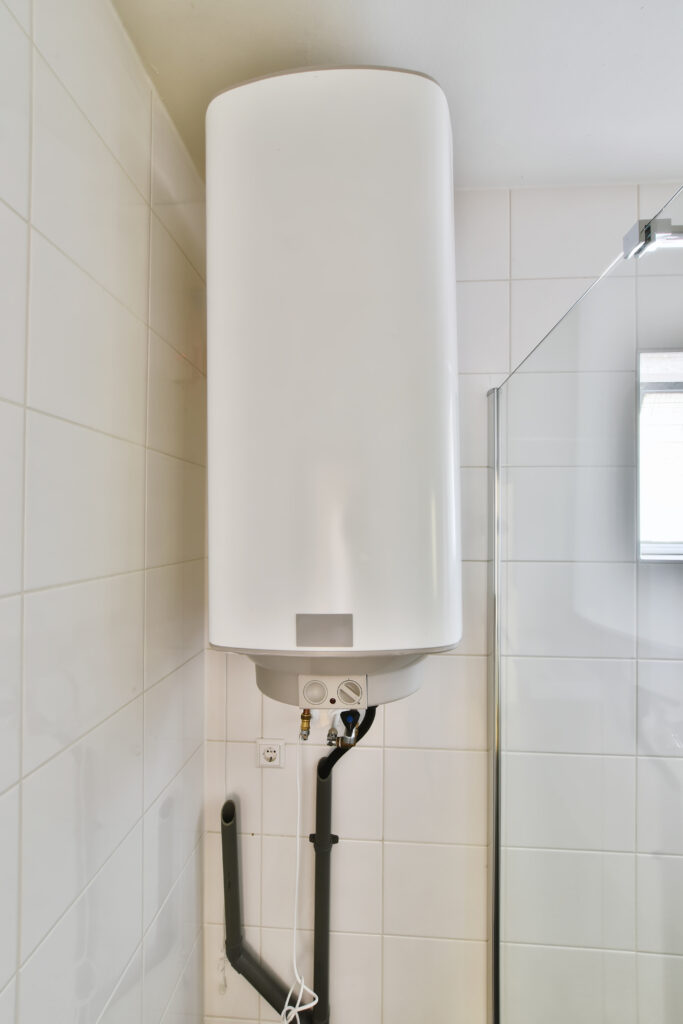
A standard fifty gallon tank occupies a footprint roughly two feet across and stands close to five feet tall, plus clearance on every side. A tankless unit mounts on the wall and takes up about the space of a carry-on suitcase, freeing the floor beneath it entirely. In a small utility closet, a converted garage corner, or a tight laundry room, that reclaimed square footage has real value. Homeowners frequently use the space for shelving, a laundry sink, or simply better access to the rest of the mechanical equipment. In homes where the water heater sits in a hallway closet, the change is even more noticeable.
Attic and crawlspace installations benefit for a different reason. A leaking tank in an attic can cause catastrophic damage to ceilings, insulation, and everything below before anyone notices. A tankless unit holds only the small volume of water inside its heat exchanger and connecting lines, which dramatically reduces the scale of any leak that does occur. That risk reduction alone motivates plenty of homeowners in this area to make the switch, particularly in newer builds where the mechanical equipment was placed upstairs. Insurance considerations sometimes factor in as well.
Placement flexibility opens up options that a tank cannot match. Because tankless units vent directly through a sidewall with sealed PVC or stainless venting, they can be located closer to the fixtures they serve. Shortening the run from heater to shower reduces the wait for hot water and cuts the amount of water wasted down the drain each time. In larger homes, some owners install two smaller units in different zones rather than one central heater, which improves delivery time throughout the house. We evaluate these layouts during the site visit and explain the tradeoffs clearly.
Situations Where a Tankless Water Heater Installation Needs Extra Planning
Gas supply is the first hurdle in most retrofits, and it catches homeowners by surprise. A tank heater might draw forty thousand BTU while a whole-home tankless unit demands one hundred fifty thousand to two hundred thousand at full fire. That jump frequently requires a larger diameter gas line running from the meter to the unit, and sometimes an upgraded meter from the utility. Running an undersized line starves the burner, causes error codes, and voids most manufacturer warranties. Any honest estimate includes a gas load calculation for the whole house rather than assuming the existing line will work.
Venting requirements are the second consideration. Tankless units cannot share the old atmospheric flue that vented your tank heater, because they produce a different exhaust profile and, in condensing models, acidic condensate. They require dedicated sealed venting run to an approved exterior termination, along with a condensate drain routed to a proper location. Depending on where your current heater sits, that vent run may be short and simple or may involve routing through finished space. Knowing this before work begins prevents the mid-project surprises that frustrate homeowners.
Water quality rounds out the list. Scale forms faster in hard water, and tankless heat exchangers are more sensitive to it than the interior of a tank. Homes on wells or on municipal supplies with elevated hardness benefit significantly from treatment installed ahead of the heater. Annual flushing remains necessary regardless, but treated water extends the interval between deep cleanings and protects the exchanger long term. We include a maintenance plan discussion with every tankless installation so the system stays under warranty and keeps performing.
Why You Need a Licensed Plumber for Your Tankless Water Heater Installation
Tankless water heater installation touches gas piping, combustion venting, water supply, and electrical connections all in one job. Each of those systems carries its own code requirements, and mistakes in any of them create risks that range from poor performance to carbon monoxide exposure. Permits and inspections exist for good reason on this type of work, and manufacturer warranties almost always require licensed installation to remain valid. The upfront cost of doing it right is far less than the cost of correcting an improper install later. Sargents Plumbing & Drain handles the entire scope so nothing gets missed.
The Code and Safety Side of Tankless Water Heater Installation
Combustion appliances require correct venting, adequate combustion air, and gas piping sized to deliver full input under peak load. An improperly vented tankless unit can spill exhaust into the living space, and that exhaust contains carbon monoxide. Sealed direct-vent systems eliminate that risk when installed to manufacturer specification, using the approved vent material, length, and termination clearances. We pull the permit, install to code, and schedule the inspection as part of the job. That paper trail protects you at resale and keeps your warranty intact.
Condensate management is another detail that unlicensed installs frequently miss. Condensing tankless units produce acidic water as a byproduct of capturing exhaust heat, and that condensate has to be neutralized before it enters your drain system. Dumping it untreated into cast iron or older drain lines accelerates corrosion over time. We install a neutralizer cartridge and route the drain properly, then explain how to service it. Small details like this separate a professional installation from a rushed one.
Water connections and isolation valves matter for the life of the unit. Every tankless installation should include service valves that allow annual flushing without cutting into the piping. Skipping those valves means every future maintenance visit costs more and takes longer. We install them as standard practice, along with proper expansion control where a closed system requires it. Need an expansion tank evaluated? Click here for our water heater expansion tank service.

Ongoing Tankless Water Heater Service and Maintenance
Annual descaling keeps the heat exchanger clear and the burner operating at its designed output. The process circulates a food-grade descaling solution through the unit for a set period, then flushes it clean. We also inspect the burner, clean the inlet filter screen, check the venting, and verify gas pressure at the same visit. Catching a small issue during routine service is far cheaper than an emergency call in the middle of a cold January week. Most homeowners schedule the flush in the fall before heavy winter demand arrives.
Error codes on tankless units are informative rather than mysterious, and a trained technician reads them quickly. Codes point toward flow issues, ignition problems, venting restrictions, or gas supply shortfalls, each with a specific diagnostic path. Guessing at a repair often replaces the wrong part and leaves the actual cause untouched. Our technicians carry the manufacturer diagnostic references for the major brands installed throughout Tulsa County. That preparation shortens the visit and lowers your cost.
Repairs on tankless units are usually component-level rather than whole-unit replacement. Igniters, flow sensors, control boards, and heat exchangers can all be replaced individually while the rest of the system stays in place. That serviceability is a real advantage over a failed tank, which almost always means full replacement. We stock common parts and can source the rest quickly. Having a problem with your current unit? Click here for our water heater repair service.
Why Choose Sargents Plumbing & Drain for Tankless Water Heaters
Sargents Plumbing & Drain is locally owned and built on honesty and hard work, and that shows up in how we handle estimates. We tell you when a tankless unit makes sense for your home and when a quality tank replacement is the smarter spend. Our team is licensed and insured, and every installation is completed to code with the proper permits pulled. We serve Broken Arrow, Tulsa, Bixby, Jenks, Owasso, Coweta, and communities throughout the surrounding area from our shop at 605 W Oakland Pl.
Financing is available to make a tankless upgrade manageable, and we back our repipes and fixtures with long-term warranties. Veterans, teachers, seniors, and others qualify for a 10% discount on our services. Straightforward pricing and clear explanations are standard on every job we take.
Our team is dedicated to always providing 5 star service, from the first phone call through the final inspection. We show up when we say we will, protect your home while we work, and walk you through the finished installation before we leave. Call (918) 380-5637 or email info@sgtplumbing.com to schedule an estimate for your tankless water heater. We will give you an honest assessment of what your home actually needs.